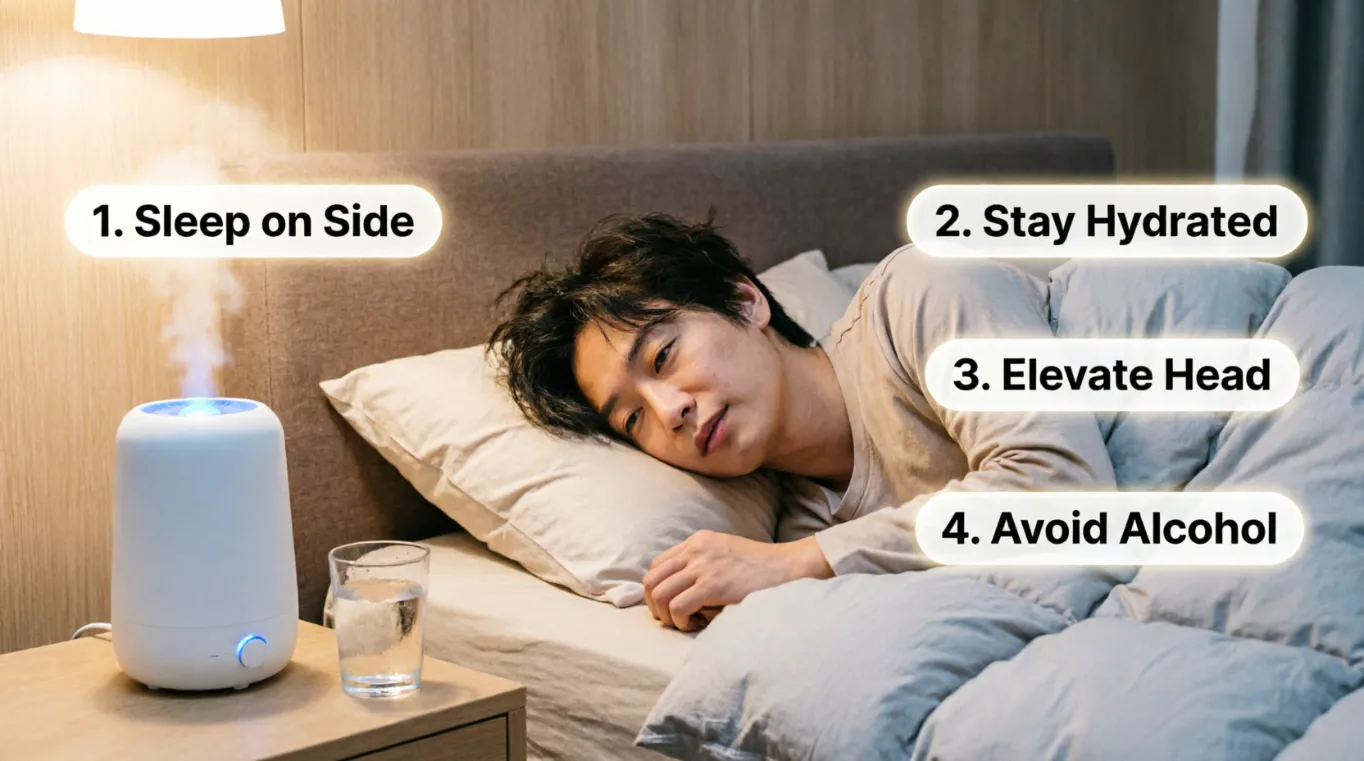
To fix snoring, start by identifying what causes it. Sleeping on your side, treating nasal congestion, avoiding alcohol before bed, maintaining a healthy weight, and getting enough sleep may reduce snoring. If snoring is loud or comes with gasping, choking, breathing pauses, or daytime sleepiness, talk with a healthcare professional about possible sleep apnea.
Key Takeaways
- Sleeping on your side may reduce snoring caused by back sleeping.
- Treating a blocked or stuffy nose can improve airflow.
- Alcohol close to bedtime can make snoring worse.
- Nasal strips may help when nasal airflow is restricted, but they do not treat every type of snoring.
- Loud snoring with breathing pauses, choking, gasping, or excessive daytime sleepiness deserves medical evaluation.
What Causes Snoring?
Snoring happens when air moves through narrowed or relaxed tissues in the nose and throat. As the air passes through, those tissues can vibrate and create the familiar snoring sound.
The reason you snore may not be the same as someone else’s. Sleeping on your back, nasal congestion, alcohol, excess weight around the neck, mouth breathing, and structural issues such as a deviated septum can all contribute.
For some people, snoring is simply an annoying nighttime habit. For others, however, it can be a sign of obstructive sleep apnea (OSA), a condition in which the airway repeatedly narrows or closes during sleep.
That is why the best way to fix snoring is to look at the possible cause rather than assume one remedy works for everyone.
How to Fix Snoring: 10 Things to Try
1. Sleep on Your Side
Your sleeping position can make a noticeable difference. For some people, lying on the back allows the tongue and soft tissues to move toward the back of the throat, narrowing the airway.
Try sleeping on your side instead. A body pillow can make the position more comfortable and may help you stay there throughout the night. Side sleeping is one of the simplest changes to try first.
2. Raise Your Upper Body
Keeping your upper body slightly elevated may help some people breathe more comfortably during sleep.
You can try a wedge-style pillow or another appropriate method of elevation. The goal is to avoid a completely flat position if that seems to make your snoring worse.
However, don’t assume that elevation will fix every case. Persistent or loud snoring still deserves attention if other warning signs appear.
3. Clear Nasal Congestion
A stuffy nose can make breathing through your nose more difficult. You may then breathe through your mouth, which can contribute to snoring.
If allergies, a cold, or another nasal problem is blocking your nose, treating that problem may reduce snoring. Nasal strips or nasal dilators can also help some people by improving airflow through the nasal passages.
If congestion happens frequently, talk with a healthcare professional rather than repeatedly treating the symptom without finding the cause.
4. Avoid Alcohol Before Bed
Alcohol can relax muscles in the upper airway. That relaxation may make the airway narrower and worsen snoring.
If you notice that your snoring becomes louder after drinking, avoiding alcohol close to bedtime is a practical step. Mayo Clinic and other medical sources specifically recommend avoiding alcohol near bedtime when trying to reduce snoring.
Certain sedating medications can also affect airway muscle tone, so talk with your healthcare professional before changing any prescribed medicine.
5. Maintain a Healthy Weight
For some people, excess tissue around the neck can place additional pressure on the airway during sleep. Losing weight, when medically appropriate, may therefore reduce snoring and can also improve symptoms in some people with obstructive sleep apnea.
This does not mean everyone who snores needs to lose weight. People of different body types can snore, and nasal or structural problems may be the main cause.
Focus on sustainable habits rather than quick-fix diets.
6. Get Enough Sleep
Being very tired can affect sleep patterns and may contribute to snoring. Mayo Clinic lists avoiding sleep deprivation among lifestyle measures that may help.
Try to maintain a regular sleep schedule and give yourself enough time to sleep each night.
Good sleep habits won’t necessarily eliminate snoring caused by a structural problem or sleep apnea, but they are a useful part of an overall approach.
7. Try Nasal Strips or Dilators
Nasal strips sit across the outside of the nose and can gently widen the nasal passages. Nasal dilators work inside the nose.
These products may help when restricted nasal airflow contributes to snoring. However, they generally won’t solve snoring caused by tissues deeper in the throat or by obstructive sleep apnea.
Think of them as a targeted option, not a universal cure.
8. Consider an Oral Appliance
An oral appliance is a device worn during sleep. Some types move the lower jaw forward, which can help keep the airway open.
For adults with primary snoring, the American Academy of Sleep Medicine and American Academy of Dental Sleep Medicine have recommended oral appliance therapy after appropriate evaluation. They also recommend custom, adjustable appliances from qualified dental professionals when oral appliances are used for obstructive sleep apnea.
Because snoring can be a symptom of sleep apnea, don’t assume a mouthpiece is appropriate without considering if an underlying sleep disorder needs evaluation.
9. Address Smoking and Allergy Triggers
Smoking and exposure to irritants can contribute to airway problems. Allergies can also cause nasal congestion, making nighttime breathing more difficult.
If your snoring gets worse during allergy season, reducing exposure to known triggers and discussing appropriate allergy treatment with a healthcare professional may help.
The important point is simple: treat the problem that is narrowing or irritating your airway.
10. Get Checked for Sleep Apnea
This is one of the most important steps if your snoring is persistent or unusually loud.
Obstructive sleep apnea occurs when throat tissues relax and repeatedly narrow or block the airway during sleep. Common warning signs include loud snoring, witnessed breathing pauses, gasping or choking during sleep, morning headaches, and excessive daytime sleepiness.
A healthcare professional may evaluate your symptoms and, when appropriate, recommend a sleep study. Some sleep studies can be performed at home, while others take place in a sleep center.
Which Snoring Remedy Should You Try First?
The right approach depends on the likely cause.
| Possible cause | What may help |
| Sleeping on your back | Try side sleeping |
| Stuffy or blocked nose | Treat congestion; consider nasal strips or dilators |
| Alcohol before bed | Avoid alcohol close to bedtime |
| Excess weight | Work toward a healthy weight when appropriate |
| Persistent loud snoring | Discuss it with a healthcare professional |
| Suspected sleep apnea | Medical evaluation and appropriate treatment |
| Jaw or airway-related snoring | Ask about a professionally fitted oral appliance |
These options are not interchangeable. For example, a nasal strip may improve nasal airflow but cannot treat the airway obstruction associated with sleep apnea.
When Is Snoring a Sign of Sleep Apnea?
Not everyone who snores has sleep apnea. However, certain symptoms make an evaluation especially important.
Talk with a healthcare professional if you or your partner notice:
- Breathing pauses while you sleep
- Loud snoring followed by silence
- Gasping or choking during sleep
- Excessive daytime sleepiness
- Morning headaches
- Trouble concentrating
- Snoring that regularly disrupts your sleep or your partner’s sleep
Don’t rely on how you feel in the morning alone. People with sleep apnea may not realize that their breathing repeatedly stops during the night.
Medical Treatments for Persistent Snoring
If lifestyle changes don’t solve the problem, a healthcare professional can look for an underlying cause.
CPAP
Continuous positive airway pressure, commonly called CPAP, uses a mask and gentle air pressure to keep the upper airway open during sleep. It is a common treatment for obstructive sleep apnea and can prevent both apnea events and related snoring.
Oral Appliances
A professionally fitted oral appliance may help certain adults with primary snoring or obstructive sleep apnea. The device typically works by repositioning the lower jaw or related oral structures to help maintain an open airway.
Surgery
In selected cases, surgery may be considered when anatomical problems contribute to snoring or sleep apnea. It isn’t appropriate for everyone, and results vary depending on the underlying problem.
Frequently Asked Questions
Can you completely stop snoring?
Sometimes, but it depends on the cause. Snoring related to sleep position, nasal congestion, alcohol, or other modifiable factors may improve substantially when the cause is addressed. Persistent snoring caused by airway anatomy or sleep apnea may require professional evaluation and treatment.
Do nasal strips really help snoring?
They can help some people, particularly when restricted nasal airflow contributes to snoring. However, nasal strips do not treat every cause of snoring and are not a treatment for obstructive sleep apnea.
Does sleeping on your side stop snoring?
Side sleeping can reduce snoring for some people, especially when snoring becomes worse while lying on the back. It does not work for everyone because snoring can have several different causes.
When should I see a doctor for snoring?
See a healthcare professional if your snoring is loud or frequent, disrupts your sleep, or occurs with breathing pauses, gasping, choking, or excessive daytime sleepiness. These symptoms can indicate obstructive sleep apnea and may require further evaluation.
Conclusion
Learning how to fix snoring starts with understanding why you snore. For some people, sleeping on their side, improving nasal airflow, avoiding alcohol before bed, getting enough sleep, or maintaining a healthy weight can make a difference. Others may need an oral appliance or treatment for an underlying sleep disorder.
Most importantly, don’t ignore loud, persistent snoring when it comes with breathing pauses, choking, gasping, or significant daytime sleepiness. Those signs can point to obstructive sleep apnea, which needs professional evaluation.
A simple lifestyle change may be enough for occasional snoring. If the problem continues, finding the underlying cause is the more useful long-term approach

I am Owen Walker, the author of dreamzoons.com and a passionate dream expert. I explore the hidden secrets and deep meanings of dreams to help you understand the true messages behind them.