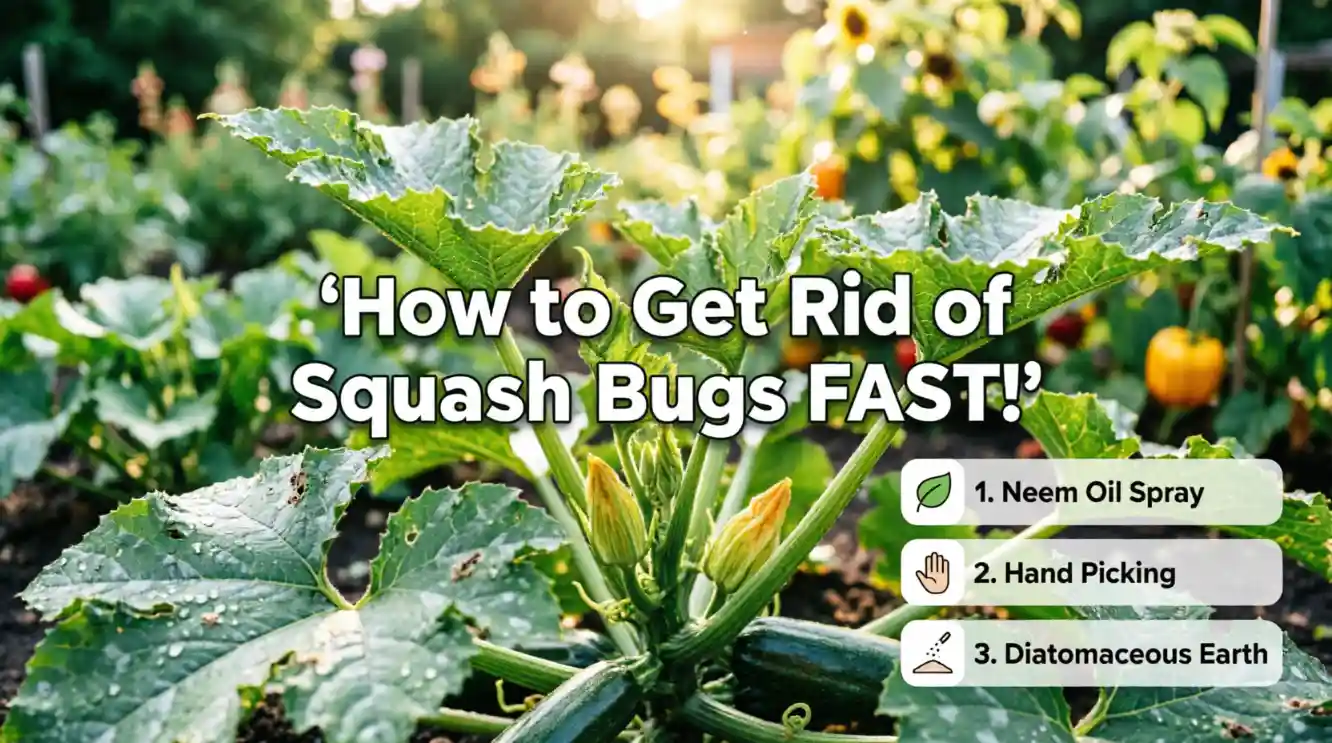
To get rid of squash bugs, remove their eggs, hand-pick adults and nymphs, use boards as traps, and protect young plants with row covers. If an infestation is severe, use a product labeled for squash bugs and target young nymphs. Clean up plant debris after harvest to reduce places where adults can survive the winter.
Key Takeaways
- Check the undersides of squash leaves for bronze or yellowish egg clusters.
- Remove eggs and squash bugs as soon as you find them.
- Young nymphs are easier to control than large adult squash bugs.
- Row covers can protect young plants before flowering.
- Clean up old squash vines and garden debris after harvest.
What Are Squash Bugs?
Squash bugs are common garden pests that attack squash, zucchini, pumpkins, cucumbers, and other cucurbit plants. The most common species is Anasa tristis. Adults are flattened and usually dark gray, brown, or nearly black, with orange-brown markings along the edges of the abdomen.
They use piercing-sucking mouthparts to feed on plant sap. Heavy feeding can cause yellow spots, wilting, browning, and eventually dead leaves. Young plants are especially vulnerable.
Squash bugs also lay clusters of eggs on the undersides of leaves, often near the veins. Finding and removing these eggs early can prevent a much larger infestation later.
How to Identify Squash Bugs
Before treating your plants, make sure you have the right pest.
Adult squash bugs are about five-eighths of an inch long, flattened, and grayish-brown to dark brown. Young squash bug nymphs are smaller and lighter. Newly hatched nymphs can have pale green or gray bodies with dark heads and legs.
Look underneath leaves, around the base of stems, and near the soil. Squash bugs often hide when you disturb the plant.
Signs of Squash Bug Damage
Watch for:
- Yellow or brown spots on leaves
- Wilting leaves
- Leaves that become dry or black
- Damaged young fruit
- Sunken or scarred areas on fruit
- Groups of bugs beneath leaves
- Bronze, yellowish, or copper-colored egg clusters
Heavy feeding can cause serious damage, especially when young plants have not developed much foliage.
How to Get Rid of Squash Bugs Step by Step
1. Find and Remove the Eggs
Start with the eggs because stopping the next generation can make control much easier.
Inspect the undersides of leaves every few days. Look especially around leaf veins, where squash bugs commonly deposit their eggs.
If you find a small cluster, crush the eggs or carefully remove the affected section of the leaf and dispose of it. You can also use tape to lift small egg clusters from leaves.
Do not wait until hundreds of nymphs appear. Early removal is one of the simplest ways to keep an infestation manageable.
2. Hand-Pick Adults and Nymphs
For a home garden, physically removing squash bugs can be very effective.
Look beneath leaves and around the base of plants. Drop adults and nymphs into a container of soapy water or otherwise remove and destroy them.
Check your plants repeatedly rather than doing it once and stopping. Extension recommendations commonly emphasize repeated removal every few days because new bugs can hatch after your first inspection.
This method works particularly well when you have only a few squash or zucchini plants.
3. Use a Board Trap
Squash bugs often hide underneath sheltered objects at night.
Place a flat board, piece of cardboard, or similar material near your squash plants. In the morning, carefully lift it and check underneath. Bugs may gather there, giving you an easy opportunity to remove them.
This technique will not solve a severe infestation by itself, but it can help reduce adult and nymph populations while also showing you whether squash bugs are active in your garden.
4. Protect Young Plants With Row Covers
Floating row covers can keep squash bugs away from young plants before the insects reach them.
Secure the edges well so bugs cannot crawl underneath. Row covers are most useful early in the season, when plants are especially vulnerable.
However, squash plants need pollinators to produce fruit. Remove the covers when the plants begin flowering so bees and other pollinators can reach the flowers.
Row covers are therefore a prevention tool, not something you normally leave over flowering squash for the entire season.
5. Use Insecticidal Treatments When Needed
If physical removal is not enough, an insecticide labeled for squash bugs may help.
Timing matters. Young squash bug nymphs are generally easier to control than larger adults. Treating after eggs hatch can therefore be more effective than waiting until the insects become large.
Products vary by state, crop, and formulation, so always read the product label before using one. The label should specifically allow the product to be used on your crop and for the pest you are targeting.
Avoid spraying flowering plants when pollinators are actively visiting. Follow the label’s instructions for timing, application, protective equipment, and harvest intervals.
How to Get Rid of Squash Bugs Naturally
If you prefer to avoid conventional pesticides, start with physical and preventive methods.
The most useful options include:
Remove egg clusters: Check leaves regularly and destroy eggs before they hatch.
Hand-pick bugs: Remove adults and nymphs and place them in soapy water.
Use board traps: Give hiding bugs a sheltered place to gather, then remove them in the morning.
Use row covers: Protect young plants before flowering.
Clean the garden: Remove old squash vines and plant debris after harvest.
Rotate crops: Avoid planting cucurbits in exactly the same location when practical.
These methods work best as a system. One tactic may reduce the population, while several combined tactics can make a much bigger difference.
How to Prevent Squash Bugs Next Year
Prevention begins after this year’s harvest.
Squash bugs can survive the winter in protected places such as old plant debris and sheltered areas around the garden. Cleaning up spent squash vines removes some of these hiding places.
After harvesting, remove old cucurbit plants rather than leaving dead vines in the garden. Also look for places where bugs could shelter, including piles of plant debris and other garden materials.
Crop rotation can provide another layer of protection. If squash bugs are a recurring problem, plant cucurbits in a different area when your garden layout allows it.
You can also choose varieties that are relatively more tolerant of squash bug feeding. No squash variety is completely immune, but some types can handle feeding better than others.
The goal is not to create a completely bug-free garden. Instead, aim to catch the problem early and keep the population low enough that your plants can continue growing and producing fruit.
Can Squash Plants Recover From Squash Bugs?
Yes, a healthy, established squash plant may recover from some squash bug damage.
Young plants are more vulnerable because they have less foliage and a smaller root system. Heavy feeding can cause severe wilting or even kill them.
Older, vigorous plants can often tolerate more feeding. If the plant still has healthy growing points and leaves, remove the bugs, destroy egg clusters, provide appropriate water, and monitor it closely.
Do not assume every wilted squash plant has squash bugs, though. Squash vine borers, diseases, heat stress, and watering problems can also cause wilting.
Squash Bugs vs. Squash Vine Borers
These pests are easy to confuse because both can cause squash plants to wilt.
Squash bugs are insects that live on the plant and feed on its leaves, stems, and sometimes fruit. You can often find adults, nymphs, or egg clusters on or underneath the plant.
Squash vine borers are moth larvae that enter the plant stem. Affected plants may wilt, and you may find a small hole and sawdust-like material near the base of the stem.
If you see bugs on the leaves, inspect for squash bugs. If a plant suddenly wilts and the base of the stem has holes or sawdust-like material, investigate squash vine borers instead.
Frequently Asked Questions About Squash Bugs
What kills squash bugs naturally?
Hand-picking adults and nymphs, crushing egg clusters, and trapping bugs under boards are useful chemical-free methods. Row covers can also prevent squash bugs from reaching young plants. The key is to start early and repeat your inspections.
Does soapy water kill squash bugs?
Dropping squash bugs into a container of soapy water can kill the insects you physically remove from the plant. This is different from spraying homemade dish-soap mixtures directly on plants. If you want to spray, use an insecticidal soap labeled for your crop and follow its directions.
Does neem oil get rid of squash bugs?
Neem-based products may help control young squash bug stages when the product is labeled for that use. They are generally less reliable against larger adults. Always follow the product label and take precautions to protect pollinators and avoid plant injury.
How do I prevent squash bugs next year?
Remove old squash vines and garden debris after harvest, rotate crops when possible, monitor young plants early, and consider row covers. Regularly checking for egg clusters can also stop a small population from becoming a major infestation.
Final Thoughts
The best way to get rid of squash bugs is to act early. Check the undersides of leaves, destroy egg clusters, remove nymphs and adults, and protect young plants before the bugs become established. If you need additional treatment, target young nymphs with a product specifically labeled for squash bugs rather than relying on repeated spraying of large adults.
After harvest, clean up old cucurbit vines and other debris. With regular scouting and several control methods working together, you can greatly reduce squash bug pressure and give your zucchini, pumpkins, and squash a better chance to thrive.

I am Jaxon Blake, the author of DreamZoons.com, where I explore the hidden meanings behind dreams. I am a dream expert, and I help people understand what their dreams may be trying to tell them.