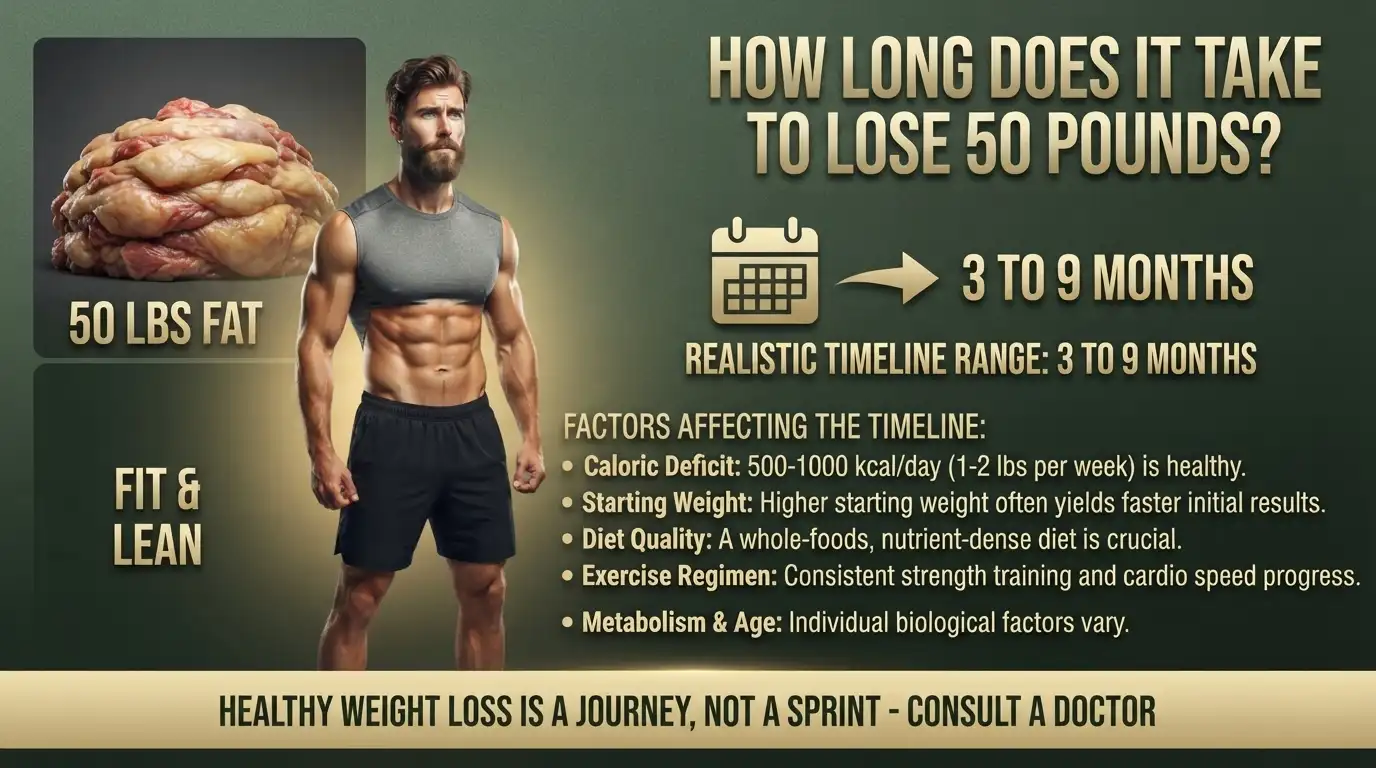
For many adults, losing 50 pounds at the CDC’s commonly recommended gradual pace of about 1–2 pounds per week would take roughly 25–50 weeks, or about 6–12 months. This is only a general estimate. Your actual timeline can vary based on starting weight, eating habits, activity, medications, health conditions, and how your body responds over time.
Key Takeaways
- Losing 50 pounds may take about 6–12 months at a gradual rate of 1–2 pounds per week.
- Weight loss does not usually happen at exactly the same rate every week.
- Your starting weight, diet, activity, medications, health conditions, and consistency can affect your timeline.
- A slower approach can be easier to maintain than trying to lose weight extremely quickly.
- Talk with a healthcare professional before making major weight-loss changes, especially if you have a medical condition or take medication.
How Long Does It Take to Lose 50 Pounds?
If you’re wondering how long it takes to lose 50 pounds, there isn’t one exact answer for everyone.
A useful starting point is the general recommendation to lose about 1–2 pounds per week. At that rate, the simple calculation looks like this:
| Average weekly loss | Approximate time to lose 50 pounds |
| 1 pound per week | 50 weeks |
| 1.5 pounds per week | About 33 weeks |
| 2 pounds per week | 25 weeks |
That works out to approximately 6–12 months.
However, this is a planning range rather than a promise. Your weight may drop faster during some weeks, stay nearly the same during others, and then begin moving again. The CDC notes that gradual, steady weight loss of about 1–2 pounds per week is more likely to be maintained than faster loss.
50-Pound Weight Loss Timeline
A 50-pound goal can feel huge when you look at it as one number. Breaking it into smaller milestones can make the process easier to understand.
For example:
- 10 pounds: first milestone
- 20 pounds: 40% of the goal
- 25 pounds: halfway point
- 30 pounds: 60% of the goal
- 40 pounds: 80% of the goal
- 50 pounds: full goal
You do not need to reach every milestone at a fixed date. The goal is to create habits you can continue rather than trying to force your body to follow a strict calendar.
Why the Timeline Can Vary
Weight loss is more complicated than simply dividing 50 by a weekly number. Your body adapts as your weight changes, and your calorie needs can change as well. NIDDK explains that body weight responds dynamically to changes in food intake and physical activity, which is one reason simple calorie formulas cannot perfectly predict how quickly someone will lose weight.
What Is a Healthy Rate of Weight Loss?
For many adults, 1–2 pounds per week is a commonly recommended gradual rate.
That does not mean everyone should lose exactly 1–2 pounds every week. Some people lose less, while others may lose more at certain points. Your healthcare professional can help determine a suitable goal based on your health and circumstances.
Trying to lose weight extremely quickly can create problems. MedlinePlus notes that losing more than 1–2 pounds per week is not safe for most people and may result in loss of muscle, water, and bone density, along with problems such as gallstones and fatigue.
So, if you see a plan promising that everyone can lose 50 pounds in just a few weeks, be cautious. Faster weight loss may sometimes occur under medical supervision, but it should not be treated as a normal target for everyone.
Can You Lose 50 Pounds in 6 Months?
It is possible for some people, but it is not guaranteed.
Losing 50 pounds in six months means averaging roughly 1.9 pounds per week. That falls near the upper end of the commonly recommended 1–2 pound weekly range.
If that pace is appropriate depends on your starting weight, health, food intake, physical activity, medications, and other factors.
NIDDK recommends working with a healthcare professional to establish a weight-loss goal and timeframe that fits your individual situation.
Also remember that health improvements can happen before you reach the full 50-pound goal. NHLBI notes that losing 5% to 10% of your starting body weight can provide meaningful health benefits.
What Affects How Fast You Lose 50 Pounds?
Starting Weight and Body Size
Your starting weight can influence how quickly your weight changes. Someone starting at a much higher weight may experience a different rate of loss from someone starting at a lower weight.
Because of this, comparing your progress directly with another person may not be useful.
Food and Calorie Intake
Weight management is affected by the relationship between calories consumed and calories used. A sustainable eating pattern can help create the energy deficit needed for weight loss.
NIDDK recommends an eating pattern that includes foods such as vegetables, whole fruits, whole grains, lean protein sources, beans, nuts, seeds, and appropriate dairy or alternatives.
Instead of searching for the most extreme diet, focus on an approach you can realistically follow for months.
Physical Activity
Exercise can support weight management and overall health.
Current CDC guidance recommends that adults get at least 150 minutes of moderate-intensity aerobic activity each week, along with muscle-strengthening activities on at least two days per week.
You can spread that activity throughout the week. Walking, cycling, swimming, dancing, and other activities can all count depending on their intensity.
Health Conditions and Medications
Medical conditions and medications can influence weight and weight management. NIDDK lists factors such as certain medical conditions, medications, stress, genes, hormones, age, and environment among factors that can affect weight.
If you have diabetes, heart disease, another chronic condition, or take medications that may affect your weight, discuss your plan with a healthcare professional.
Consistency and Lifestyle
Your everyday habits matter. Eating patterns, activity, sleep, stress, and your ability to maintain those habits can all affect your progress.
A plan that works reasonably well for 10 months is often more practical than a highly restrictive plan that you can follow for only a few weeks.
How to Lose 50 Pounds Safely
Build Sustainable Eating Habits
Start with habits that you can continue.
For example, you might focus on reasonable portions, more nutrient-dense foods, fewer high-calorie drinks, and meals that keep you satisfied. You do not need to completely eliminate an entire food group unless a healthcare professional recommends it for a specific reason.
NIDDK emphasizes choosing a healthy eating plan that you can maintain over time.
Add Regular Physical Activity
Choose movement that fits your current ability and schedule.
If you are inactive, you do not have to begin with an intense workout program. Starting with manageable activity and gradually increasing it can make the habit easier to maintain.
If you have a chronic health condition or have been inactive and want to begin vigorous exercise, CDC recommends discussing appropriate activity with your healthcare professional.
Include Strength Training
Strength training can be useful as part of an overall physical activity routine. The current adult activity guidelines recommend muscle-strengthening activity at least two days per week.
Your routine can be adjusted to your experience and physical abilities.
Track Progress Beyond the Scale
The scale is only one way to measure progress.
You can also monitor your waist measurement, physical activity, fitness, clothing fit, eating habits, and how consistently you follow your routine.
Daily weight can move because of changes in water, food, sodium, and other normal factors. Looking at a longer trend can provide more useful information than reacting to one day’s number.
Why Weight Loss Slows Down
It is common to expect weight loss to look like a straight line: lose two pounds, then two more, and continue until you reach 50 pounds.
Real life rarely works that way.
As your body weight decreases, your energy needs can change. NIDDK notes that metabolism slows during weight loss and the body requires fewer calories at a lower weight.
That can make later stages feel slower than the beginning.
A short period with little scale movement does not automatically mean your efforts have failed. Review your overall trend and habits rather than trying to compensate with extreme dieting.
When Should You Talk With a Healthcare Professional?
Consider speaking with a healthcare professional before starting a major weight-loss program, particularly if you have a chronic health condition, take prescription medication, are pregnant or planning pregnancy, or have a history of eating disorders.
A professional can help you determine if losing 50 pounds is an appropriate goal and establish a realistic timeframe.
For some adults with higher weight or obesity, lifestyle changes may be combined with prescription weight-management medications or other medical treatments. NIDDK explains that these treatments are individualized and should be used with professional guidance rather than as a substitute for healthy eating and physical activity.
Frequently Asked Questions
Can I lose 50 pounds in 3 months?
Losing 50 pounds in three months would require averaging more than 4 pounds per week. That is considerably faster than the gradual 1–2 pound weekly pace commonly recommended for many adults. Rapid weight loss can carry health risks and should not be attempted without appropriate medical supervision.
Is losing 50 pounds in a year realistic?
Yes, a year can be a realistic timeframe for some people. Losing 50 pounds over 12 months averages about 1 pound per week. Your appropriate pace may be slower or faster depending on your health, starting weight, lifestyle, and treatment plan.
Will exercise make me lose 50 pounds faster?
Exercise can support weight loss by increasing physical activity and can provide important health benefits. However, it does not guarantee a particular rate of weight loss. Food intake, starting weight, health conditions, medications, sleep, and other factors also matter.
What if my weight loss stops?
A temporary plateau can happen during weight loss. As your weight decreases, your body may require fewer calories, which can make continued weight loss more difficult. Review your overall habits and consider speaking with a healthcare professional if you are concerned about your progress.
Conclusion
So, how long does it take to lose 50 pounds? For many adults, a reasonable general estimate is about 6–12 months when losing approximately 1–2 pounds per week. That range is not a deadline or guarantee.
Your actual timeline may be shorter or longer depending on your starting weight, eating pattern, activity level, health conditions, medications, and how your body responds. The most useful approach is to focus on sustainable habits rather than trying to force rapid results.
If you are planning a 50-pound weight-loss goal, consider discussing your target and timeframe with a healthcare professional. A personalized plan can help you pursue weight loss while protecting your overall health.

I am Owen Walker, the author of dreamzoons.com and a passionate dream expert. I explore the hidden secrets and deep meanings of dreams to help you understand the true messages behind them.