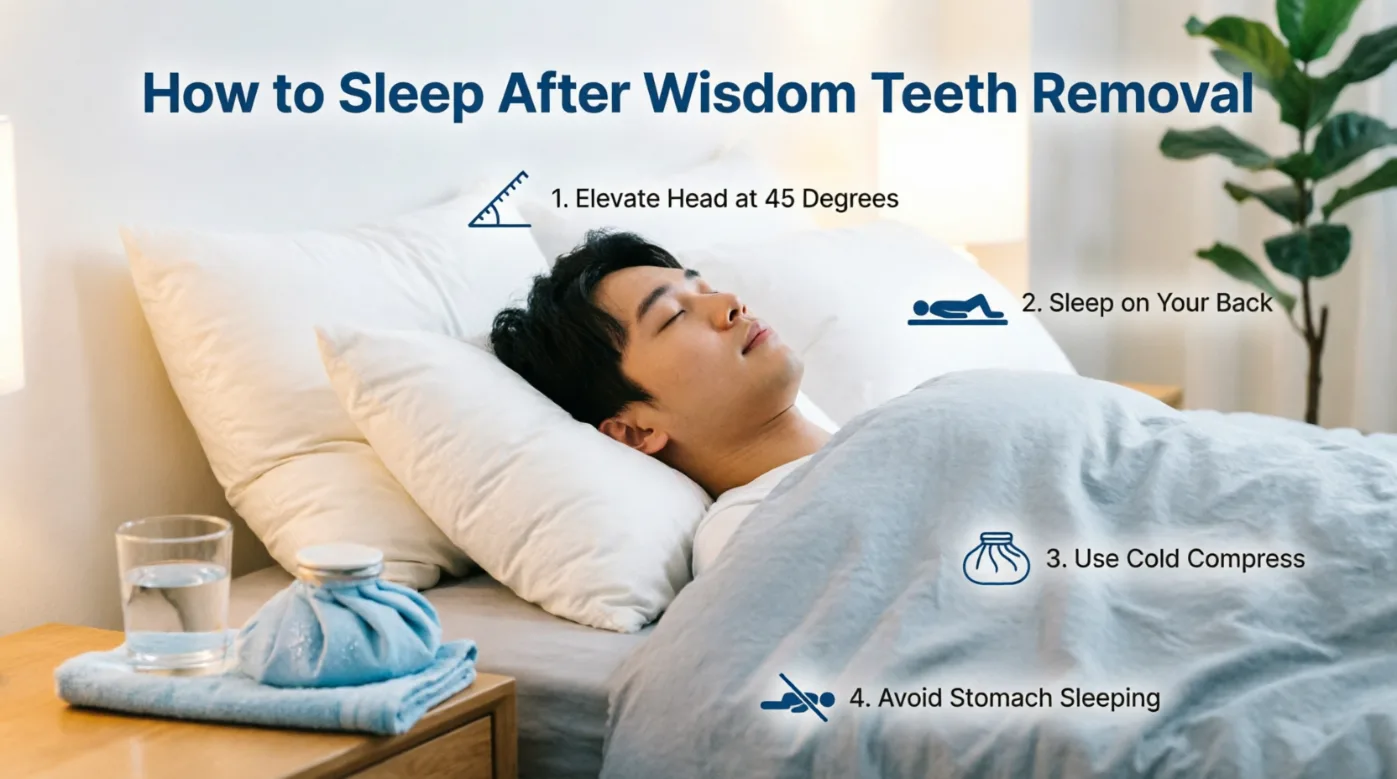
To sleep after wisdom teeth removal, keep your head and upper body elevated, preferably on your back, especially during the first night. Follow your dentist’s pain-control instructions, use cold therapy as directed, and protect the blood clot by avoiding smoking, alcohol, straws, and vigorous rinsing. Remove gauze before sleeping unless your oral surgeon specifically tells you otherwise.
Key Takeaways
- Keep your head elevated rather than lying completely flat.
- Back sleeping can help avoid pressure on the extraction sites.
- Do not sleep with gauze in your mouth unless your dental professional specifically instructs you to do so.
- Follow your prescribed or recommended pain-control plan.
- Avoid smoking, alcohol, straws, and vigorous rinsing while the blood clot is healing.
- Contact your dentist or oral surgeon about excessive bleeding, severe or worsening pain, significant swelling, or other concerning symptoms.
How to Prepare for Sleep After Wisdom Teeth Removal
Sleeping can feel uncomfortable after wisdom tooth surgery because your jaw may hurt, your cheeks may swell, and your mouth may feel strange. Anesthesia or sedation can also affect how you feel during the first several hours.
The goal is not to force yourself into a perfect night’s sleep. Instead, focus on keeping the surgical area protected while making yourself as comfortable as possible.
1. Keep Your Head Elevated
One of the most practical steps is to keep your head and upper body elevated rather than lying completely flat.
You can use several pillows or a wedge-style pillow to create a comfortable incline. The important thing is to support your head and shoulders without bending your neck awkwardly.
Keeping yourself elevated can make swelling and nighttime discomfort easier to manage. Dental professionals commonly recommend elevation as part of early postoperative care.
2. Create a Comfortable Sleeping Setup
Prepare your bed before you become tired.
Place your pillows where you need them, keep water nearby, and have anything your dental team recommended within easy reach. You can also put an old towel over your pillowcase if you’re worried about a small amount of blood-tinged saliva.
Try to avoid constantly changing positions once you are comfortable. Rest is important during the first few days of recovery, and the American Association of Oral and Maxillofacial Surgeons recommends taking it easy after wisdom tooth surgery.
3. Follow Your Pain-Control Plan
Pain can make it difficult to fall asleep, so follow the medication instructions provided by your dentist or oral surgeon.
Depending on your situation, your dental professional may recommend an over-the-counter pain reliever or prescribe medication. The American Dental Association provides evidence-based guidance for managing acute dental pain after tooth removal.
Do not take extra medication simply because you’re having trouble sleeping. If your pain remains severe despite following your instructions, contact your dental professional.
What Is the Best Sleeping Position After Wisdom Teeth Removal?
For many people, sleeping on your back with your head elevated is a practical choice during the first night or two.
This position can reduce pressure on your cheeks and extraction areas while making it easier to keep your head raised.
Your surgeon’s instructions should take priority, especially if you had multiple teeth removed or a more complicated surgical procedure.
Sleeping on Your Back
Start by placing your upper body in a slightly raised position. You can use a wedge pillow, several supportive pillows, or another setup recommended by your dental team.
Avoid lying completely flat if that increases throbbing or swelling.
You do not need to panic if you accidentally roll over during sleep. Simply reposition yourself when you wake up.
What About Sleeping on Your Side?
Advice about side sleeping can vary. Some dental sources recommend avoiding pressure on the surgical area, while others say side sleeping can be comfortable when the head remains elevated.
If you sleep on your side, avoid putting direct pressure on the side where surgery was performed. When both sides are treated, back sleeping may be easier for protecting both areas.
If your oral surgeon gave you specific instructions about sleeping position, follow those instructions instead.
Can You Sleep With Gauze After Wisdom Teeth Removal?
Generally, you should not fall asleep with gauze in your mouth. Gauze is used to help control bleeding and support clot formation, but loose gauze can become a choking hazard while you are asleep.
Your oral surgeon should tell you how long to keep the gauze in place. Follow that specific instruction rather than relying on a general time.
The American Association of Oral and Maxillofacial Surgeons recommends following your surgeon’s directions for gauze and contacting the surgeon if bleeding persists or becomes excessive.
If you’re still experiencing significant bleeding when bedtime arrives, don’t simply go to sleep with gauze in your mouth. Sit upright, follow the bleeding-control instructions your dental team gave you, and contact the dental office if the bleeding does not settle.
How to Sleep the First Night After Wisdom Teeth Removal
The first night often feels the most challenging because you may be dealing with soreness, swelling, numbness wearing off, and worry about disturbing the extraction sites.
Try this simple routine:
Before bed:
- Follow your dentist’s instructions for pain medication.
- Eat or drink only what your dental team recommends.
- Use an ice pack on the outside of your cheek if instructed.
- Make sure any required gauze has been used for the recommended period.
- Remove gauze before sleeping unless your dental professional specifically tells you otherwise.
- Set up your pillows so your head and upper body remain elevated.
- Keep water nearby.
- Avoid smoking, alcohol, and straws.
The blood clot in the extraction socket is important for healing. Actions that disturb it can contribute to complications such as dry socket.
If You Wake Up During the Night
Don’t worry if you wake up several times.
Check how you feel and reposition yourself if you have slid down the pillows. A small amount of blood-tinged saliva can occur during early recovery.
However, pay attention to the amount and persistence of bleeding. Excessive or prolonged bleeding is not something to ignore. AAOMS recommends contacting your oral surgeon when bleeding persists or becomes excessive.
How to Reduce Pain and Swelling Before Bed
A few simple steps may make bedtime more comfortable.
Use cold therapy as directed. An ice pack or cold compress may help reduce swelling during the early recovery period. AAOMS notes that intermittent ice can be used during the first 48 to 72 hours.
Take medication as directed. Follow the exact instructions provided by your dental professional.
Choose soft foods. If you need something to eat before bed, choose soft foods that your dentist has approved. Options commonly recommended after extraction include yogurt, mashed potatoes, soups, smoothies, and eggs.
Drink enough fluids. Stay hydrated, but avoid using a straw because suction can disturb the developing blood clot.
What to Avoid Before Sleeping
Your bedtime routine matters because some activities can interfere with healing.
Avoid:
- Smoking or vaping
- Alcohol
- Drinking through a straw
- Vigorous rinsing or spitting
- Hard, crunchy foods
- Touching the extraction site
- Strenuous exercise
- Sleeping with loose gauze in your mouth
Smoking and tobacco can interfere with healing and increase the risk of complications. AAOMS also recommends avoiding alcohol during recovery, particularly because it can interact with medications and interfere with healing.
You should also avoid aggressively rinsing your mouth during the early healing period. Gentle rinsing should begin only according to your dentist’s instructions.
How Long Should You Sleep Elevated?
There is no single number of nights that applies to everyone.
Many people find elevation particularly helpful during the first few nights, when swelling and discomfort can be more noticeable. After that, you can gradually return to your normal sleeping position as your discomfort improves and your dental professional’s instructions allow.
Your recovery depends on factors such as how many wisdom teeth were removed, if the teeth were impacted, how difficult the surgery was, and how your body heals.
Instead of following a rigid timeline, use your symptoms and your surgeon’s instructions as your guide.
When Should You Call Your Dentist or Oral Surgeon?
Some discomfort, swelling, and light bleeding can occur after wisdom tooth removal. However, certain symptoms need professional attention.
Contact your dentist or oral surgeon if you experience:
- Excessive or persistent bleeding
- Severe or worsening pain
- Significant or worsening swelling
- Fever or chills
- Pus or drainage
- A worsening bad taste or odor along with pain
- Trouble swallowing or breathing
- Symptoms that concern you or do not improve as expected
MedlinePlus and the NHS both advise seeking dental or medical help for problems such as excessive bleeding, severe or worsening pain, infection symptoms, or breathing/swallowing difficulties.
A particularly important complication is dry socket, which occurs when the protective blood clot is lost or does not form properly. It can cause significant pain and delay healing. Smoking, using straws, and vigorous rinsing or spitting can increase the risk of disturbing the clot.
Frequently Asked Questions
Can I sleep on my side after wisdom teeth removal?
You may be able to sleep on your side when it does not put pressure on the extraction area, but many people choose back sleeping with the head elevated during the early recovery period. Follow your oral surgeon’s specific instructions, particularly if you had surgery on both sides.
How long should I sleep sitting up after wisdom teeth removal?
You do not necessarily need to sleep completely upright. A comfortable elevated position can be enough during the first few nights. Use pillows or a wedge to support your upper body, and return to your normal position as swelling and discomfort improve.
Can I sleep with gauze in my mouth?
Do not fall asleep with gauze in your mouth unless your dental professional specifically instructs you to do so. Gauze can shift while you sleep and create a choking risk. Follow your surgeon’s directions for how long to use gauze for bleeding control.
How do I prevent dry sockets while sleeping?
Protect the blood clot by keeping your head elevated, avoiding pressure on the extraction sites, and avoiding smoking, alcohol, straws, and vigorous rinsing or spitting. Most importantly, follow the postoperative instructions provided by your dentist or oral surgeon.
Why is it difficult to sleep after wisdom teeth removal?
Pain, swelling, jaw stiffness, anxiety about bleeding, and the effects of anesthesia or sedation can make sleep difficult. Keeping your head elevated, following your pain-control plan, and creating a comfortable sleeping setup may make the first few nights easier.
Conclusion
Knowing how to sleep after wisdom teeth removal can make the first few nights less stressful. Start with a comfortable elevated position, protect the extraction sites, and follow the instructions provided by your dentist or oral surgeon.
Keep gauze out of your mouth while sleeping unless your dental professional specifically directs otherwise. Avoid smoking, alcohol, straws, and vigorous rinsing while the blood clot is healing. Most importantly, don’t ignore unusual symptoms. Persistent bleeding, severe or worsening pain, significant swelling, fever, or breathing and swallowing problems deserve professional attention.
Recovery varies from person to person, so your own oral surgeon’s instructions should always take priority over general online advice.

I am Jaxon Blake, the author of DreamZoons.com, where I explore the hidden meanings behind dreams. I am a dream expert, and I help people understand what their dreams may be trying to tell them.