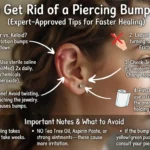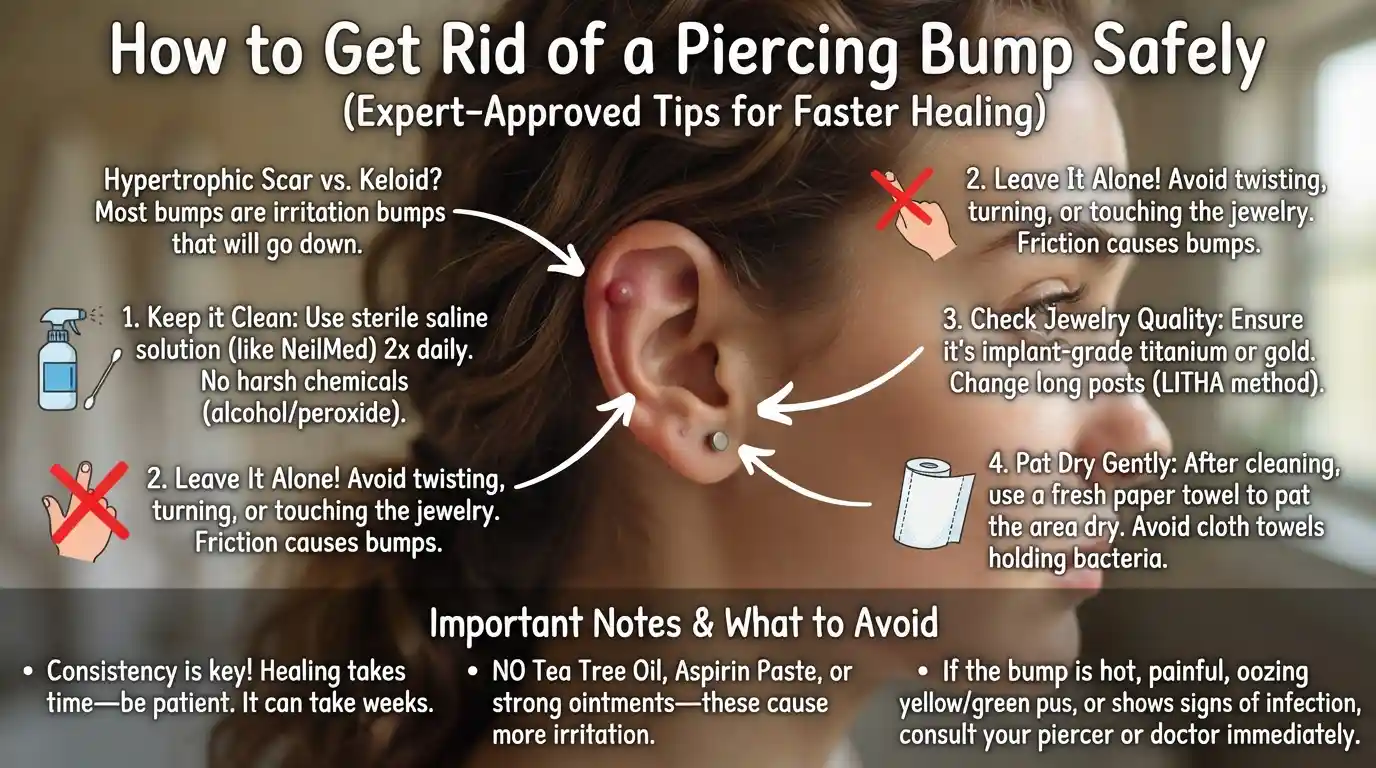
To get rid of a piercing bump, start by reducing irritation and caring for the area gently. Clean your hands, use sterile saline wound wash, avoid picking or twisting the jewelry, and reduce friction or pressure. If the bump is painful, hot, spreading, draining pus, or accompanied by fever, seek medical care because it may be infected.
Key Takeaways
- Most piercing bumps are linked to irritation, pressure, trauma, jewelry problems, or other healing issues.
- Use sterile saline and gentle aftercare rather than harsh chemicals.
- Do not pop, squeeze, pick, or repeatedly touch the bump.
- A keloid is different from a temporary irritation bump and usually needs professional treatment.
- Severe pain, warmth, spreading redness, pus, fever, or worsening symptoms require medical attention.
What Causes a Piercing Bump?
A piercing bump is a raised area that develops around or beside a piercing. It can appear on a nose, ear, eyebrow, lip, navel, or another body piercing.
The important thing to know is that not every piercing bump has the same cause.
Irritation is common, but a bump can also be related to an infection, granuloma, allergic reaction, jewelry problems, or a raised scar such as a keloid. The Association of Professional Piercers notes that irritation and allergy can actually be more common than infection in problematic piercings.
That is why simply putting a strong product on the bump is not a good solution.
Irritation and Trauma
Friction, pressure, sleeping on the piercing, snagging it on clothing, playing with the jewelry, or cleaning it too aggressively can keep the area irritated.
Repeated trauma can interfere with healing and contribute to additional scar tissue.
Infection
An infected piercing can become swollen, painful, hot, and increasingly red or dark. Thick yellow, green, or foul-smelling discharge can also occur. Fever, chills, or feeling generally unwell are more serious warning signs.
Granuloma
A small lump can sometimes develop because of trapped fluid or excess tissue during healing. These bumps are not automatically infections.
For example, the NHS notes that small lumps can develop around some ear or nose cartilage piercings and may represent granulomas.
Keloid or Raised Scar
A keloid is a type of raised scar that grows beyond the original injury. Unlike a simple irritation bump, a keloid generally does not disappear on its own and may continue growing without treatment.
Metal Allergy or Jewelry Problems
Some people react to jewelry materials, particularly nickel. An allergic reaction may cause itching, redness, swelling, or a rash around the piercing. Jewelry size, shape, material, and mechanical pressure can also contribute to ongoing irritation.
How to Get Rid of a Piercing Bump Safely
If the bump appears to be related to irritation rather than a serious infection or keloid, gentle care is usually the best starting point.
1. Clean Your Hands Before Touching It
Wash your hands thoroughly before cleaning or touching your piercing.
Dirty hands can introduce bacteria to a healing piercing. The Association of Professional Piercers recommends washing your hands before touching the area for any reason.
Try not to touch the bump throughout the day just to check if it has changed.
2. Use Sterile Saline
A sterile saline wound wash can help keep a healing piercing clean without the harshness of many household products.
Look for a product labeled as sterile saline wound wash. The Association of Professional Piercers recommends saline containing 0.9% sodium chloride as the only active ingredient, with purified water sometimes also listed.
Cleveland Clinic also recommends normal saline for piercing care and notes that store-bought sterile saline is preferable to homemade mixtures, which can be too salty and irritating.
Gently rinse the area according to the product directions. Avoid aggressive scrubbing.
3. Stop Picking, Popping, or Twisting It
This is one of the most important steps.
It can be tempting to squeeze a bump that looks like a pimple. However, popping or picking it can further injure the tissue and introduce bacteria.
You should also avoid repeatedly twisting or spinning jewelry. The Association of Professional Piercers specifically advises against rotating jewelry during cleaning because unnecessary movement can irritate the piercing.
4. Reduce Friction and Pressure
Think about what keeps touching the piercing.
For example, an ear piercing may be irritated by sleeping on that side. A nose piercing can be bumped while washing your face. A navel piercing can rub against tight clothing.
Try to remove the source of repeated pressure, friction, or snagging.
Avoid unnecessary contact with makeup, lotions, sprays, and other personal-care products around a healing piercing.
5. Check the Jewelry With a Professional
Jewelry that is too tight, poorly fitted, or made from a material that irritates your skin can keep a bump from settling down.
Rather than changing healing jewelry yourself, consider having an experienced professional piercer evaluate the size, style, placement, and material.
The Association of Professional Piercers notes that changing jewelry size, style, material, or aftercare can sometimes resolve piercing complications.
6. Give the Piercing Time to Heal
A piercing bump usually does not disappear overnight.
Healing can take time, especially when the piercing continues to experience friction or pressure. A nose piercing, for example, may take months to fully heal.
Instead of trying a new treatment every day, focus on consistent, gentle care and removing the source of irritation.
What Not to Put on a Piercing Bump
Avoid experimenting with harsh products simply because they are commonly recommended online.
The Association of Professional Piercers advises against alcohol, hydrogen peroxide, harsh soaps, iodine, and other irritating products for healing body piercings. Over-cleaning can also delay healing and increase irritation.
Do not assume that a stronger product will make the bump disappear faster.
Likewise, avoid squeezing the bump or deliberately breaking the skin around it.
If you are unsure what the bump is, getting it examined is safer than repeatedly trying home remedies.
Piercing Bump vs. Keloid: What’s the Difference?
These terms are often used interchangeably online, but they are not the same.
An irritation bump is often associated with local trauma, pressure, friction, or problems with aftercare. It may improve when the source of irritation is removed.
A keloid is a raised scar that extends beyond the original wound. Keloids can continue to grow and generally do not disappear without treatment.
| Feature | Irritation bump | Keloid |
| Common trigger | Friction, pressure, trauma | Abnormal scar formation |
| May improve with gentle care | Often | Usually not |
| Extends beyond piercing wound | Usually not | Often |
| Can continue growing | Sometimes | Yes |
| Professional evaluation | Helpful if persistent | Recommended |
If you notice a firm area that keeps getting larger or extends beyond the original piercing site, make an appointment with a dermatologist.
When a Piercing Bump May Be an Infection
A bump deserves more attention when it comes with signs of infection.
Watch for:
- Increasing pain
- Significant swelling
- Skin that feels hot
- Spreading redness or darkening
- Thick yellow, green, or foul-smelling discharge
- Red streaks moving away from the piercing
- Fever or chills
- Feeling weak or generally unwell
These symptoms should not be treated as a simple irritation bump. The NHS advises seeking medical help when a piercing appears infected, while the Association of Professional Piercers recommends prompt medical attention for severe symptoms, significant discharge, spreading redness, fever, chills, or worsening symptoms.
If you suspect an infection, do not automatically remove the jewelry yourself. Removing jewelry can sometimes allow the channel to close and trap an infection. Speak with a healthcare professional about what to do.
When Should You See a Doctor or Dermatologist?
Contact a healthcare professional if the bump keeps growing, becomes increasingly painful, looks infected, or does not improve with gentle care.
A dermatologist can help determine if you are dealing with irritation, an allergic reaction, a granuloma, a hypertrophic scar, or a keloid.
Keloids may require professional treatments such as corticosteroid injections, silicone-based treatments, cryotherapy, laser treatment, or other approaches depending on the individual case.
Seek urgent medical attention if you have serious symptoms such as fever, chills, rapidly worsening swelling or redness, severe pain, red streaks, or significant pus or foul-smelling discharge.
Frequently Asked Questions
How long does a piercing bump take to go away?
There is no fixed timeline because the cause matters. An irritation bump may improve after the source of friction or pressure is removed, while a keloid generally will not disappear on its own. Persistent or worsening bumps should be evaluated by a healthcare professional.
Should I pop a piercing bump?
No. Avoid popping, squeezing, or picking a piercing bump. These actions can injure the tissue and introduce bacteria. If the bump contains pus or becomes increasingly painful, hot, swollen, or red, have it evaluated rather than trying to drain it yourself.
Can I use salt water on a piercing bump?
Sterile saline is generally preferred for routine piercing aftercare. The Association of Professional Piercers recommends sterile saline wound wash and warns that homemade salt mixtures can easily become too strong and irritate the piercing.
Should I remove my jewelry if I have a piercing bump?
Do not automatically remove jewelry because a bump has appeared. If an infection is possible, removing jewelry without medical advice can sometimes allow the opening to close and trap infection. Ask a healthcare professional or qualified piercer to assess the situation before making a change.
Conclusion
Learning how to get rid of a piercing bump starts with figuring out what is causing it. For a typical irritation bump, gentle sterile-saline care, clean hands, less friction, and leaving the area alone may help it settle. Avoid harsh chemicals, over-cleaning, picking, squeezing, and unnecessary jewelry movement.
However, not every bump is an irritation bump. Infection, metal sensitivity, granulomas, and keloids require different approaches. If the area becomes increasingly painful, hot, swollen, or produces thick discharge or if you develop fever or chills seek medical care. When a bump keeps growing or does not improve, a dermatologist can help identify the cause and choose the right treatment.

I am Owen Walker, the author of dreamzoons.com and a passionate dream expert. I explore the hidden secrets and deep meanings of dreams to help you understand the true messages behind them.