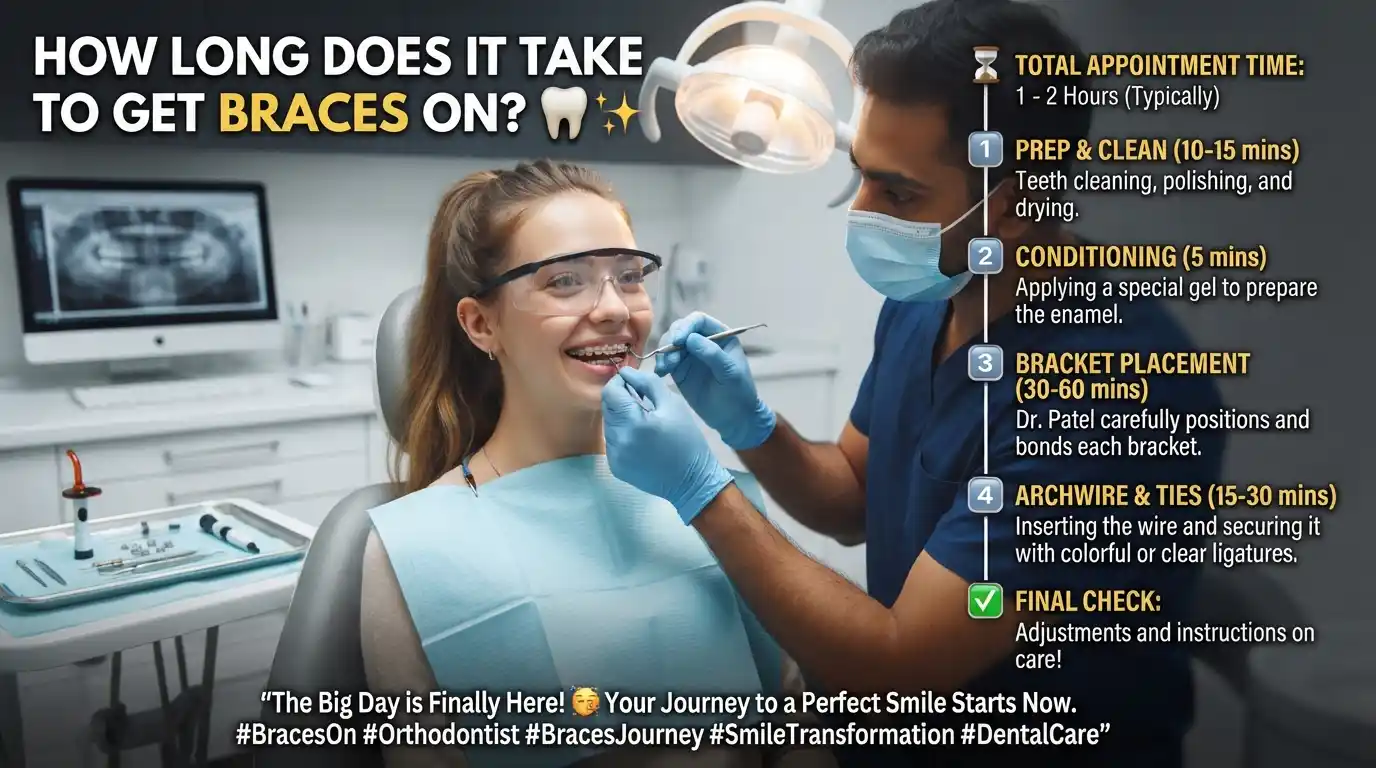
Getting traditional braces usually takes about 1 to 2 hours for the actual placement appointment. Your orthodontist cleans and prepares your teeth, attaches the brackets with adhesive, places the archwire, and secures it with clips or small elastic bands. The exact time can vary depending on your treatment plan and the type of braces you receive.
Key Takeaways
- Getting braces put on commonly takes about 1–2 hours.
- The appointment involves preparing your teeth, attaching brackets, placing wires, and reviewing aftercare.
- The placement itself usually involves pressure and some discomfort rather than sharp pain.
- You may be able to start treatment on the same day as your consultation, but this depends on the orthodontic office and your dental needs.
- Braces typically remain in place much longer than the appointment itself, often around 12–24 months, although treatment time varies from person to person.
How Long Does It Take to Get Braces On?
If you are wondering, “How long does it take to get braces on?”, plan for roughly one to two hours for a typical traditional-braces placement appointment.
That does not mean you will spend two hours in the orthodontist’s chair doing one thing. Several steps happen during the visit. Your teeth need to stay clean and dry while the orthodontist carefully positions each bracket. After that, the wire and other components are added.
The American Association of Orthodontists describes the braces-fitting visit as typically the longest orthodontic appointment in the treatment process.
Your appointment may take less or more time depending on factors such as the type of braces, if you are getting braces on one or both arches, and how complicated your treatment plan is.
So, if you have school, work, or another appointment afterward, giving yourself a little extra time is a smart idea.
What Happens During a Braces Appointment?
Getting braces may sound complicated, but the basic process is straightforward.
1. Your Teeth Are Prepared
First, your orthodontic team prepares your teeth for the brackets. The teeth need to be clean and dry so the brackets can bond properly.
The American Association of Orthodontists explains that the tooth surface is conditioned, adhesive is applied, and the bracket is positioned on the tooth.
You may have a device placed in your mouth to help keep your cheeks away from your teeth. This also helps the orthodontist maintain a dry working area.
2. Brackets Are Attached
Next, the orthodontist places the brackets on your teeth.
Each bracket has a specific position because the brackets help guide the teeth during treatment. The orthodontist removes excess adhesive and uses a curing light to harden the bonding material.
This part requires patience because your orthodontist needs to position the brackets carefully rather than simply sticking them onto your teeth.
3. The Wire Is Added
Once the brackets are secured, the orthodontist places the archwire through the bracket slots.
Small elastic bands, often called ligatures, may hold the wire in place. With some braces, the brackets have built-in clips instead.
At this point, you officially have your braces on.
4. Your Orthodontist Explains Care
Before you leave, the orthodontic team should explain how to care for your new braces.
You may receive instructions about brushing, flossing, foods to avoid, and what to do if a bracket or wire causes a problem. Hard, sticky, and chewy foods can damage braces, so following your orthodontist’s instructions is important.
Does Getting Braces Hurt?
For many people, getting the braces themselves is more uncomfortable than painful.
You may feel pressure while your orthodontist places and adjusts the brackets and wire. The process does not normally involve drilling into your teeth to attach traditional brackets.
The bigger change often comes after the appointment. Your teeth may feel sore or sensitive as they begin responding to the gentle forces from the braces.
This discomfort is usually temporary. Eating softer foods can make the first few days easier.
If you experience severe, unusual, or persistent pain, contact your orthodontist rather than assuming it is normal.
Can You Get Braces on the Same Day as Your Consultation?
Sometimes, yes.
However, it depends on the orthodontic office, your treatment plan, and if your teeth and gums are ready for treatment.
The American Association of Orthodontists notes that initial visits generally involve evaluating your orthodontic needs and developing a treatment plan. In some practices, treatment can begin after the examination when the patient is ready and the appointment schedule allows it.
You may need additional dental treatment first if you have issues such as cavities or other conditions that should be addressed before orthodontic treatment begins. The AAO specifically notes that certain dental conditions may need treatment before braces are placed.
If you want same-day braces, ask the orthodontic office when scheduling your consultation.
What Can Make a Braces Appointment Take Longer?
Not every braces appointment takes exactly the same amount of time.
Several factors can affect the length of your visit:
| Factor | Why It May Affect Appointment Time |
| Type of braces | Different systems have different placement procedures |
| Number of teeth treated | More brackets can require more positioning time |
| One or both arches | Treating both upper and lower teeth may take longer |
| Treatment complexity | More involved cases may require additional steps |
| Dental health | Cavities or gum problems may need attention before treatment |
| Orthodontic office | Appointment procedures and scheduling vary |
For traditional braces, a 1–2 hour appointment is a useful general planning range, but your orthodontist can give you the most accurate estimate for your specific visit.
Can You Eat After Getting Braces?
Yes, but your first meals may feel different.
Right after getting braces, your teeth may feel tender. Soft foods can be easier to chew while your mouth adjusts.
Good options may include foods such as:
- Yogurt
- Scrambled eggs
- Pasta
- Mashed potatoes
- Smooth soups
- Soft rice
- Bananas
- Applesauce
Your orthodontist may also tell you to avoid hard, sticky, or chewy foods because they can damage brackets or wires.
As you become comfortable with your braces, you can learn which foods work best for you while following your orthodontist’s specific instructions.
How Long Does It Take to Get Used to Braces?
The adjustment period varies from person to person.
At first, your teeth, cheeks, and lips may notice the braces more than you expect. You may also feel some pressure or tenderness as your teeth begin moving.
Your mouth gradually becomes familiar with the brackets and wires. Good brushing and flossing habits are especially important because braces can make cleaning around your teeth more challenging.
If a wire or bracket repeatedly irritates your cheek or causes a problem, contact your orthodontist for advice.
How Long Will You Have to Wear Braces?
This is a different question from how long it takes to get braces on.
The placement appointment may take around one to two hours, while the entire orthodontic treatment can take many months or longer.
The AAO says many people wear braces for approximately 12–24 months, while the American Dental Association’s MouthHealthy notes that treatment commonly lasts one to three years. The exact timeline depends on the individual case, including the type and severity of the bite or alignment problem.
Your orthodontist should provide a personalized estimate based on your teeth and treatment goals.
Regular appointments are also part of the process. Orthodontic visits may occur every several weeks so your orthodontist can monitor tooth movement and make adjustments when needed.
How to Prepare for Your Braces Appointment
A little preparation can make the appointment easier.
Brush and floss carefully beforehand. Clean teeth give your orthodontist a good starting point for the bonding process.
Eat beforehand if your orthodontist recommends it. The appointment can last one to two hours, and your mouth may feel tender afterward.
Wear comfortable clothing. You may be sitting in the dental chair for an extended period.
Ask questions. If you are unsure about food, brushing, flossing, sports, or discomfort, ask before you leave.
Plan for some adjustment time. Your mouth may feel different after the brackets and wire are placed, so knowing this ahead of time can make the experience less surprising.
Frequently Asked Questions
How long does it take to put braces on?
Putting traditional braces on usually takes around 1–2 hours. The orthodontist prepares your teeth, bonds the brackets, places the archwire, and secures the wire. The exact appointment length varies by treatment plan and orthodontic office.
Can I go to school or work after getting braces?
Usually, you can return to your normal activities after the appointment. However, your mouth may feel sore or unusual at first. If possible, scheduling your appointment when you have some flexibility afterward can make the first day more comfortable.
Can I eat normally after getting braces?
You can eat after getting braces, but softer foods may be easier during the initial adjustment period. Your orthodontist may also recommend avoiding hard, sticky, or chewy foods that could damage brackets or wires.
Do braces hurt more after the appointment?
Some people notice more tenderness after the appointment as their teeth begin responding to the orthodontic forces. This is different from the placement itself. If pain is severe or does not improve, contact your orthodontist for guidance.
How often will I visit the orthodontist after getting braces?
Follow-up visits are scheduled throughout treatment so your orthodontist can monitor tooth movement and make adjustments. The interval varies, but orthodontic appointments may occur roughly every 4–12 weeks, depending on your treatment stage and individual needs.
Conclusion
So, how long does it take to get braces on? For traditional braces, you should generally expect the placement appointment to take about one to two hours. During that time, your orthodontist prepares your teeth, attaches the brackets, places the wire, and explains how to care for your new braces.
The appointment is only the beginning of the process. Your actual orthodontic treatment may continue for many months or longer, depending on your individual needs.
If you are preparing for your first braces appointment, ask your orthodontist how long your specific visit is expected to take. That gives you the most accurate schedule and helps you know exactly what to expect.

I am Jaxon Blake, the author of DreamZoons.com, where I explore the hidden meanings behind dreams. I am a dream expert, and I help people understand what their dreams may be trying to tell them.