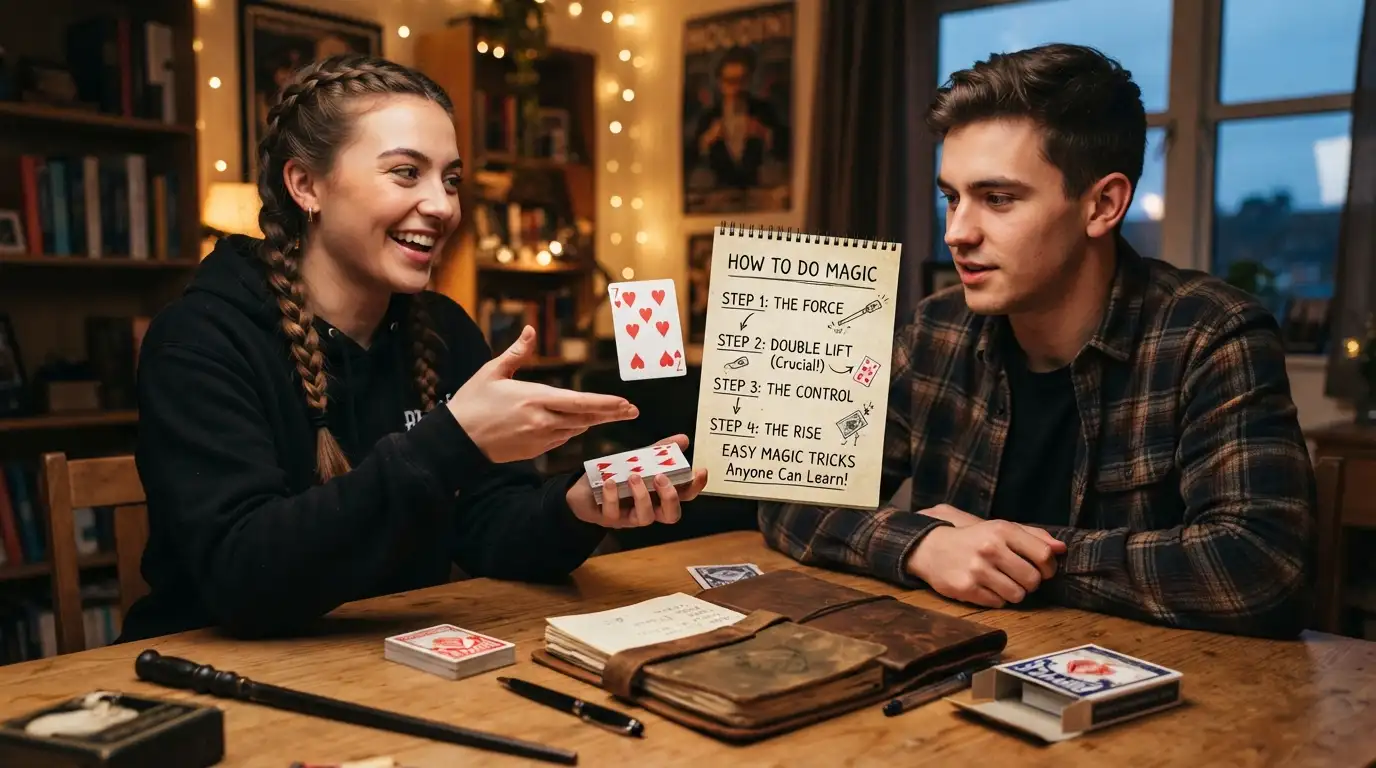
To learn how to do magic, start with one simple trick using ordinary items such as a coin, playing cards, or a rubber band. Learn the method, practice the movements slowly, and then improve your timing, presentation, and misdirection. With regular practice, beginners can perform convincing magic without expensive equipment.
Key Takeaways
- You do not need special powers or expensive equipment to learn performance magic.
- Start with one easy trick instead of trying to learn dozens at once.
- Cards, coins, rubber bands, and everyday objects are excellent beginner props.
- Practice the secret method separately from your presentation.
- Good magic depends on timing, natural movements, attention, and storytelling—not just the secret trick.
What Does “Magic” Mean Here?
When people search how to do magic, they usually mean learning magic tricks that create the appearance of something impossible.
A magician might make a coin disappear, find a selected card, make a rubber band jump, or apparently read someone’s mind. These effects use techniques such as sleight of hand, clever setups, psychology, misdirection, and presentation.
This is different from claiming supernatural powers. Performance magic is an entertainment skill that you can study and practice.
The good news is that you do not need to be naturally talented to begin. Modern beginner resources commonly recommend starting with simple tricks and gradually building technical skills.
How to Do Magic: Start With the Basics
If you are completely new, resist the temptation to learn ten tricks tonight. A better approach is to master one simple effect.
1. Choose One Simple Trick
Pick a trick that uses something you already have.
A normal coin, a deck of cards, a rubber band, or a pencil can be enough. Beginners can even start with self-working tricks, where the method does much of the work for you. Current beginner guides frequently recommend these effects because they let you focus on performing instead of struggling with difficult finger movements.
2. Learn the Secret Method
Before worrying about impressing anyone, understand exactly how the trick works.
Break it into small actions. Ask yourself:
- Where is the hidden object?
- What should each hand do?
- Where should the audience look?
- When does the secret action happen?
- What happens immediately before the reveal?
Understanding the method makes practice much easier.
3. Practice Slowly
Do not rush because the final performance looks fast.
Practice each movement slowly enough to notice mistakes. Once the movement becomes comfortable, gradually increase your speed.
Recording yourself with your phone can also help. You may notice awkward movements or exposed angles that you cannot see while concentrating on your hands. Beginner magic resources increasingly recommend video review and deliberate practice for exactly this reason.
4. Add Presentation
A secret alone does not create great magic.
Your words, facial expressions, pauses, and eye contact help turn a mechanical trick into a memorable moment.
Instead of silently moving your hands, give the audience a reason to watch.
For example, before making a coin disappear, you could say:
“Keep your eyes on the coin. It only disappears when you stop watching it.”
The sentence creates curiosity. The pause creates anticipation.
5. Perform for Someone
Once you can perform the trick smoothly by yourself, show it to a friendly person.
Do not worry if your first performance feels awkward. That is normal.
Your goal is to discover what happens when another person watches you. You will learn where they look, when they become suspicious, and which moments create the strongest reaction.
5 Easy Magic Tricks for Beginners
You can begin building your skills with several classic beginner-friendly effects.
The Disappearing Coin
The French Drop is a classic coin vanish. The basic idea is simple: you appear to take a coin with one hand while secretly keeping it in the other.
The audience follows the hand that appears to receive the coin. You then open that hand and show that the coin has disappeared.
This teaches an important lesson: the audience’s attention is part of the trick.
The French Drop is widely taught as a beginner coin technique and can lead to more advanced coin routines later.
The Self-Working Card Trick
Self-working card tricks are excellent if you are new to sleight of hand.
These tricks use a mathematical principle, arrangement, or predetermined procedure. You follow the instructions correctly, and the effect works without difficult finger movements.
That makes them useful for learning the most important part of magic: performing for another person.
Once you become comfortable, you can move toward techniques such as card controls, breaks, and double lifts.
The Jumping Rubber Band
A rubber band can create surprisingly visual magic.
One popular effect makes a rubber band appear to jump from two fingers to two different fingers. The method relies on secretly positioning the band before the visible movement.
This type of trick is useful because the prop is ordinary and easy to carry.
The Vanishing Pencil
A pencil can also create a simple illusion.
The basic concept involves controlling what the audience sees while the pencil is hidden or moved at the right moment. Simple household-object tricks are common beginner exercises because they teach you to create an illusion without needing expensive props.
The Paperclip Trick
Paperclips are another useful beginner prop.
Some paperclip effects rely more on setup and timing than advanced sleight of hand. That makes them a good choice when you want to experience the fun of performing magic before learning complicated techniques.
The key is not how expensive the prop is. It is how impossible the result appears to your audience.
How to Practice Magic at Home
You can practice magic almost anywhere with very little equipment.
Start with a small practice area and remove distractions. Use a mirror when you need to check angles, but also record yourself from the audience’s viewpoint.
Try this simple routine:
5 minutes: Learn or review the method.
10 minutes: Practice the secret movement slowly.
5 minutes: Practice the complete trick with your words.
5 minutes: Record yourself performing it.
Then watch the recording.
Look for anything that appears unnatural. Does one hand move faster than the other? Do you stare at the secret action? Does the reveal happen too quickly?
Fix one problem at a time.
Regular, focused practice is more useful than repeatedly performing the entire trick without noticing what needs improvement.
What Makes a Magic Trick Look Real?
A beginner often thinks the secret is the most important part.
It is not.
The secret must work, but the performance determines whether the audience believes what they see.
Misdirection
Misdirection does not always mean making someone look away.
It can be as simple as directing attention toward the hand that supposedly contains the object.
Your eyes, words, body position, and timing can all influence where people look.
Timing
Do not rush the reveal.
A short pause can make a simple trick feel much stronger. Let the audience understand what they expect to happen before you show them something different.
Natural Movement
Your secret action should look like a normal action.
If you suddenly move one hand strangely, people may notice. Practice the ordinary version of the movement first. Then make the secret action blend into it.
Confidence
You do not need to act like a movie magician.
Speak clearly. Move calmly. Avoid apologizing when something feels slightly imperfect.
Confidence grows naturally as your technique improves.
How Long Does It Take to Learn Magic?
There is no single timeline.
A very simple self-working trick may be learned in one session. A basic coin vanish or card sleight may require days or weeks of practice before it looks natural.
More advanced sleight of hand can take months or years to refine.
The important distinction is between learning a trick and performing it well.
You might understand a trick in ten minutes but still need considerable practice before you can perform it naturally while talking to someone.
That is normal. Current beginner guidance emphasizes that technical skill and performance confidence develop at different speeds.
Common Beginner Mistakes
Avoid these common problems when learning how to do magic:
Learning too many tricks at once: Master one before adding another.
Practicing only the secret: Practice the complete performance, including your words.
Moving too quickly: Speed often exposes mistakes.
Staring at your hands: Your eyes can accidentally tell the audience where the secret is.
Repeating the same trick immediately: If someone knows what to expect, the effect may become much easier to analyze.
Buying too much equipment: You can build a strong foundation with ordinary cards, coins, or household objects.
Performing before you are ready: Practice privately until the movements feel reliable.
How to Become a Better Magician
Once you can perform a few beginner tricks, choose a direction.
If you enjoy playing cards, explore card magic. If you like portable tricks, try coin magic. If you enjoy performing close to people, explore close-up magic.
You can also study mentalism, stage illusions, or magic with everyday objects.
The best next step is not simply learning more secrets. Build a short routine.
For example:
- Start with a quick card effect.
- Follow it with a coin vanish.
- Finish with your strongest trick.
Three polished effects can make a better performance than twenty unfinished tricks. Beginner-focused magic resources repeatedly emphasize learning a small number of effects well and developing presentation alongside technique.
Frequently Asked Questions
Can anyone learn how to do magic?
Yes. Performance magic is a learned skill. You do not need to be born with special abilities. Beginners can start with simple tricks and gradually develop sleight of hand, timing, misdirection, and presentation skills through practice.
What is the easiest magic trick to learn?
A self-working card trick is one of the easiest places to begin because it can require little or no difficult sleight of hand. A simple coin vanish is another popular starting point if you want to practice a physical magic technique.
Can I learn magic without buying a magic kit?
Absolutely. A regular deck of cards, a coin, rubber bands, paperclips, and other household objects can provide plenty of beginner practice. You do not need expensive props to learn the fundamentals of magic.
How long does it take to learn magic?
Simple tricks can sometimes be learned in a single practice session, while polished sleight-of-hand techniques may take weeks or longer. Your performance skills continue developing as you gain experience performing for real people.
Is magic real?
Magic tricks create the appearance of impossible events through methods such as illusion, sleight of hand, psychology, misdirection, and specially designed props. That is different from claiming that supernatural powers have been scientifically demonstrated.
Final Thoughts
Learning how to do magic is easier when you stop trying to become an expert overnight. Start with one simple trick, understand its method, and practice until your movements look natural.
A coin, deck of cards, or rubber band can be enough to begin. From there, focus on timing, eye contact, misdirection, and storytelling. Those skills turn a basic trick into a memorable performance.
Most importantly, enjoy the process. Your first trick may not fool everyone, and that is perfectly fine. Every magician starts by learning one effect, practicing it repeatedly, and eventually sharing it with an audience.

I am Jaxon Blake, the author of DreamZoons.com, where I explore the hidden meanings behind dreams. I am a dream expert, and I help people understand what their dreams may be trying to tell them.