You may be able to stop or slow further gum recession by treating its cause, brushing gently with a soft-bristle toothbrush, cleaning between your teeth daily, avoiding tobacco, and getting regular dental care. Existing recession usually does not grow back on its own, so a dentist or periodontist should evaluate persistent or worsening recession.
Key Takeaways
- Brush gently with a soft-bristle toothbrush instead of scrubbing your gums.
- Clean between your teeth every day to control plaque.
- Gum disease can contribute to gum recession and needs professional treatment.
- Existing gum tissue generally does not regenerate on its own.
- A dentist or periodontist can determine if you need monitoring, treatment, or gum grafting.
What Is Gum Recession?
Gum recession, also called gingival recession, happens when the gum tissue around a tooth moves away from its normal position. This can expose more of the tooth and, in some cases, the tooth root.
You may notice that a tooth looks longer than before. Some people also develop sensitivity when they drink something cold, eat something sweet, or breathe in cold air. Exposed roots can also be more vulnerable to decay because they do not have the same enamel covering as the crown of the tooth.
The important point is that stopping the gum recession depends on why it is happening. Aggressive brushing requires a different approach from gum disease, tooth-position problems, or another source of irritation.
What Causes Gum Recession?
Gum recession does not always have one single cause. Several factors can contribute.
Brushing Too Hard
Hard scrubbing can repeatedly irritate the gumline. Using a hard-bristle toothbrush may add to this mechanical damage. Dental guidance recommends a soft-bristle toothbrush and gentle brushing rather than forceful back-and-forth scrubbing.
Gum Disease
Plaque that remains around the teeth can irritate the gums. If gum disease progresses, it can damage the tissues and bone supporting the teeth. This can contribute to recession and other dental problems.
Other Possible Causes
Other factors may include naturally thin gum tissue, tooth position, trauma, tobacco use, oral piercings, or mechanical irritation. Because causes vary, a dental examination can help determine what is happening in your particular case.
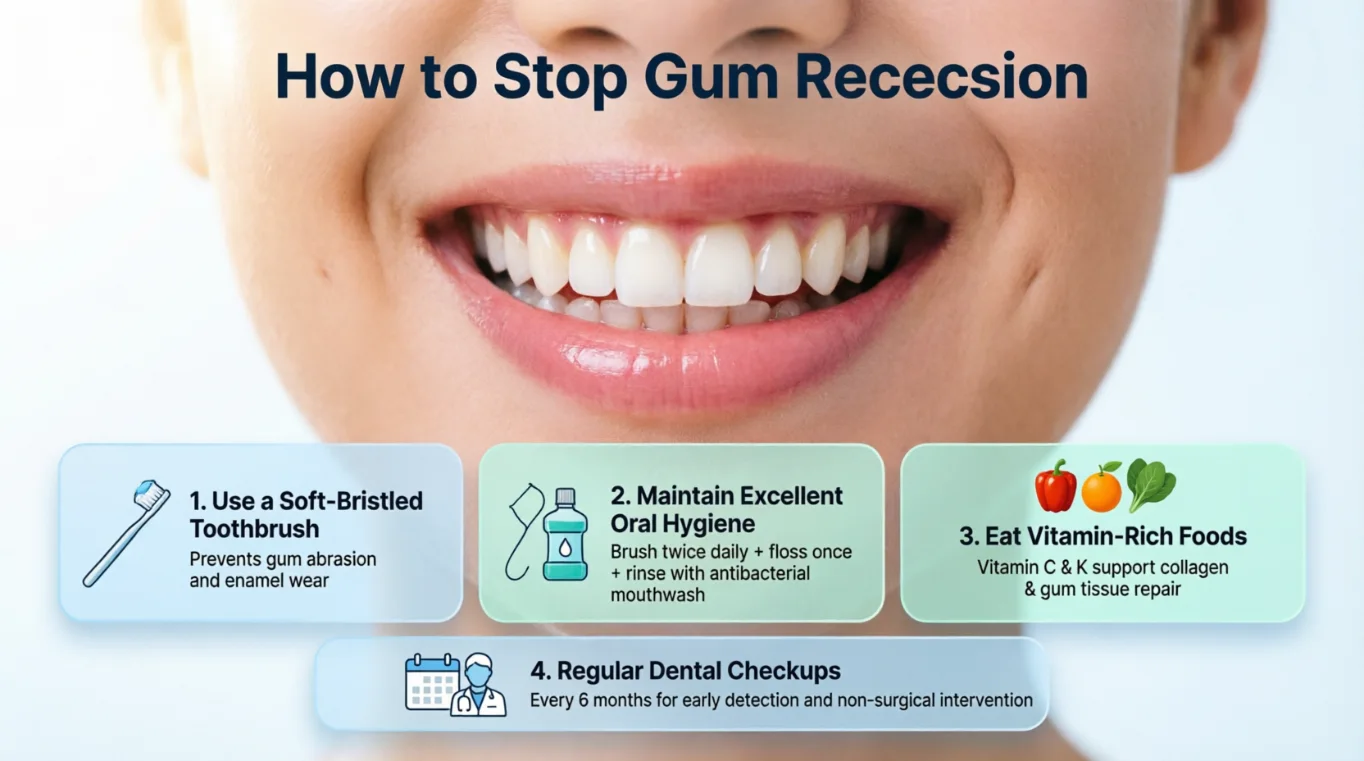
How to Stop Gum Recession
If you already notice your gums pulling away from your teeth, focus on preventing additional damage while finding the underlying cause.
1. Brush Gently With a Soft-Bristle Toothbrush
One of the simplest changes is to reduce brushing pressure.
Choose a soft-bristle toothbrush and use gentle, controlled movements. You do not need to scrub aggressively to remove plaque. Guidance from HRSA recommends gentle brushing with small circular motions rather than hard back-and-forth scrubbing.
Brush twice a day with fluoride toothpaste, paying attention to the gumline without pressing heavily.
If you regularly notice worn bristles, gum soreness, or increased sensitivity after brushing, ask your dentist to check your technique.
2. Clean Between Your Teeth Every Day
Brushing alone cannot clean every surface between your teeth. Daily cleaning between the teeth helps remove plaque that can contribute to gum inflammation.
Depending on your mouth and your dentist’s recommendation, you may use dental floss, a floss holder, an interdental brush, or a water flosser. NIDCR recommends cleaning between teeth regularly, generally once a day.
The goal is not to force floss into your gums. Use a gentle technique and ask a dental professional to demonstrate it if you are unsure.
3. Treat Gum Disease Early
If gum disease is contributing to recession, changing your toothbrush alone will not address the underlying problem.
A dentist can examine your gums and determine if inflammation or periodontal disease is present. Treatment may include professional cleaning and, when appropriate, periodontal treatment. More advanced periodontal disease may require specialized care.
Signs that deserve attention include bleeding gums, swollen or tender gums, persistent bad breath, loose teeth, and visible gum recession. The American Academy of Periodontology recommends periodontal evaluation when these types of symptoms occur.
4. Keep Regular Dental Appointments
Regular dental visits can help identify gum recession before it becomes more advanced.
Professional cleaning also removes tartar, which cannot simply be brushed away at home. NIDCR recommends routine dental checkups and professional cleaning as part of maintaining oral health.
Your dentist can also monitor if the gumline is changing over time.
5. Stop Smoking or Using Tobacco
Tobacco use can increase the risk of gum disease and interfere with healthy gum tissue.
If you use tobacco, talk with a healthcare professional about quitting. NIDCR specifically recommends not smoking as part of protecting oral health.
Stopping tobacco use does not instantly restore lost gum tissue, but it can remove an important risk factor for ongoing oral health problems.
6. Address Teeth Grinding and Other Irritation
Repeated pressure or irritation can sometimes contribute to gum and tooth problems. If you grind or clench your teeth, tell your dentist.
Likewise, mention oral piercings, dental appliances, orthodontic treatment, or anything else that repeatedly irritates a particular area.
The correct solution depends on the cause, so avoid trying to diagnose the reason for recession yourself.
7. Protect Sensitive Exposed Roots
Receding gums can expose root surfaces and make teeth more sensitive. This can make brushing uncomfortable, which may tempt you to avoid cleaning the area.
Instead, tell your dentist about the sensitivity. Professional recommendations may include measures that reduce sensitivity while you continue maintaining good oral hygiene.
If sensitivity is sudden, severe, or associated with pain or swelling, arrange a dental evaluation rather than assuming recession is the only possible cause.
Can Receding Gums Grow Back?
Usually, gum tissue that has already receded does not grow back on its own. However, stopping the cause can help prevent additional recession.
This distinction matters. Improving brushing habits, controlling plaque, and treating gum disease can protect the remaining gum tissue, but these steps should not be described as a way to naturally regrow missing gum tissue.
When root coverage is needed, a periodontist may recommend a procedure such as gum graft surgery. The American Academy of Periodontology explains that gum graft surgery can cover exposed roots and help prevent additional recession and bone loss.
When Should You See a Dentist?
Make a dental appointment if you notice:
- Gums that appear to be pulling away from your teeth
- Teeth that look longer than they used to
- Increasing sensitivity
- Bleeding or swollen gums
- Persistent bad breath
- Pain around the gumline
- Loose or shifting teeth
- A visible exposed tooth root
Do not wait for severe pain before seeking care. Gum problems can sometimes progress without causing obvious discomfort.
Professional Treatments for Gum Recession
Treatment depends on the cause and severity.
For some people, the dentist may recommend improved oral hygiene, monitoring, treatment of gum disease, or changes to brushing technique.
When recession is more significant, a periodontist may discuss gum graft surgery. During this procedure, tissue is placed over an exposed root to provide additional coverage. The American Academy of Periodontology notes that gum grafting may also reduce sensitivity and improve the appearance of the gumline.
If periodontal disease has caused supporting bone damage, other periodontal procedures may also be considered. The appropriate treatment depends on the individual condition of the teeth, gums, and supporting tissues.
FAQs
Can gum recession be stopped?
Often, further recession can be slowed or stopped by addressing its cause. Gentle brushing, daily cleaning between teeth, treatment of gum disease, tobacco cessation, and professional dental care can all help protect your gums. The specific plan depends on why the recession is occurring.
Can receding gums grow back naturally?
Generally, gum tissue that has already receded does not grow back naturally. However, you can often protect the remaining tissue and prevent further recession. In selected cases, professional procedures such as gum grafting can cover exposed roots.
Can brushing too hard cause gum recession?
Yes. Repeated aggressive brushing can traumatize the gumline. Using a soft-bristle toothbrush and gentle pressure can reduce this risk. If you already have a recession, ask your dentist to review your brushing technique.
Is gum grafting always necessary?
No. Not every person with gum recession needs surgery. Treatment depends on the amount of recession, its cause, symptoms, tooth condition, and risk of further problems. A dentist or periodontist can determine if monitoring, nonsurgical care, or a procedure is appropriate.
Can gum recession cause tooth sensitivity?
Yes. When recession exposes a tooth root, the area can become sensitive to cold, heat, sweet foods, or touch. A dentist can help determine if the sensitivity is related to recession or another dental problem.
Conclusion
Learning how to stop gum recession starts with protecting the gum tissue you still have and finding out why it is receding. Use a soft-bristle toothbrush, brush gently, clean between your teeth daily, avoid tobacco, and keep regular dental appointments. If gum disease is involved, professional treatment is important.
Remember that prevention and treatment are different from regrowing lost gum tissue. Receded gums generally do not grow back naturally, but dental care can help control the underlying problem. When necessary, a periodontist can discuss procedures such as gum grafting to cover exposed roots.

I am Owen Walker, the author of dreamzoons.com and a passionate dream expert. I explore the hidden secrets and deep meanings of dreams to help you understand the true messages behind them.