You’re driving home, and a police car pulls in behind you. Or a background check for a new job is taking longer than it should. Or a friend mentioned, almost in passing, that your name came up in a court search. Suddenly you’re wondering: do I have a warrant, and how would I even find out?
The good news is that most warrants people discover aren’t the dramatic kind. They’re bench warrants issued because a court date was missed, a fine went unpaid, or a notice got mailed to an old address. They’re common, and they’re fixable.
The bad news is that checking carelessly can turn a manageable problem into an immediate arrest. This guide walks through six ways to check for a warrant, ranked from safest to riskiest, what each one actually tells you, and exactly what to do the moment you find one.
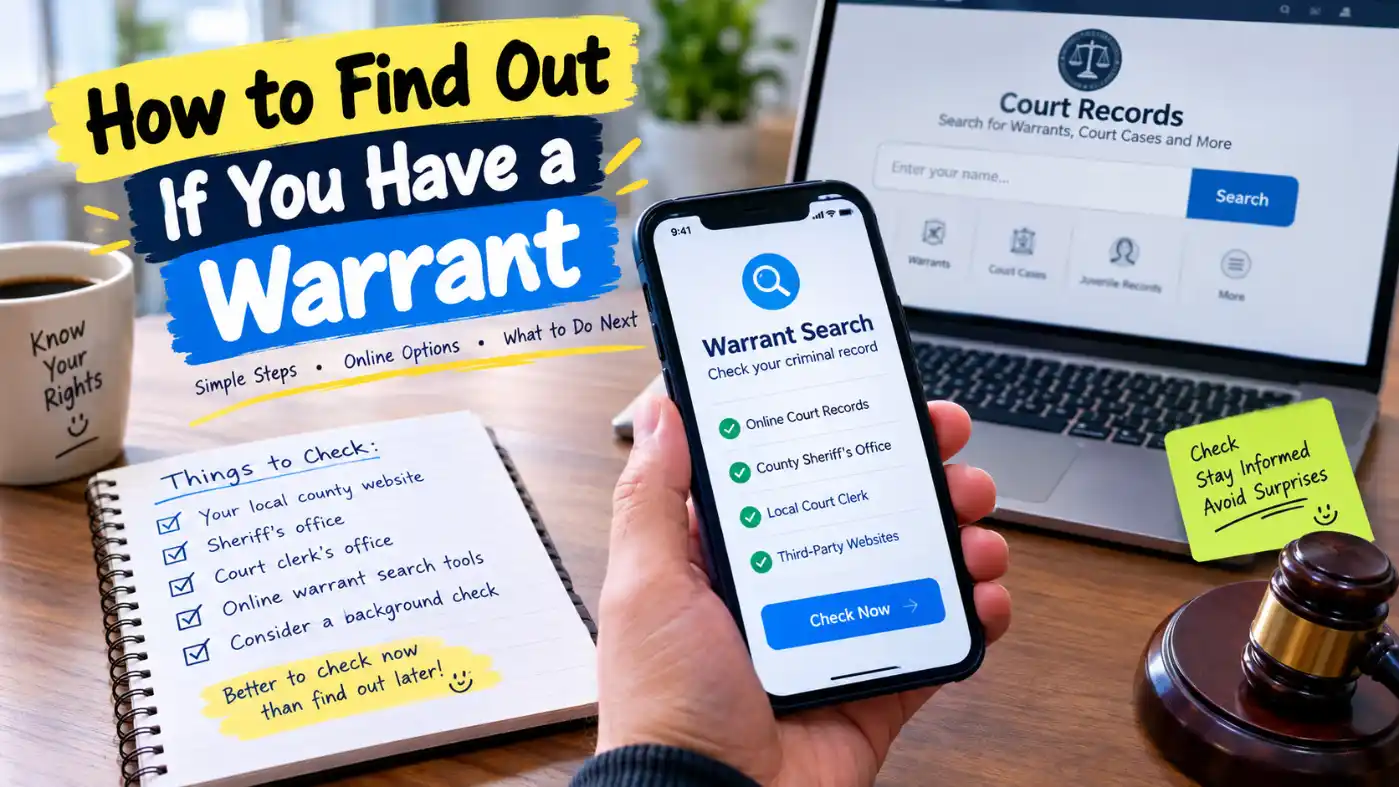
Quick answer: Search your county’s online court records by name and date of birth, check your county sheriff’s active warrant list, or call the clerk of court directly. For certainty without any arrest risk, have a criminal defense attorney check for you most do this free during a consultation.
Understand What You’re Looking For
Before you search anywhere, it helps to know what you’re actually looking for “warrant” covers several different things, and the type determines both how urgent it is and where you’ll find it.
What a warrant is
A warrant is a court order, signed by a judge or magistrate, based on a finding of probable cause. Someone has to show a court a legitimate reason a criminal charge, or a missed obligation to the court itself.
The main types
- Arrest warrant new criminal charges filed; often needs immediate attorney involvement
- Bench warrant missed court date or unpaid fine; the most common, and usually resolvable without drama
- Capias / capias pro fine unpaid court costs; typically a payment issue
- Probation/parole violation warrant alleged violation of release terms; bond is often denied
- Civil warrant contempt or unpaid child support; resolves once the underlying issue is addressed
- Search warrant authorizes searching property, not an arrest risk to you
- Out-of-state warrant charges filed elsewhere; depends on extradition policy
Why bench warrants dominate this search
If you’re reading this because a notice never arrived or a court date slipped your mind, you’re likely dealing with a bench warrant, not a manhunt. These get issued automatically and can sit quietly for years.
One caveat
Sealed warrants and pending indictments aren’t public. If you suspect charges are being prepared, an empty search isn’t full reassurance talk to an attorney instead.
How to Check (Safest to Riskiest)
County or state online court records
Most counties run a searchable case lookup search “[county name] clerk of court case search” to find yours. Search by full name and date of birth to avoid false matches. Watch for docket codes like FTA, BW ISSUED, ACTIVE, RECALLED, or QUASHED. Coverage varies: some municipal courts aren’t included, and updates can lag.
County sheriff’s warrant list
Many sheriff’s offices publish an active warrants page, though it’s often limited to felonies or a “most wanted” subset rather than every open warrant.
State judiciary databases
Some states offer a unified statewide search; others require checking county by county. Confirm which applies to yours before assuming a clean search means you’re clear.
Calling the court clerk
Clerks can confirm docket status by case number, though they can’t give legal advice. This works especially well for municipal or traffic courts with no online system ask about the case generally rather than volunteering that you’re the subject.
Having an attorney check
The safest, most complete option. Attorneys can access systems the public can’t, and most do this free during a consultation ideal if you suspect a felony warrant.
Having someone else check for you
A friend, family member, or bail bondsman can search on your behalf with zero exposure to you.
Paid background-check sites
Useful only as a weak signal data is often stale, incomplete, and carries no legal weight.
Methods That Carry Real Risk
Some ways of “checking” can turn a manageable situation into an immediate arrest. Worth knowing before you try any of them.
Walking into a police station to ask
If a warrant exists, officers can detain you on the spot. Asking in person offers no legal protection you’re voluntarily placing yourself in front of the people authorized to arrest you.
Asking at a courthouse security desk
Same exposure as a police station. Courthouses often have officers stationed specifically to serve outstanding warrants.
Calling the police non-emergency line with your name and DOB
Some departments will run your information immediately and dispatch officers if something comes up. A phone call doesn’t protect you the way a lawyer’s inquiry does.
Assuming a clean traffic stop means you’re clear
Not all warrants are entered into shared databases promptly, especially minor bench warrants from smaller courts. A stop that turns up nothing today doesn’t guarantee the same result next week.
Ignoring it and hoping it lapses
Warrants generally don’t expire. Some can sit unserved for years, then surface unexpectedly during a background check, a license renewal, or a stop for something unrelated. Waiting doesn’t make the underlying issue go away; it usually just adds fees or additional charges like failure to appear.
The theme across all of these: any method that puts you physically in front of law enforcement before you know what you’re dealing with is a method to avoid.
Checking Across Jurisdictions
Multiple counties
Check every county where you’ve lived, been ticketed, or had any court involvement not just your current one. Warrants stay tied to the county that issued them and won’t show up in a search elsewhere.
Out-of-state warrants
A warrant from another state doesn’t disappear just because you moved. Whether it leads to arrest depends on extradition policy many states won’t extradite for minor misdemeanors, but you can still be detained locally when the warrant surfaces, even if you’re never transferred.
Federal warrants
These aren’t publicly searchable. PACER shows federal court cases, not warrant status. If you have reason to think a federal charge is involved, an attorney is the only reliable way to find out.
NCIC and why you can’t search it
The National Crime Information Center is law-enforcement-only; there’s no public portal. What you can request is an FBI Identity History Summary, a fingerprint-based record check useful for confirming your own record, though it’s not a live warrant lookup and can take weeks to process.
Immigration-related warrants
Immigration matters, including ICE detainers, work differently from criminal warrants and carry consequences well beyond a single jurisdiction. This is an area where guessing is especially risky an immigration attorney should be the first call, not a database search.
You Found a Warrant. Now what?
The first 24 hours
Don’t panic, and don’t make it worse. Avoid posting about it publicly, avoid unnecessary driving, and avoid contacting the court yourself before talking to an attorney about what you say can be used against you.
Call a criminal defense attorney
Have the basics ready: case number, court name, charge, date issued, and bond amount if listed. Most attorneys will do a free initial consultation and can often act faster than you’d expect.
Your resolution options
- Motion to recall or quash your attorney asks the judge to lift the warrant, often without you ever being arrested
- Walk-through arraignment / self-surrender a scheduled, low-drama appearance arranged in advance
- Posting bond arranged ahead of time through a bondsman rather than after arrest
- Payment plan common for fine-only capias warrants
- Turning yourself in sometimes the only option; your attorney can tell you what to bring and what to leave at home
What happens at the hearing
Typically bond is set (or reaffirmed), release conditions are established, and a new court date is scheduled. For minor bench warrants, this can be resolved in a single brief appearance.
Costs to expect
Filing fees, a bond premium (usually a non-refundable percentage if you use a bondsman), attorney fees, and sometimes a reinstatement fee for the original case.
Downstream Consequences
An unresolved warrant doesn’t just sit quietly it can surface in places you wouldn’t expect and affect more than your freedom.
Driver’s license and registration
Many states suspend a license or place a hold on vehicle registration renewal once a warrant, especially a traffic-related bench warrant, has been outstanding for a while.
Employment and licensing
Background checks for jobs, especially anything requiring a security clearance, professional license, or fingerprinting, can flag an active warrant even when a routine online search doesn’t.
Housing applications
Landlords running tenant screening reports sometimes see warrant information that a free public search misses, since screening companies often pull from aggregated law enforcement data.
Firearm purchases
An active warrant can trigger a denial during the federal background check required for a firearm purchase.
Travel
Domestic flights are rarely affected directly, but passport issuance or renewal can be delayed or denied if the warrant is tied to certain federal offenses. International entry can also be affected if the destination country checks records.
Child custody proceedings
An outstanding warrant can be raised in family court and may influence custody or visitation decisions, regardless of how minor the underlying issue is.
Immigration consequences
For non-citizens, even a minor warrant can have implications for status or future applications, another area where an attorney should be consulted directly rather than guessed at.
Prevention
Most warrants people deal with are avoidable with a few small habits especially since bench warrants are usually triggered by something falling through the cracks rather than any wrongdoing.
Keep your address current everywhere that matters
Update your address with the court, the DMV, and your probation officer in writing whenever you move. Courts mail notices to the address on file, and a missed notice is one of the most common reasons people miss a court date without realizing it.
Confirm every court date in writing
Don’t rely on memory or a verbal reminder. Take a photo of the docket sheet or written notice, and keep it somewhere you’ll actually see it again.
Set reminders with a buffer
Calendar the date itself, plus a reminder 72 hours ahead, so you have time to reschedule or contact the court if something comes up.
Confirm fines actually posted
Payment portals occasionally fail silently. Keep receipts or confirmation numbers for any court fine or fee, and check back a few days later to confirm it was applied to your case.
Call the clerk the same day if you miss something
If you realize you’ve missed a court date or a payment deadline, call the clerk immediately rather than waiting. Many courts will reset a hearing or grant a short grace period before a warrant is actually issued but only if you reach out before, not after, they act.
Frequently Asked Questions
Can I check for a warrant for free?
Yes. County court portals, sheriff’s office warrant lists, and calling the clerk directly all cost nothing.
Do warrants expire?
Generally, no. Most warrants remain active indefinitely until they’re served, recalled, or resolved in court.
Will a warrant show up on a background check?
Often, yes, especially employment screenings that pull from aggregated law enforcement data, even when a basic public search shows nothing.
Can I be arrested at work or at home?
Yes. Warrants can be served anywhere you’re found, including your workplace or residence.
Can police arrest me for a warrant from another state?
Yes, though whether you’re transferred back depends on that state’s extradition policy many won’t extradite for minor misdemeanors, but local arrest can still happen.
Does a warrant show up on my driving record?
Traffic-related bench warrants sometimes trigger a license suspension, which does appear on your driving record.
How long does it take to recall a bench warrant?
It varies by court, but many are resolved within days to a few weeks once an attorney files the motion.
Can I fly with an active warrant?
Domestic flights are usually unaffected, but certain federal charges can delay passport issuance or international travel.
Do I need a lawyer to clear a warrant?
Not always, but it’s the safest route especially for anything beyond a minor fine-based warrant.
Can a warrant be issued without me knowing?
Yes. This is common with bench warrants when a notice was mailed to an old address.
Conclusion
If there’s one thing to take away from this guide, it’s this: start with your county’s online court records or a call to the clerk, and if anything more serious turns up, call a criminal defense attorney before you do anything else. Most warrants people discover this way are bench warrants fixable, not catastrophic but how you handle the discovery matters as much as the warrant itself.
Avoid the temptation to check in person at a police station or courthouse. It feels direct, but it’s the one method that can turn a manageable situation into an immediate arrest.
A quick disclaimer: this guide is informational only, not legal advice. Warrant procedures vary significantly by state and county, and the specifics of your situation may differ from the general patterns described here. If you suspect you have a warrant, consult a licensed attorney in your jurisdiction.

I am Owen Walker, the author of dreamzoons.com and a passionate dream expert. I explore the hidden secrets and deep meanings of dreams to help you understand the true messages behind them.