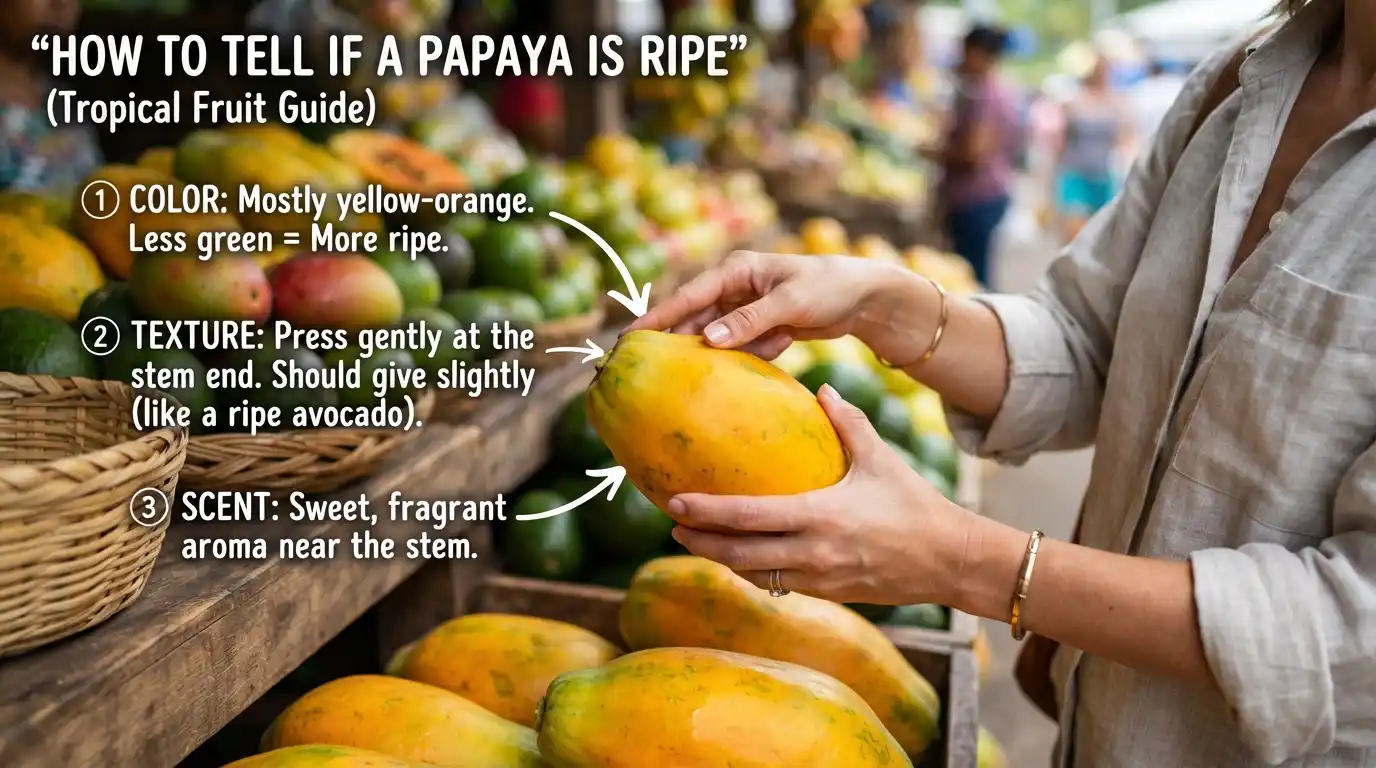
To tell if a papaya is ripe, check three main signs: color, firmness, and smell. A ripe papaya is usually mostly yellow or orange, gives slightly when gently pressed, and has a mild, sweet aroma near the stem. Avoid fruit that feels rock-hard, extremely mushy, leaks liquid, or smells sour or fermented.
Key Takeaways
- Look for skin that has changed from green to mostly yellow or orange.
- A ripe papaya should have some gentle give when pressed.
- A sweet, mild aroma near the stem is another useful sign.
- Green papayas can continue ripening at room temperature if they were mature enough when harvested.
- Very soft, leaking, moldy, or unpleasant-smelling fruit may be spoiled rather than simply ripe.
5 Easy Signs a Papaya Is Ripe
If you are standing in a grocery store wondering whether a papaya is ready to eat, you do not need special equipment. Your eyes, hands, and nose can tell you quite a lot.
The important thing is to use several signs together. Color can show that a papaya is progressing toward ripeness, while texture and aroma help confirm whether it is actually ready to eat.
1. Check the Skin Color
Start by looking at the outside.
An unripe papaya is generally green. As it ripens, the skin changes toward yellow, yellow-orange, or orange, depending on the variety.
For a papaya you want to eat soon, look for one that is mostly yellow or orange rather than completely green. However, do not assume that every ripe papaya must have exactly the same color.
Some varieties naturally keep green areas even as the flesh becomes ripe. UC Davis notes that papayas are harvested at different stages, ranging from color-break fruit to fruit that is already substantially yellow.
That is why color should be your first clue, not your only test.
2. Give It a Gentle Press
Next, check the firmness.
Hold the papaya gently in your palm and press the skin lightly with your fingers. A ripe papaya should yield slightly under gentle pressure.
Think of the difference between a hard, underripe peach and a ripe peach. You want some softness, but you do not want the fruit to collapse under your fingers.
A simple guide looks like this:
| Feel | What it usually means |
| Rock hard | Not ready yet |
| Slightly soft | Likely ripe or close to ripe |
| Very soft or mushy | May be overripe |
| Soft in one damaged spot | Could indicate bruising or decay |
Be gentle when performing this test. Pressing hard can bruise the fruit and make an otherwise good papaya deteriorate faster.
Recent product guidance also emphasizes gentle softness rather than squeezing firmly when judging papaya ripeness.
3. Smell the Stem End
Now use your sense of smell.
Bring the stem end of the papaya near your nose. A ripe papaya often has a mild, sweet, tropical aroma.
If there is almost no smell and the fruit is still very firm and green, it probably needs more time.
On the other hand, a strong sour, fermented, or unpleasant smell can indicate that the fruit has gone beyond its best eating stage.
The aroma works best as a supporting clue. Do not rely on smell alone because different varieties can have different levels of fragrance.
4. Look for Healthy Skin
A few small marks do not automatically mean that a papaya is bad.
Papayas can have minor cosmetic blemishes, scratches, or uneven coloring. What matters more is the condition of the skin and whether the damaged areas look fresh or deteriorating.
Avoid fruit with:
- Large sunken areas
- Wet or leaking spots
- Extensive bruising
- Mold
- Cracks containing decay
- Extremely soft patches
- A strong unpleasant odor
FDA guidance recommends choosing produce that is not bruised or damaged and discarding produce that looks rotten.
So, a couple of harmless-looking marks should not automatically scare you away. However, soft, wet, or visibly decaying areas deserve more caution.
5. Consider the Variety
Not every papaya ripens in exactly the same way.
Two common types you may encounter in U.S. stores are Hawaiian or Solo papayas and Mexican papayas.
Hawaiian papayas are usually smaller and often develop a strong yellow-orange color as they ripen. Mexican papayas are typically much larger, and their skin can retain some green coloring even when the flesh is ready to eat.
Because of these differences, do not use a single exact shade as your rule for every papaya.
Instead, combine color + feel + aroma. This gives you a more useful picture of the fruit’s ripeness.
What Does a Ripe Papaya Look Like?
A ripe papaya usually has skin that has changed substantially from green toward yellow or orange.
It should also feel slightly soft when you gently press it. Near the stem, you may notice a pleasant sweet or tropical fragrance.
When you cut it open, the flesh should be soft and juicy rather than hard and pale. Depending on the variety, the flesh can range from yellow to orange or reddish-orange.
Remember that the exact appearance can vary by cultivar. UC Davis identifies changes in flesh color from green to yellow or red as papayas ripen.
The best approach is therefore to look for several signs that agree rather than searching for one “perfect” color.
What Does an Unripe Papaya Look and Feel Like?
An unripe papaya is usually:
- Mostly green on the outside
- Firm or hard
- Low in aroma
- Less sweet
- More difficult to cut and scoop
Green papaya is not necessarily useless. In fact, unripe papaya is used intentionally in some savory dishes.
If you bought a papaya for a sweet snack, smoothie, or fruit salad, however, you will probably want to let it ripen before eating it.
A completely green papaya may also need more time than one that has already started showing yellow.
How to Tell If a Papaya Is Overripe
A ripe papaya should be soft, but there is a difference between soft and mushy.
An overripe papaya may have:
- Very soft or collapsing flesh
- Large sunken areas
- Leaking liquid
- Mold
- Dark, deteriorating patches
- A sour or fermented smell
Wrinkling alone does not necessarily mean the fruit is unsafe, but significant softness combined with unpleasant odor, leaking, or visible decay is a warning sign.
If a papaya looks rotten, it is safer to throw it away rather than trying to rescue the edible-looking portion.
Can a Green Papaya Ripen at Home?
Yes, a papaya can continue ripening after harvest, provided it was harvested at an appropriate maturity stage.
A papaya that is partly green with some yellow is often a better candidate for home ripening than one that is completely dark green and immature.
UC Davis explains that papayas are commonly harvested around the color-break stage or at later yellow stages, and that ripening changes both skin and flesh color.
The Paper Bag Method
If your papaya needs more time, leave it at room temperature away from direct sunlight.
You can also place it in a paper bag. The fruit naturally produces ethylene, a plant hormone involved in ripening, and enclosing the fruit can help concentrate the gas around it.
Check the papaya every day. Once it develops the color, softness, and aroma you want, it is ready for eating.
Do not keep squeezing it repeatedly. A gentle daily check is enough.
When to Refrigerate It
Once the papaya reaches the ripeness you want, refrigeration can slow further changes.
The exact storage time depends on ripeness and handling, so use the fruit’s appearance and condition rather than relying on an exact number of days.
For cut papaya, refrigeration is particularly important. FDA guidance recommends refrigerating perishable fresh-cut produce at 40°F or below.
How to Choose a Papaya at the Grocery Store
If you plan to eat the papaya today or tomorrow, look for fruit that is:
- Mostly yellow or orange.
- Slightly soft when gently pressed.
- Pleasantly fragrant near the stem.
- Free from major bruises, mold, leaks, or sunken areas.
- Appropriate for the amount of time you have before eating it.
If you want to eat it several days later, choose one that is less ripe and allow it to finish ripening at home.
This gives you more control over when the fruit reaches its ideal texture.
One useful tip is to avoid judging a papaya by size alone. Large and small papayas can both be good; size often reflects variety rather than ripeness.
What Does a Ripe Papaya Look Like Inside?
When you cut open a ripe papaya, the flesh should be soft and juicy.
Depending on the variety, the flesh may be yellow, orange, or reddish-orange. The center contains many small, round black seeds surrounded by a soft, slippery coating.
An unripe papaya may have firmer, less colorful flesh and a less developed sweet flavor.
If the inside contains obvious mold, extensive decay, leaking tissue, or an unpleasant odor, do not eat it.
How to Prepare Papaya Safely
Before cutting your papaya, rinse the whole fruit under running water, even if you plan to remove the skin.
This matters because a knife can transfer dirt or bacteria from the outside surface into the flesh as you cut.
The FDA recommends washing fresh produce under running water before peeling or cutting it and advises against using soap, detergent, bleach, or commercial produce washes.
After washing, cut the papaya on a clean surface. Scoop out the seeds, remove the peel, and cut the flesh into pieces.
Frequently Asked Questions
What color is a ripe papaya?
A ripe papaya is generally mostly yellow, yellow-orange, or orange. However, the exact color depends on the variety. Some ripe papayas can retain green areas, so combine color with gentle softness and a sweet aroma rather than judging by color alone.
How soft should a ripe papaya be?
A ripe papaya should give slightly when you press it gently. It should not feel rock-hard, but it also should not collapse, feel watery, or have large mushy areas. Gentle softness is a better sign than squeezing the fruit firmly.
How long does papaya take to ripen?
Ripening time varies depending on the fruit’s starting maturity and storage conditions. A partly yellow papaya may need only a few days at room temperature, while a very green fruit may need longer or may not develop ideal sweetness if harvested too early.
Can you eat green papaya?
Yes. Green papaya is commonly used as an unripe fruit in savory preparations. However, if you want the soft, sweet fruit typically associated with ripe papaya, wait until the skin has changed toward yellow or orange and the flesh has softened.
Should you refrigerate a ripe papaya?
Refrigeration can slow further ripening once the papaya has reached the desired stage. Cut papaya should be refrigerated promptly because cut fresh produce is more perishable. Keep refrigerated perishable produce at 40°F or below, following FDA guidance.
Conclusion
Learning how to tell if a papaya is ripe is easier when you use more than one clue. Start with the color, then gently check the firmness and smell the stem end. A mostly yellow or orange papaya with slight give and a mild sweet aroma is generally a good sign that it is ready to enjoy.
If the fruit is still hard and green, give it more time at room temperature. If it has become extremely soft, moldy, leaky, or unpleasant-smelling, it may be overripe or spoiled.
Most importantly, do not judge every papaya by exactly the same color. Variety and harvest stage can affect its appearance, so the combination of color, texture, aroma, and overall condition gives you the clearest answer.

I am Owen Walker, the author of dreamzoons.com and a passionate dream expert. I explore the hidden secrets and deep meanings of dreams to help you understand the true messages behind them.