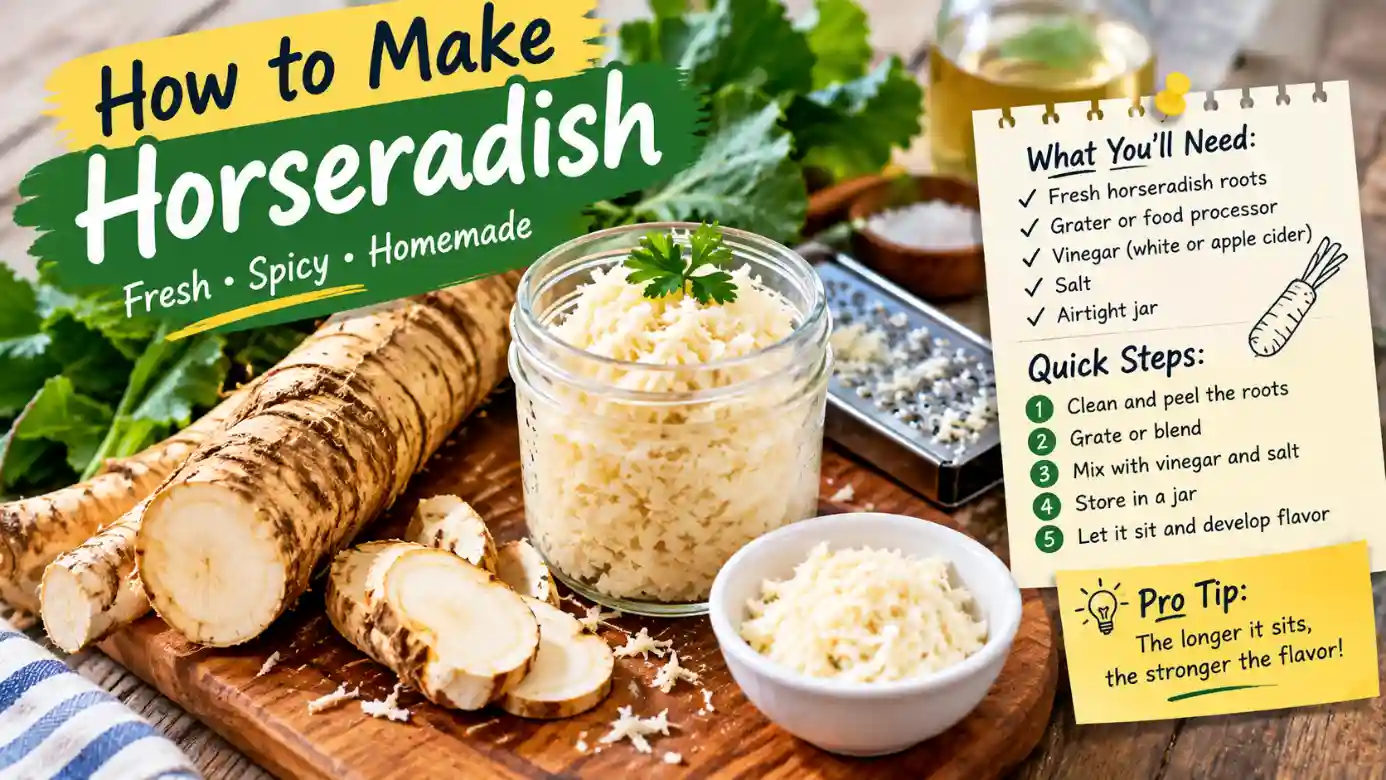
There’s a moment, right after you grate fresh horseradish, when your eyes water, your sinuses clear, and you realize the jar on the store shelf has been lying to you. That pale, mellow paste can’t compete with the fiery punch of the real thing.
Making horseradish at home is surprisingly simple. All you need is a fresh root, a little vinegar, some salt, and about fifteen minutes. There are no fillers, no preservatives, and you control exactly how hot it gets.
In this guide, you’ll learn how to choose the best root, why timing your vinegar changes the heat, and how to store your batch so it stays potent. We’ll also cover flavor variations, serving ideas, and fixes for common problems. Open a window, grab your peeler, and let’s get started.
Understanding Horseradish
Before you start grating, it helps to know what you’re working with. Horseradish (Armoracia rusticana) is a hardy root vegetable in the Brassicaceae family, which also includes mustard, cabbage, broccoli, and wasabi. That family connection explains its sharp, sinus-clearing bite.
The plant is believed to have originated in southeastern Europe and western Asia, and people have cultivated it for centuries. It has been valued both as a condiment and as a traditional remedy. Today, it appears on tables around the world: alongside roast beef in Britain, in cocktail sauce in the United States, and as maror, one of the bitter herbs on the Passover seder plate.
Nutritionally, horseradish is used in such small amounts that it won’t transform your diet, but it does contain some vitamin C and beneficial plant compounds called glucosinolates. These compounds are also the source of its heat, which we’ll explore in the next section.
It’s also worth clearing up some common confusion:
- Fresh horseradish root is the raw, unprocessed root you’ll use in this recipe.
- Prepared horseradish is grated root preserved in vinegar and salt, which is what you’re making here.
- Horseradish sauce is usually prepared horseradish mixed with cream, mayonnaise, or sour cream.
- Wasabi is a different plant. Most “wasabi” served outside Japan is actually horseradish colored green.
Knowing these distinctions will help you shop with confidence and follow the recipe more easily.
The Science of the Heat
Horseradish isn’t spicy the way a chili pepper is. A whole, uncut root has almost no aroma and very little bite. The heat only appears when you damage the root’s cells, and understanding how that works is the key to controlling your final product.
Inside the intact root, two things are stored separately: compounds called glucosinolates (mainly one known as sinigrin) and an enzyme called myrosinase. When you grate, chop, or blend the root, the cells rupture and the two mix. The enzyme converts the glucosinolates into allyl isothiocyanate, the volatile compound responsible for horseradish’s pungency.
This is why the heat hits your nose and sinuses rather than lingering on your tongue. The compound vaporizes easily, and you inhale it as you work. It’s also why you’ll want good ventilation when grinding.
Here’s the part that matters most for your recipe: acid stops the reaction. When you add vinegar, it halts the enzyme’s work and locks in whatever heat has developed so far. That gives you a simple way to tune the result:
- Add vinegar right away for a milder horseradish.
- Wait two to three minutes for a hot, full-strength version.
The compound is also unstable, so even after you add vinegar, the heat slowly fades over weeks in the refrigerator. Fresh batches are always at their fiercest.
Once you know this, the recipe stops being guesswork. You’re simply deciding when to stop the chemistry.
Choosing the Root
Great horseradish starts at the store or market. The root you pick has more influence on the final flavor than any technique, so it’s worth a few minutes of careful selection.
Where to buy. Look in the produce section of well-stocked grocery stores, often near the ginger and turmeric. Farmers’ markets and specialty grocers are also good sources, and they may have fresher roots that were recently dug.
When to buy. Horseradish is traditionally harvested in the fall and early spring, when the root is at its most pungent. You’ll often find the best selection in the weeks leading up to Passover and Easter, when demand peaks.
What to look for. A good root should be:
- Firm and heavy for its size, with no bending or softness
- Smooth and clean, with pale tan skin
- Free of mold, dark spots, or wrinkled, dried-out patches
- Without green sprouts, which signal an older, less potent root
Avoid any root that feels spongy or hollow, since it has likely dried out and lost much of its bite.
How much to buy. A root about 8 inches long, or roughly 8 ounces, typically yields around one cup of grated horseradish and makes about half a pint of finished product. Buy a little extra if you like a larger batch or want to give jars as gifts.
Storing before use. Wrap the unwashed root in a paper towel, place it in a sealed bag, and refrigerate it. It will stay fresh for a couple of weeks. For longer storage, freeze it whole and grate it straight from the freezer.
Ingredients
One of the best things about homemade horseradish is how short the ingredient list is. You need just four basics, plus a few optional extras to fine-tune the flavor.
Core Ingredients
- Fresh horseradish root: 8 ounces (225 g), about 8 inches long, peeled and cut into chunks
- Cold water: ¼ cup (60 ml), to help the root blend smoothly
- White distilled vinegar: ¼ to ½ cup (60 to 120 ml), depending on how thick you like it
- Fine salt: ½ teaspoon, added to taste
Optional Additions
- Sugar: ½ teaspoon, to soften the sharp edge
- Lemon juice: 1 teaspoon, for a brighter, fresher tang
- Other vinegars: apple cider or white wine vinegar for a rounder, fruitier flavor
Ingredient Notes
Vinegar matters. Distilled white vinegar gives the cleanest, most classic flavor and keeps the color light. Milder vinegars work well, but they can add their own taste and may darken the mixture slightly.
Use cold water. Warm water can speed up the reaction unpredictably and weaken the heat. Cold water keeps the process steady.
Choose the right salt. Fine sea salt or kosher salt dissolves easily. Avoid iodized table salt if you can, as it may leave a slightly metallic taste.
Skip the extras at first. Sugar and lemon juice are helpful if your batch turns out harsh, but try the basic version before adding them. You may find you don’t need them.
Scaling the recipe. Because everything is proportional, you can double or triple the batch easily. Just keep the ratio of root to vinegar consistent.
Equipment and Setup
You don’t need fancy gear to make horseradish, but the right tools make the job faster, and a little preparation keeps your kitchen comfortable while you work.
Essential Equipment
- Vegetable peeler or paring knife: for removing the tough outer skin
- Cutting board and sharp knife: for cutting the root into small chunks
- Food processor: the best option, since it grinds the root quickly and evenly
- Clean glass jars with tight-fitting lids: for storing the finished horseradish
Alternatives
- Blender: works well if you add the water first and cut the root into small pieces
- Box grater or microplane: perfect for small batches, though it takes more effort and releases more fumes into your face
Prepare Your Space
Horseradish fumes are no joke. Grinding releases the same volatile compound that gives it its heat, and it can sting your eyes and nose much like cutting a strong onion, only more intensely.
- Open a window and turn on a fan or range hood.
- Work at arm’s length from the food processor, and stand back when you remove the lid.
- Wear protective eyewear if you’re sensitive.
- Wash your hands thoroughly afterward and avoid touching your eyes.
Sterilize Your Jars
Wash jars and lids in hot, soapy water, then rinse well. For extra safety, submerge them in boiling water for a few minutes and let them air dry. Clean jars help your horseradish stay fresh longer.
Once your tools are ready and the air is moving, you’re set to begin.
Step-by-Step Recipe
Now for the main event. This recipe makes about one cup of horseradish and takes roughly 15 minutes. Make sure your window is open and your fan is running.
Step 1: Wash and peel. Scrub the root under cold water to remove any dirt. Peel away the tan outer skin with a vegetable peeler until you reach the creamy white flesh.
Step 2: Cut into chunks. Trim off any dark or woody spots, then cut the root into ½-inch pieces so your machine can process it evenly.
Step 3: Grind. Add the chunks and ¼ cup of cold water to a food processor. Pulse, then process for 30 to 60 seconds until finely ground, scraping down the sides as needed.
Step 4: Rest. Leave the lid on and wait. This is when the heat develops. Wait about 2 to 3 minutes for hot horseradish, or just 30 seconds for a milder result.
Step 5: Add vinegar and salt. Carefully remove the lid, standing back from the fumes. Add ¼ cup of vinegar and ½ teaspoon of salt, then pulse until combined. Add more vinegar for a thinner texture.
Step 6: Taste and adjust. Try a tiny amount on a spoon. Add sugar or lemon juice if it’s too harsh, or a splash more vinegar if it’s too thick.
Step 7: Jar and label. Spoon the horseradish into a clean jar, press down to remove air pockets, seal, and write the date on the lid.
Let it sit in the refrigerator for a day if you can. The flavors blend and settle nicely.
Customizing the Heat and Texture
Once you’ve made a basic batch, you can tailor it to your own taste. Horseradish is flexible, and a few small changes make a big difference.
Adjusting the Heat
Timing is your main control. The longer the ground root sits before you add vinegar, the hotter the result:
- Immediately: mild and gentle, good for people who want flavor without the burn
- After 1 to 2 minutes: medium heat with a pleasant kick
- After 3 minutes or more: hot and sharp, with the full sinus-clearing effect
If your batch turns out too fiery, stir in a little extra vinegar, a pinch of sugar, or a spoonful of sour cream or mayonnaise to soften it. If it’s too mild, grate a bit more fresh root and mix it in.
Adjusting the Texture
Texture depends on how long you process the root and how much liquid you add:
- Coarse and rustic: pulse briefly and use less liquid for a chunky, grainy spread
- Smooth and creamy: process longer and add a little more water or vinegar
- Thin and pourable: add extra vinegar, useful for sauces and dressings
Adjusting Acidity and Salt
Vinegar adds tang as well as preserving the horseradish. If it tastes too sour, balance it with a pinch of sugar. If it tastes flat, a little more salt or a squeeze of lemon can brighten it.
Working with Older Roots
An older or drier root will be less potent. Compensate by using more root, skipping extra water, and letting it rest a bit longer before adding vinegar.
Flavor Variations
Once you’ve mastered the classic recipe, it’s easy to branch out. These variations start with your basic prepared horseradish and add a few simple ingredients.
Beet Horseradish (Red Horseradish)
A staple of Eastern European tables, especially around Easter and Passover. Cook one small beet until tender, peel it, and grate or blend about ¼ cup into your finished horseradish. The beet adds a subtle sweetness, an earthy note, and a vivid magenta color that looks stunning on a plate.
Creamy Horseradish Sauce
Perfect for prime rib and roast beef. Stir 2 to 3 tablespoons of prepared horseradish into ½ cup of sour cream, crème fraîche, or mayonnaise. Add a squeeze of lemon, a pinch of salt, and a little black pepper. Chill for at least 30 minutes so the flavors meld.
Horseradish Mustard
Mix equal parts prepared horseradish and whole-grain or Dijon mustard. This bold spread is excellent on sandwiches, sausages, and pretzels.
Garlic and Herb Horseradish
Blend in one small roasted garlic clove and a tablespoon of chopped chives or dill. The mellow garlic and fresh herbs round out the sharpness.
Lemon Horseradish
Replace a portion of the vinegar with fresh lemon juice and add a bit of zest. This version is bright and pairs beautifully with smoked salmon or seafood.
Cocktail Sauce and Bloody Mary Base
Combine 2 tablespoons of horseradish with ½ cup of ketchup and a squeeze of lemon for classic cocktail sauce. For Bloody Marys, stir a spoonful straight into your tomato juice.
Storage and Shelf Life
Homemade horseradish keeps well when stored properly, but its heat is fragile. Good storage protects both the flavor and the safety of your batch.
Refrigeration
Keep your horseradish in a clean, airtight glass jar in the refrigerator. For the best flavor, use it within 4 to 6 weeks. It may stay safe to eat for a few months, but the heat gradually fades, and older batches taste noticeably milder. Press the surface down to remove air pockets, and always use a clean spoon so you don’t introduce bacteria.
Freezing
To keep it longer, freeze small portions in ice cube trays or spoon it into freezer bags in flat layers. Once frozen, transfer the cubes to a sealed container. Frozen horseradish keeps for up to six months, and the texture may soften slightly after thawing. Thaw in the refrigerator and stir before serving.
Storing Unprepared Root
Wrapped in a paper towel and sealed in a bag, a whole root lasts a couple of weeks in the fridge. You can also freeze it whole and grate it while it is still frozen, which is a good way to make fresh batches through the year.
Color Changes
Horseradish naturally darkens over time as it oxidizes. Vinegar slows this down, so make sure the root is well coated and the jar is tightly sealed.
Signs of Spoilage
Discard it if you notice:
- Mold or fuzzy spots
- A sour, off, or fermented smell that isn’t just vinegar
- A slimy texture
If it has simply lost its kick but looks and smells normal, it’s safe but past its prime. Try mixing in a bit of freshly grated root to revive it.
Ways to Use Horseradish
Now that you have a jar of fresh horseradish, here’s how to put it to work. A little goes a long way, so start small and add more to taste.
Classic Pairings
Roast beef and prime rib. This is the traditional match. The sharp heat cuts through rich, fatty meat. Serve a small spoonful on the side or mix it into a creamy sauce.
Smoked fish. Pair it with smoked salmon, trout, or mackerel, ideally on rye bread or crackers with a touch of crème fraîche.
Corned beef. Spread it on a sandwich with mustard and sauerkraut for an extra layer of flavor.
Sandwiches and Burgers
Stir a teaspoon into mayonnaise for a zesty spread. It transforms roast beef sandwiches, steak wraps, and burgers.
Sauces, Dressings, and Dips
- Creamy dip for vegetables, shrimp, or roasted potatoes
- Vinaigrette with olive oil, lemon, and a little mustard
- Steak sauce blended with sour cream and chives
Everyday Dishes
- Deviled eggs: add half a teaspoon to the yolk mixture
- Potato salad: a spoonful brightens the dressing
- Mashed potatoes: stir in some for a peppery lift
- Roasted beets: a natural pairing, earthy and sharp together
Cocktails
A teaspoon in a Bloody Mary adds a fiery finish. It’s also a key ingredient in classic cocktail sauce served with shrimp.
Holidays and Traditions
Horseradish is central to the Passover seder as maror, and it appears on many Easter and Christmas tables, especially with ham or roast beef.
Experiment freely. Once you have it on hand, you’ll find surprising places to use it.
Frequently Asked Questions
Can I use a blender?
Yes. Add the water first and cut the root into small pieces.
Do I have to peel it?
Yes, the skin is tough and can taste bitter.
Can I make it without vinegar?
You can, but it won’t keep. Use it right away, since vinegar is what preserves the heat and extends shelf life.
Is it safe to eat a lot?
In normal culinary amounts, yes. People with sensitive stomachs or certain digestive conditions may want to go easy, since it can irritate.
Can I substitute jarred horseradish?
For recipes, yes, but expect a milder flavor than fresh.
Conclusion
Making horseradish at home is one of the easiest ways to upgrade your kitchen. With just a fresh root, vinegar, salt, and a few minutes, you can create a condiment that’s far more vibrant than anything from a store shelf.
Remember the key points: choose a firm, healthy root, work in a well-ventilated space, and time your vinegar to control the heat. Store your batch in an airtight jar, and enjoy it while it’s at its fiercest.
From there, the possibilities are wide open. Try a beet version for the holidays, stir it into a creamy sauce for prime rib, or add a spoonful to your next Bloody Mary.
Give this recipe a try and let us know how your batch turned out. Share your favorite ways to use it in the comments, and subscribe for more from-scratch kitchen guides.

I am Owen Walker, the author of dreamzoons.com and a passionate dream expert. I explore the hidden secrets and deep meanings of dreams to help you understand the true messages behind them.