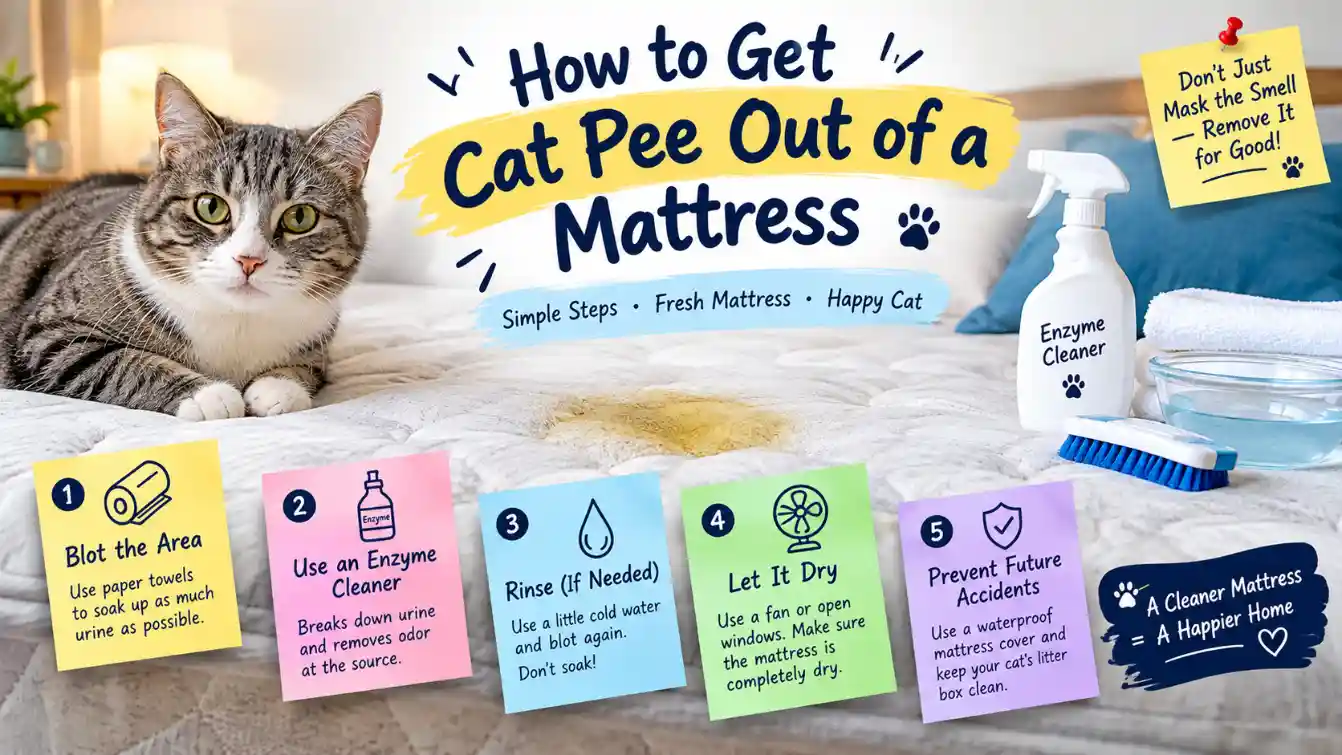
There are few smells as unmistakable, or as stubborn, as cat urine soaked into a mattress. Even a quick accident can leave behind an odor that lingers for weeks if it isn’t treated properly, and simply blotting it up or spraying air freshener won’t solve the problem.
The good news is that cat urine can be fully removed with the right approach. The key is understanding what’s actually in the stain, choosing a cleaner that breaks it down at the source, and getting it out before it dries deep into the layers of your mattress.
In this guide, you’ll learn why cat urine smells so strong, what supplies actually work, and how to clean a fresh or dried stain step by step. We’ll also cover deep-cleaning options, prevention tips, and fixes for lingering odors. Grab some gloves and let’s get started.
Understanding Cat Urine and Why It’s So Persistent
Before you start scrubbing, it helps to understand why cat urine is so much harder to remove than ordinary spills. Fresh cat urine contains urea, uric acid, and bacteria, along with proteins and hormones that vary depending on if the cat is intact or neutered.
As the urine dries, the uric acid crystallizes and binds tightly to fibers. Those crystals are not water-soluble, which means regular soap, water, or standard laundry detergent can’t break them down. Instead, cleaning without the right product often just moves the crystals deeper into the mattress or masks the smell temporarily.
There’s another twist: humidity reactivates the crystals. That’s why a mattress can smell fine on a dry day and suddenly reek again when the weather turns damp. This is often mistaken for a cleaning failure, when really the odor was never fully eliminated in the first place.
It’s also worth understanding what makes cat urine different from dog urine or general odors:
- Cat urine is more concentrated, since cats conserve water more efficiently than dogs.
- Intact male cats produce urine with a stronger, muskier smell due to added hormones and proteins.
- Older or dried stains are harder to treat because the uric acid has fully crystallized.
Once you understand this, the plan becomes clear: you need a cleaner that chemically breaks down uric acid, not one that just cleans the surface.
Choosing the Right Cleaner
Not all cleaning products are equally effective against cat urine, and choosing correctly will save you time and frustration.
Enzymatic cleaners are the gold standard. These products contain bacteria-produced enzymes that break the uric acid crystals down into gasses and water, essentially digesting the source of the smell rather than covering it up. Look for one labeled specifically for pet urine or cat urine.
Hydrogen peroxide with baking soda and dish soap is a strong homemade alternative. Hydrogen peroxide oxidizes and breaks down odor-causing compounds, while baking soda absorbs moisture and neutralizes odor.
Baking soda alone works well for absorbing moisture and mild odors but won’t fully break down dried, crystallized stains.
Vinegar solutions can help neutralize the alkaline salts in urine and are useful for fresh stains, though they’re less effective than enzymatic cleaners on older ones.
What to avoid:
- Ammonia-based cleaners. Urine itself contains ammonia compounds, so these can actually intensify the smell.
- Steam cleaners on unset stains. Heat can set the protein in urine, making it much harder to remove.
- Scented sprays or air fresheners alone. These mask the smell temporarily without addressing the source.
For the best results, enzymatic cleaner is worth the investment, especially for anything beyond a very fresh accident.
Before You Start: Assess the Situation
A few minutes of assessment will help you choose the right approach and supplies.
Is the stain fresh or dried? Fresh stains are easier to treat and require less product. Dried stains need more soaking time and often benefit from a blacklight check to find the full extent of the spread.
How deep has it soaked? Check the mattress cover, the foam or padding layer, and even the box spring if the accident was substantial. A small surface spot needs a different approach than a soaked-through mattress.
Find hidden or old stains. Cat urine glows under UV light. In a darkened room, run a blacklight or UV flashlight over the mattress to spot stains you might otherwise miss.
Check your mattress type. Memory foam, innerspring, and hybrid mattresses respond differently to moisture. Memory foam absorbs liquid more deeply and takes longer to dry, so avoid oversaturating it.
Decide on your approach. Small, fresh spots can often be handled with spot cleaning. Larger or older stains may need a full soak-and-extract method, and severely soaked mattresses may need professional cleaning or replacement.
Set your expectations. Plan for at least an hour of active cleaning, plus 12 to 24 hours of drying time.
Supplies You’ll Need
Most of what you need is inexpensive and available at a grocery or pet store.
Core Supplies
- Enzymatic cleaner: made for pet urine, enough to fully saturate the stained area
- Paper towels or clean absorbent cloths: for blotting
- Rubber gloves: to protect your hands
- A UV blacklight flashlight: to locate stains, including old or dried ones
- A wet vacuum or shop vac: for extracting moisture (optional but very helpful)
- Baking soda: for deodorizing after cleaning
- A spray bottle: for applying homemade solutions evenly
Optional Additions
- Hydrogen peroxide (3%) and dish soap: for a homemade booster solution
- White vinegar: for neutralizing fresh stains
- A mattress protector: for preventing future accidents
- A fan or dehumidifier: to speed up drying
- Plastic sheeting or a tarp: to protect the floor while you work
Supply Notes
Read the label. Always check that your enzymatic cleaner is safe for your mattress fabric, and test it on a hidden area first.
Don’t mix cleaners. Combining hydrogen peroxide, vinegar, and other chemicals in one step can be ineffective or even release irritating fumes. Use one method fully before trying another.
Buy enough cleaner. Under-saturating the stain is one of the most common mistakes, since the cleaner needs to reach as deep as the urine did.
Setup and Preparation
A little preparation makes the cleaning process much more effective.
Prepare the Room
- Ventilate well. Open windows and use a fan to help with drying and odor control.
- Protect the floor. Lay down towels or a tarp underneath the treated area.
- Strip the bed. Remove all sheets, mattress protectors, and pillows, and wash them separately in hot water with regular detergent.
Locate the Full Stain
Darken the room and pass a UV blacklight slowly over the mattress. Cat urine will glow a pale yellow or greenish color. Mark the edges with painter’s tape or chalk so you don’t lose track of the boundaries once the lights are back on.
Blot Before You Treat
If the stain is fresh, press clean, absorbent towels firmly onto the area to soak up as much liquid as possible before applying any product. Avoid rubbing, which pushes the urine deeper into the fibers.
Test Your Cleaner
Apply a small amount of your chosen cleaner to a hidden area of the mattress and wait a few minutes to check for discoloration or damage before treating the main stain.
With your supplies ready and the stain identified, you’re set to begin.
Step-by-Step Cleaning Process
This method works for both fresh and dried cat urine stains. Set aside about an hour, plus drying time.
Step 1: Blot the area. Press clean towels onto the stain to remove as much liquid as possible. Skip this step for dried stains.
Step 2: Saturate with enzymatic cleaner. Pour or spray enough enzymatic cleaner to match the depth of the original stain. It needs to reach as far as the urine soaked.
Step 3: Let it sit. Follow the product’s instructions, typically 10 to 15 minutes for fresh stains and up to several hours for old, dried ones. This gives the enzymes time to break down the uric acid.
Step 4: Blot again. Press clean towels onto the area to absorb the cleaner and lifted residue. Avoid scrubbing, which can spread the stain.
Step 5: Extract moisture. If you have a wet vacuum, use it to pull out as much liquid as possible. This step dramatically speeds up drying and improves results.
Step 6: Apply baking soda. Once the area is barely damp, sprinkle a generous layer of baking soda over the stain to absorb any remaining moisture and odor.
Step 7: Let it dry completely. Leave the baking soda in place for at least 8 hours, ideally overnight, with a fan directed at the mattress or a window open.
Step 8: Vacuum thoroughly. Once fully dry, vacuum up all the baking soda.
Step 9: Recheck with the blacklight. Confirm the stain is gone and treat any spots you may have missed.
Customizing Your Approach
Not every situation is the same, and a few adjustments can improve your results.
For Fresh Stains
Fresh accidents respond quickly. Blot thoroughly first, then apply enzymatic cleaner right away before the urine has a chance to dry and crystallize.
For Dried or Old Stains
Older stains need more product and more time. Saturate thoroughly, let the cleaner sit for several hours or even overnight under plastic wrap to prevent evaporation, then extract and repeat if the smell persists.
For Memory Foam Mattresses
Memory foam absorbs liquid deeply, so avoid oversaturating it. Apply cleaner in smaller amounts, use a wet vacuum to extract as much as possible, and allow extra drying time, since trapped moisture can lead to mold.
For Large or Deeply Soaked Areas
If urine has soaked through to the mattress core, you may need to repeat the full process two or three times. In severe cases, especially with older mattresses, replacement may be more practical than repeated deep cleaning.
Boosting Homemade Solutions
If you don’t have an enzymatic cleaner on hand, a mixture of ½ cup hydrogen peroxide, 2 tablespoons baking soda, and a few drops of dish soap can help break down fresh stains. Test it first, since hydrogen peroxide can lighten some fabrics.
Alternatives and Methods to Avoid
While the enzymatic method above is the most reliable, there are other options depending on your situation.
Reasonable Alternatives
Steam cleaning after enzymatic treatment. Once the enzymes have fully broken down the stain and the area is dry, steam cleaning can help refresh the mattress. Never steam clean before the enzymatic treatment, since heat can set the stain.
Professional mattress cleaning. For large, old, or repeated stains, a professional service has stronger equipment and products.
Mattress replacement. If a mattress has absorbed urine repeatedly over a long period, especially into the foam core, replacement may be the healthiest and most practical option.
Odor-absorbing mattress toppers. These won’t remove existing stains but can help manage minor lingering odors while you address the source.
Methods to Avoid
- Ammonia-based cleaners, which can make the smell worse.
- Heat or steam on an untreated stain, which sets the proteins.
- Scrubbing aggressively, which spreads the stain and damages fibers.
- Masking with perfume or air freshener alone, which doesn’t address the source.
- Skipping the blacklight check, which often leaves hidden stains untreated and smelling again later.
The most reliable approach always starts with proper enzymatic treatment before anything else.
Prevention and Ongoing Care
Once your mattress is clean, a few steps can help prevent future accidents and protect your investment.
Protect the Mattress
- Use a waterproof mattress protector. This creates a barrier that keeps future accidents from soaking into the mattress itself.
- Wash bedding regularly. Regular washing keeps the sleeping area smelling fresh and helps you notice new accidents early.
Address the Root Cause
- Rule out medical issues. Sudden litter box avoidance can signal a urinary tract infection or other health problem, so a vet visit is a good first step.
- Check the litter box setup. Make sure it’s clean, appropriately sized, and in a quiet, accessible location. Many cats prefer one box per cat, plus one extra.
- Reduce stress. New pets, moves, or changes in routine can trigger inappropriate urination. Consider calming aids or extra attention during transitions.
Ongoing Maintenance
- Do periodic blacklight checks. This helps you catch new accidents before they set and worsen.
- Keep enzymatic cleaner on hand. Treating an accident within hours makes cleanup far easier than treating a dried stain days later.
- Rotate and air out the mattress. Occasional airing helps prevent trapped odors from building up over time.
FAQs
How long does enzymatic cleaner take to work?
Usually 10 to 15 minutes for fresh stains, but old stains may need several hours or overnight.
Can I use a regular carpet cleaner?
Only if it’s specifically enzymatic and labeled for pet urine. Standard carpet cleaners won’t break down uric acid.
Is it safe to sleep on the mattress the same night?
It’s best to wait until the mattress is completely dry, ideally 12 to 24 hours.
Will baking soda alone remove the smell?
It helps with moisture and mild odor but won’t fully eliminate dried, crystallized urine on its own.
How do I find an old stain I can’t see?
Use a UV blacklight in a darkened room. Cat urine glows under UV light even after it has dried.
Conclusion
Getting cat pee out of a mattress takes the right cleaner and a bit of patience, but it’s absolutely achievable. Once you understand that uric acid crystals are the real source of the smell, the solution becomes clear: saturate, wait, extract, and dry thoroughly.
Remember the key points: use an enzymatic cleaner rather than ammonia or scented sprays, give it enough time to work, and check your mattress with a blacklight to catch any hidden spots. With a mattress protector and some attention to your cat’s litter habits, you can prevent most future accidents too.
Give this method a try and share how it worked for you in the comments. Subscribe for more practical home cleaning guides.

I am Jaxon Blake, the author of DreamZoons.com, where I explore the hidden meanings behind dreams. I am a dream expert, and I help people understand what their dreams may be trying to tell them.