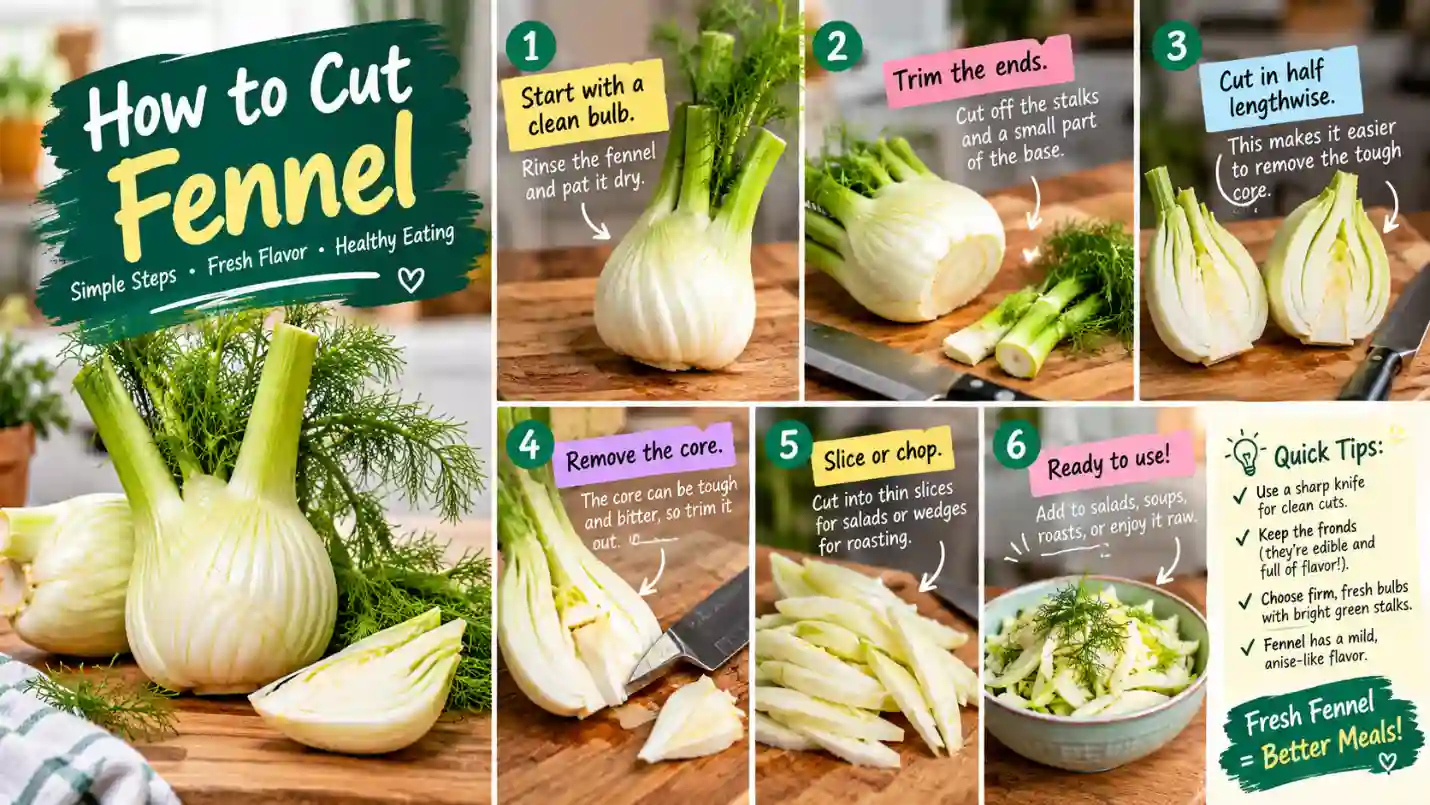
Fennel has a reputation for being tricky. With its pale bulb, long stalks, and feathery fronds, it’s hard to know where to start with a knife. But once you understand how the plant is put together, learning how to cut fennel takes only a few minutes and a handful of simple steps.
It’s worth the effort. Sliced thin, fennel adds a crisp, refreshing crunch to salads. Roasted in wedges, it turns sweet, tender, and caramelized. Even the stalks and fronds have uses, so nothing has to go to waste.
In this complete guide, you’ll learn how to choose a good bulb, trim and core it, and cut it into slices, wedges, dice, and more. You’ll also find storage tips, common mistakes to avoid, and recipes to try. If you’re a beginner or simply want cleaner, faster cuts, you’re in the right place. Grab a sharp knife, and let’s get started.
Understanding Fennel Before You Cut
Knowing what you’re looking at makes the cutting much easier. Every part of the fennel plant is edible, but each one behaves differently in the kitchen.
The Parts of Fennel
- The bulb: The pale, layered base is the main event. It’s crisp and juicy, and it’s what most recipes call for.
- The stalks: These grow up from the bulb like celery. They’re fibrous and too tough to eat raw in large pieces, but they’re great for stocks, braises, and finely chopped stuffings.
- The fronds: The delicate green tops look like dill and work as a fresh herb or garnish.
- The core: The dense, wedge-shaped center at the base of the bulb is tougher than the outer layers. You’ll often remove it, depending on how you’re cutting.
What Fennel Tastes Like
Raw fennel is crunchy and refreshing, with a light anise or licorice flavor. If you’re not a fan of licorice, don’t write it off. Cooking mellows that flavor into something soft, sweet, and almost buttery, which is why roasted or braised fennel wins over many skeptics.
Fennel vs. Anise: Clearing Up the Confusion
Fennel gets mixed up with a few similar-sounding ingredients:
- Florence fennel is the type grown for its bulb, and it’s the one you’ll find at most grocery stores. Wild fennel grows tall and feathery but doesn’t form a bulb.
- Anise is a separate plant. It tastes similar, but you’d use its seeds rather than a fresh bulb.
- Fennel seeds come from the plant’s flowers and are used as a spice, not a vegetable.
- Star anise is unrelated, though it shares the licorice flavor.
Buying and Selecting Fennel
A great cut starts with a great bulb. Fennel is easy to shop for once you know what to look for.
What to Look For
- Firm, heavy bulbs: A good bulb feels dense for its size. Light or spongy ones tend to be dry inside.
- Clean, pale color: Look for white to pale green with smooth skin. Small blemishes on the outer layer are fine, since you can peel them away.
- Fresh, green fronds: Bright, feathery tops signal a recently harvested bulb. Wilted or yellow fronds suggest it’s been sitting.
- Sturdy stalks: They should be crisp and upright, not limp or slimy.
What to Avoid
- Cracks or splits in the bulb
- Brown or soft spots, especially near the base
- Dry, shriveled outer layers
- A strong, sour smell
Size and Shape
Bulbs range from small and round to large and flat. Rounder bulbs are often a bit more tender and sweeter, while flatter ones can be slightly stringier. You may hear the old “male versus female” bulb myth, but both shapes are the same plant, so pick based on freshness and your recipe. Medium bulbs are easiest to handle and give you even slices. One medium bulb, about a pound, serves two as a side dish.
When and Where to Buy
Fennel is at its best from fall through early spring, when the bulbs are sweetest and most abundant. You’ll find it in most supermarkets, farmers’ markets, and Middle Eastern or Italian grocers. Some stores label it “anise,” so check for the bulb and fronds.
Tools and Setup
You don’t need fancy equipment to cut fennel well. A few basics, set up properly, make the job faster and safer.
The Knife
A sharp chef’s knife, about eight inches, is your best tool. Its weight powers through the dense bulb, and a sharp edge cuts cleanly instead of crushing the layers. A dull knife is also more dangerous, since it slips more easily. A paring knife helps with trimming, and a serrated knife can work in a pinch.
The Cutting Board
Choose a large, stable board, wood or plastic. Place a damp paper towel or kitchen towel underneath so it doesn’t slide. Fennel bulbs are round and can roll, so a steady surface matters.
Optional Tools
- Mandoline: Ideal for paper-thin shavings for salads. Use the hand guard every time.
- Vegetable peeler: Handy for removing tough outer layers.
- Kitchen shears: Quick for snipping fronds.
- Box grater or food processor: Useful for slaws in large batches.
Knife Safety Basics
- Use the claw grip: Curl your fingertips inward and guide the knife with your knuckles.
- Create a flat side: Halve the bulb first so it sits flat instead of rolling.
- Keep your knife sharp: Hone it regularly and sharpen it a few times a year.
- Cut away from your body: And never try to catch a falling knife.
- Stay focused: Slow down when using a mandoline.
Before You Begin
Set out a bowl for scraps and another for prepared fennel. Clear your workspace, and you’re ready to cut.
Prep: Washing and Trimming
Proper prep sets you up for clean, even cuts. It only takes a couple of minutes, and each step has a purpose.
Washing Fennel
Fennel grows close to the soil, so grit can hide between the layers. Rinse the whole bulb under cold running water, rubbing gently with your hands. Wash after trimming, when the layers are easier to separate, or rinse cut pieces in a bowl of cold water. Pat dry with a clean towel so slices stay crisp and don’t slip on the board.
Saving the Fronds
Start at the top by snipping off the feathery fronds. Rinse and pat dry, then store them like fresh herbs. Use them as garnish or in pesto.
Removing the Stalks
Lay the bulb on its side. Cut off the stalks where they meet the top of the bulb, leaving a clean, flat edge. Don’t toss them. Set them aside for stock, braising, or finely chopped stuffing.
Trimming the Root End
Slice a thin layer off the base, about a quarter inch, to remove the dry, browned edge. Keep the core intact for now, since it holds the layers together for the next step.
Peeling Off Outer Layers
Inspect the outermost layer. If it’s bruised, dry, or stringy, peel or cut it away. Fresh, smooth bulbs may not need this. A vegetable peeler can shave off fibrous patches.
Quick Prep Checklist
- Rinse and dry the bulb
- Snip off the fronds
- Cut off the stalks
- Trim the root end
- Remove any tough outer layers
Step-by-Step: The Basic Method
Once your fennel is washed and trimmed, the main cutting takes just a few steps. This method works for almost every dish, and you can adapt the final cut to suit your recipe.
Step 1: Position the Bulb
Set the trimmed bulb upright on your board with the flat root end down. If it wobbles, trim a hair more from the base for stability.
Step 2: Halve It Lengthwise
Hold the bulb steady with your claw grip and slice straight down through the center, from top to root. You’ll see the layers and the dense core inside. Now each half has a flat side, so it won’t roll.
Step 3: Decide What to Do With the Core
The core is the tough, wedge-shaped section at the base. Cut it out by angling your knife in a V shape on each half, then discard it or save it for stock. For wedges, leave the core in, since it holds the pieces together during roasting or grilling.
Step 4: Lay the Halves Flat
Place each half cut-side down. This gives you a stable base and lets you cut with control.
Step 5: Cut to Your Desired Shape
Slice the halves into thin slices, wedges, half-moons, or dice depending on your recipe. The next section covers each cut in detail.
Quick Tips
- Cut in one smooth motion rather than sawing.
- Keep pieces a consistent size so they cook evenly.
- Fennel layers can separate as you slice. That’s normal, and they’ll still cook well.
Cutting Techniques by Shape
Starting from your halved and cored bulb, here’s how to cut fennel into the most useful shapes. Choose the one that suits your dish.
Thin Slices and Shavings
Best for: raw salads, slaws, and garnishes.
Lay a half flat and slice crosswise as thinly as you can. For paper-thin shavings, use a mandoline with the hand guard on. Soak the slices in ice water for ten minutes to make them extra crisp.
Wedges
Best for: roasting, grilling, and braising.
Leave the core in. Cut each half lengthwise into three or four wedges, so the core holds every piece together as it cooks.
Half-Moons
Best for: sautés, pastas, and sheet-pan dinners.
Slice each cored half crosswise into pieces about a quarter inch thick. The curved layers naturally form half-moon shapes that cook quickly and evenly.
Dice
Best for: soups, stews, and sauces.
Cut each cored half lengthwise into strips, turn them, and slice crosswise into small cubes, about a quarter to half an inch.
Julienne
Best for: stir-fries, garnishes, and quick pickles.
Cut the cored half into thin slices, stack a few at a time, and cut them into long matchsticks.
Chopped or Minced
Best for: stuffings, meatballs, and sausage mixtures.
Dice the fennel first, then rock your knife back and forth over the pieces until they reach the size you need.
Quick Guide: Which Cut for Which Dish?
- Raw: thin slices or shavings
- Roasted or grilled: wedges
- Quick-cooked: half-moons
- Soups and sauces: dice
- Fillings: chopped or minced
Cutting for Raw vs. Cooked Dishes
The same bulb behaves very differently depending on how you plan to use it. Matching your cut to your cooking method gives you better texture and flavor.
Cutting for Raw Dishes
Thickness matters most when fennel is uncooked. Thick pieces taste strongly of anise and can feel tough to chew, while thin slices are crisp, delicate, and mild. Aim for slices about 1/16 inch thick, or use a mandoline to get them consistent. Slice just before serving, or hold the pieces in lemon water to prevent browning. A quick toss in a citrus dressing softens the flavor even further.
Adjusting Cuts for Cooking Methods
- Roasting: Wedges about 3/4 inch thick at the widest point caramelize outside and turn tender within.
- Grilling: Thick wedges or 1/2-inch slabs hold together over the heat.
- Sautéing: Half-moons or thin strips cook fast and evenly.
- Braising: Halves or large wedges soak up liquid while keeping their shape.
- Soups and stews: Small dice or chopped pieces melt into the base and add sweetness.
Approximate Cooking Times
- Thin slices, sautéed: 5-8 minutes
- Half-moons, sautéed: 8-10 minutes
- Wedges, roasted at 400°F (200°C): 25-35 minutes
- Wedges, braised: 30-40 minutes
- Diced, in soup: 10-15 minutes
Times vary with your oven, pan, and bulb size, so test with a fork. It should slide in easily.
The Golden Rule
Keep your pieces uniform. Mixed sizes mean some cook through while others stay hard.
Using the Whole Plant (Zero Waste)
Once you’ve cut your bulb, you’re left with fronds, stalks, and a core. Every one of them is edible, and each has a good use.
Fronds
The feathery tops taste mild and slightly sweet, much like dill with a hint of anise.
- Garnish: Sprinkle over salads, soups, roasted vegetables, or fish.
- Pesto: Blend with olive oil, nuts, garlic, and parmesan.
- Herb butter: Mix chopped fronds into softened butter for bread or grilled meat.
- Salsa verde: Combine with parsley, capers, lemon, and olive oil.
Stalks
Stalks are fibrous, so they work best cooked or cut very small.
- Stock: Simmer with onion, carrot, and herbs for a fragrant broth.
- Braises and soups: Slice thinly and cook until tender.
- Stuffings: Finely dice and sauté with onion and celery.
- Slaws: Shave paper-thin for a crunchy, aromatic addition.
Core
The core is tough raw but softens with cooking.
- Soups and purées: Chop and simmer until soft, then blend.
- Roasting: Cut into small pieces and roast with the wedges.
- Stock: Add to the pot for extra flavor.
Trimmings
Save the ends and peels in a bag in the freezer. When it’s full, simmer them into a vegetable stock so nothing goes to waste.
Storing the Extras
Keep fronds wrapped in a damp paper towel in the fridge for up to a week. Stalks and cores last a few days in an airtight container.
Preventing Browning and Storing Fennel
Fennel oxidizes quickly once cut, turning brown around the edges. A little care keeps it fresh and crisp.
Preventing Browning
Fill a bowl with cold water and add a squeeze of lemon juice, about one tablespoon per quart. Drop cut fennel in as you work. The acid slows browning, and the soak also crisps thin slices. Drain and pat dry before using. For salads, toss the slices in dressing right away, since the acid does the same job.
Storing Whole Bulbs
- Trim off the stalks and fronds, which draw moisture from the bulb.
- Wrap the bulb loosely in a damp paper towel or place it in a produce bag.
- Keep it in the crisper drawer.
- Whole bulbs stay fresh for about 5 to 7 days.
Cut Fennel
- Place pieces in an airtight container with a damp paper towel on top.
- Or store them submerged in lemon water for a day.
- Cut fennel keeps 2 to 3 days in the fridge.
Storing Fronds
Treat them like fresh herbs. Wrap in a damp paper towel and refrigerate in a container for up to a week. For longer storage, chop and freeze in ice cube trays with olive oil or water.
Freezing Fennel
Raw fennel turns limp and watery when frozen, so it’s best for cooked dishes. Slice, blanch for 2 to 3 minutes, plunge into ice water, drain well, and freeze in airtight bags for up to 6 months.
Signs It’s Gone Bad
Discard fennel that’s slimy, mushy, or smells sour.
Common Mistakes and How to Fix Them
Even experienced cooks slip up with fennel. Here are the most common mistakes and how to avoid them.
Cutting Raw Slices Too Thick
The problem: Thick raw pieces taste harsh and chew tough.
The fix: Slice as thin as you can, or use a mandoline. A soak in ice water helps too.
Leaving the Core In by Accident
The problem: The core stays tough and chewy, even after cooking.
The fix: Cut it out in a V shape after halving the bulb. The exception is wedges, where the core holds everything together.
Throwing Away the Fronds and Stalks
The problem: You lose flavor and waste food.
The fix: Save the fronds for garnish or pesto, and the stalks for stock and braises.
Cutting Uneven Pieces
The problem: Some pieces burn or stay hard while others turn to mush.
The fix: Keep your cuts a consistent size. Take a moment to line up your slices before cooking.
Using a Dull Knife or Wobbly Board
The problem: A dull knife crushes the layers and slips, which is dangerous. A sliding board is just as risky.
The fix: Hone your knife often, sharpen it a few times a year, and secure your board with a damp towel.
Cutting Too Far Ahead
The problem: Cut fennel browns and dry them out within an hour or two.
The fix: Prep it just before cooking, or keep it in lemon water until you need it.
Skipping the Wash
The problem: Grit hides between the layers and ruins the dish.
The fix: Rinse thoroughly after trimming, and pat dry.
Troubleshooting and Tips
Even with good technique, fennel can throw you a curveball. Here’s how to handle the most common problems.
What If the Fennel Is Stringy or Tough?
Older bulbs and outer layers can be fibrous. Peel away the outermost layer with a vegetable peeler, then slice extra thin across the grain. If it’s still tough, cook it. Braising or roasting softens even stubborn fennel.
What If It Tastes Too Much Like Licorice?
- Soak it: Ten to fifteen minutes in ice water mellows the flavor.
- Cook it: Heat turns the anise note sweet and gentle.
- Pair it: Citrus, apple, and creamy cheeses balance the flavor.
- Use less: Start with a small amount and add more to taste.
How to Cut a Very Large Bulb
Big bulbs can be unwieldy. Cut the bulb into quarters first, then work with each piece. Remove the core from each quarter with a small angled cut.
How to Cut a Very Small Bulb
Baby fennel is tender and needs little prep. Simply halve or quarter it lengthwise, leaving the core in, and roast or grill it whole.
Pro Tips for Speed and Consistency
- Work in batches: Cut all the halves first, then slice them together.
- Stack and slice: Stack a few layers together to cut multiple pieces at once.
- Use a mandoline for volume: It saves time when prepping salads for a crowd.
- Keep a bowl of lemon water nearby: Drop pieces in as you go.
- Taste as you cook: Fennel varies by season and freshness.
Flavor Pairings
Fennel is a team player. Its light anise flavor works with bright, rich, and savory ingredients, so it’s easy to build a full dish around it.
Citrus and Fruit
Acid and sweetness balance fennel’s licorice notes beautifully.
- Citrus: Orange, lemon, grapefruit, and blood orange
- Orchard fruit: Apple and pear
- Others: Pomegranate seeds, grapes, and dried cranberries
Cheese
- Parmesan: Shaved over roasted or raw fennel
- Feta or goat cheese: Tangy contrast in salads
- Gorgonzola or blue cheese: Bold and creamy alongside sweet fruit
Proteins
- Fish and seafood: Salmon, sea bass, shrimp, and mussels
- Pork and sausage: Italian sausage is a classic partner
- Chicken: Roasted with fennel wedges and lemon
- Beans and lentils: A hearty vegetarian option
Olives, Capers, Herbs, and Heat
Salty olives and capers cut through the fennel’s sweetness. Parsley, mint, dill, and thyme keep things fresh, while chili flakes add a gentle kick.
Quick Vinaigrette Ideas
- Lemon vinaigrette: Lemon juice, olive oil, Dijon mustard, salt, and pepper
- Orange-honey dressing: Orange juice, olive oil, honey, and a splash of white wine vinegar
- Creamy yogurt dressing: Plain yogurt, lemon juice, garlic, and chopped fronds
- Balsamic glaze: A drizzle over roasted wedges for deep, sweet flavor
Simple Combinations to Try
Fennel, orange, and olives make an easy salad. Fennel, sausage, and pasta makes a quick dinner. Roasted fennel, lemon, and parmesan works as a side for almost anything.
Recipes to Put Your Skills to Work
Now that you know how to cut fennel, here are six simple ideas that match each cut to a dish.
Shaved Fennel and Orange Salad (Thin Slices)
Toss paper-thin fennel with orange segments, olives, and lemon vinaigrette. Top with fronds. Tip: Soak the slices in ice water first for extra crunch.
Roasted Fennel with Parmesan (Wedges)
Toss wedges with olive oil, salt, and pepper. Roast at 400°F (200°C) for 30 minutes, then add parmesan and roast for 5 more minutes. Tip: Cut wedges evenly so they finish cooking together.
Braised Fennel (Wedges or Halves)
Brown halves in a pan, add broth and a splash of white wine, cover, and simmer for 30 to 40 minutes until tender. Tip: Save the stalks to add flavor to the braising liquid.
Fennel and Sausage Pasta (Half-Moons)
Sauté half-moons with Italian sausage and garlic, then toss with cooked pasta, a little pasta water, and parmesan. Tip: Use the fronds as a fresh finish.
Fennel Slaw (Julienne)
Mix julienned fennel with cabbage, apple, lemon juice, and yogurt. Serve with fish tacos or sandwiches. Tip: Let the slaw rest for ten minutes so the flavors blend.
Creamy Fennel Soup (Dice)
Sauté diced fennel, onion, and potato, add stock, and simmer until soft. Blend, then finish with cream and fronds. Tip: Add the core to the pot for extra flavor.
Start with the salad or roasted wedges, which are the easiest, then work your way down the list. Each recipe is a chance to practice a different cut.
Nutrition and Health Benefits
Fennel is more than a flavorful vegetable. It’s light, hydrating, and packed with useful nutrients.
Nutrition at a Glance
One cup (about 87 grams) of raw sliced fennel bulb provides roughly:
- Calories: about 27
- Fiber: about 3 grams
- Vitamin C: about 10 mg, or around 12% of the daily value
- Potassium: about 360 mg
- Other nutrients: small amounts of folate, manganese, and calcium
Values vary slightly by source, so check a database like USDA FoodData Central if you want exact numbers.
Why It’s a Smart Addition to Your Plate
- Low in calories, high in volume: Its crunch adds bulk to salads and sides without many calories.
- Good source of fiber: Fiber supports digestion and helps you feel full.
- Vitamin C: An antioxidant that supports the immune system.
- Potassium: A mineral that supports healthy blood pressure and muscle function.
- Plant compounds: Fennel contains antioxidants, including flavonoids and anethole, the compound behind its licorice taste.
About the Digestion Claims
Fennel is popular as a digestive aid, especially fennel seed, which people in many cultures chew after meals. Research is still limited, and most of it focuses on seeds and extracts rather than the bulb. It’s best described as traditional use rather than a proven benefit.
A Note on Allergies
Fennel belongs to the same plant family as celery, carrots, and parsley. People who are allergic to those foods may react to fennel too.
This information is general and isn’t medical advice.
Frequently Asked Questions
Quick answers to the questions readers ask most.
Can you eat the whole fennel plant?
Yes. The bulb, stalks, fronds, and seeds are all edible. The stalks are fibrous, so cook them or slice them very thin.
Do you eat the core?
You can, but it’s tough. Cut it out for salads and quick cooking, or chop it and simmer it in soups and stocks.
Can you eat fennel raw?
Absolutely. Raw fennel is crisp and refreshing. Slice it very thin and pair it with citrus or a tangy dressing.
How do you cut fennel without it falling apart?
Leave the core in when you cut wedges. It holds the layers together during roasting, grilling, and braising.
What’s the difference between cutting fennel for roasting and for salads?
Salads need thin shavings, while roasting calls for thick wedges. Thin pieces stay crisp and mild, and thick ones caramelize.
Can you freeze fennel?
Yes, but only for cooked dishes. Blanch slices for 2 to 3 minutes, then freeze in airtight bags for up to 6 months.
How long does cut fennel last?
Cut fennel keeps 2 to 3 days in the fridge, in an airtight container with a damp paper towel.
What can I do with the stalks and fronds?
Use fronds for garnish, pesto, and herb butter. Use stalks for stock, braises, and stuffings.
What does fennel taste like?
Fennel tastes mildly of anise or licorice. Raw, it’s crisp and fresh. Cooked, it turns sweet and mellow.
Conclusion
Cutting fennel isn’t difficult once you know how the plant is built. Start with a fresh, firm bulb, and set up with a sharp knife and a stable board. Wash and trim it, separating the fronds, stalks, and bulb. Then halve the bulb lengthwise, cut out the core if you don’t need it, and slice it into the shape your recipe calls for.
The best way to get comfortable is to practice. Pick one recipe from this guide, like the shaved fennel and orange salad or roasted fennel with parmesan, and cut a bulb this week. By the second or third try, the steps will feel automatic. Did you try one of these techniques? Leave a comment and tell me how it went, and share a photo if you have one. If this guide helped, share it with a friend who’s been avoiding fennel at the store.

I am Owen Walker, the author of dreamzoons.com and a passionate dream expert. I explore the hidden secrets and deep meanings of dreams to help you understand the true messages behind them.