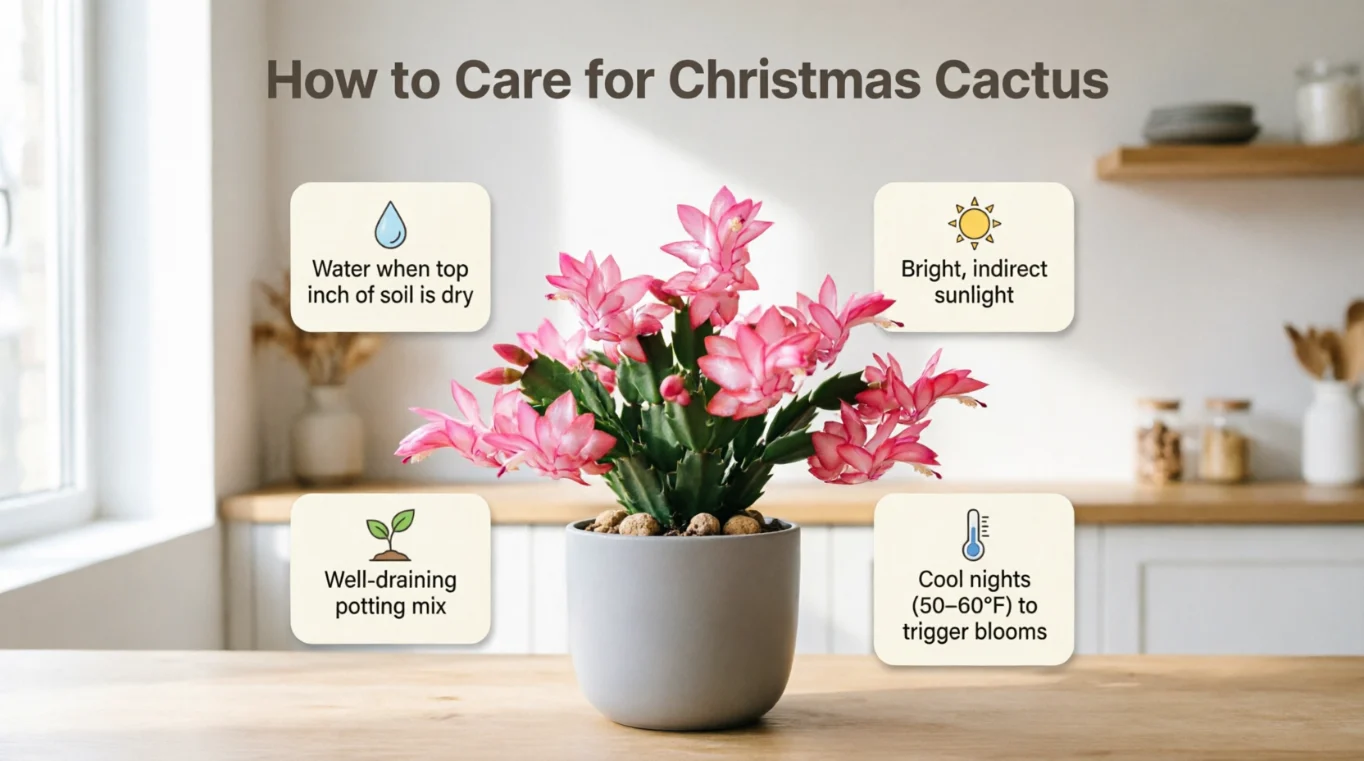
To care for a Christmas cactus, give it bright, indirect light, well-draining soil, regular but careful watering, moderate to high humidity, and comfortable indoor temperatures. During fall, cooler nights and long periods of uninterrupted darkness help trigger flower buds. Avoid soggy soil, harsh direct sunlight, sudden temperature changes, and frequent moves when buds appear.
Key Takeaways
- Place your Christmas cactus in bright, indirect light rather than harsh midday sun.
- Water when the upper part of the soil begins to dry, but never leave the roots sitting in water.
- Use an airy, well-draining potting mix because Christmas cactus naturally grows in rainforest environments.
- Feed during active growth, then reduce feeding as fall approaches.
- For holiday flowers, provide cool nights and about 12–13 hours or more of uninterrupted darkness.
What Is a Christmas Cactus?
A Christmas cactus is a popular flowering houseplant in the Schlumbergera group. Unlike desert cacti, it comes from the tropical rainforests of southeastern Brazil, where related plants grow on trees or rocks rather than in dry desert soil. That difference explains why its care is a little different from what you might expect from a cactus.
Christmas cactus has flat, jointed green stems and colorful flowers that usually appear around the winter holiday season. The plant can also live for many years when it receives consistent care. Some holiday cacti have even been passed from one generation to another.
How to Care for Christmas Cactus
1. Give It Bright, Indirect Light
Christmas cactus grows best with bright, filtered or indirect light. An east- or west-facing window can work well, while a bright south-facing location may need some protection from strong direct sun.
Too much intense sunlight can scorch or yellow the stems. If you move the plant outdoors during warm weather, choose a bright, shaded location instead of placing it in full afternoon sun.
In simple terms, think bright but gentle. The plant needs enough light to grow, but harsh sunlight can damage it.
2. Water When the Soil Begins to Dry
Watering is one of the most important parts of Christmas cactus care.
Check the soil with your finger. When the upper inch feels dry, give the plant a thorough watering. Allow excess water to drain through the bottom of the pot, and empty the saucer afterward.
Do not follow a strict schedule such as “water every Sunday.” Your plant may need water at different times depending on temperature, light, pot size, soil, and humidity.
Christmas cactus likes more moisture than many desert cacti, but soggy soil is dangerous. Constantly wet soil can contribute to root and stem rot.
3. Use Well-Draining Soil
Choose an airy, well-draining potting mix. The goal is to hold some moisture while allowing excess water to escape quickly.
A compact, heavy soil that stays wet for a long time can create problems. Extension recommendations commonly describe Christmas cactus as needing a well-drained growing medium with materials that improve drainage and aeration.
A pot with drainage holes is equally important. Even excellent soil cannot compensate for a container that traps water.
4. Keep Humidity Moderate to High
Because Christmas cactus comes from a humid rainforest environment, it appreciates more humidity than typical desert cacti.
A naturally humid room can work well. You can also place the pot near other houseplants or use a humidity tray. If you use a pebble tray, keep the plant pot above the water rather than sitting directly in it.
However, humidity does not mean constantly wet soil. Keep the air humid and the roots well-drained.
5. Maintain Comfortable Temperatures
Normal indoor temperatures usually work well during the growing season. Christmas cactus generally prefers warm conditions during active growth but benefits from cooler nights as it prepares to flower.
For winter care, avoid placing the plant directly beside heaters, fireplaces, cold drafts, or other sources of sudden temperature changes. Stable conditions are especially important once flower buds form.
A cooler fall period can actually help trigger flowering. For example, extension and horticultural sources recommend cool nights in roughly the 55–65°F range as part of the flowering process.
6. Fertilize During Active Growth
Christmas cactus benefit from feeding during its active growing period. A balanced houseplant fertilizer can be used according to the product directions, often at reduced strength.
University of Minnesota Extension recommends monthly feeding with a balanced houseplant fertilizer at half-strength from June through August. Other extension guidance recommends feeding during the growing season and reducing or stopping fertilizer as fall flowering preparation begins.
Avoid heavy feeding when the plant is preparing to flower. The goal is steady growth, not forcing the plant with excess fertilizer.
How to Get a Christmas Cactus to Bloom
Getting a Christmas cactus to flower is mostly about giving it the right light and temperature cues in fall.
Christmas cactus is a short-day plant. As autumn arrives, longer periods of darkness and cooler nights help initiate flower buds. University extension sources recommend around 12–13 hours or more of uninterrupted darkness, depending on temperature and growing conditions.
The Fall Blooming Routine
About six to eight weeks before you want flowers, try this routine:
- Keep the plant in bright light during the daytime.
- Give it a long period of uninterrupted darkness each night.
- Keep nighttime temperatures relatively cool.
- Avoid bright lamps or room lights reaching the plant during its dark period.
- Keep watering consistent without making the soil soggy.
- Once buds appear, avoid moving the plant unnecessarily.
Even a lamp that stays on near the plant at night can interfere with the darkness it needs for flowering.
Once buds develop, consistency becomes especially important. Sudden changes in temperature, light, moisture, or location can contribute to bud drop.
How to Care for a Christmas Cactus After It Blooms
After flowering ends, continue giving your Christmas cactus bright, indirect light and appropriate moisture.
Once new growth begins, you can return to regular feeding during the growing season. Light pruning after flowering can also help create a fuller, more branched plant.
Pruning is simple. Remove a few stem segments from the ends of branches to encourage branching. Those healthy segments can also be used to propagate new plants.
If the plant has been in the same container for several years or the soil no longer drains well, spring is generally a better time to report than the period when it is preparing to flower.
Common Christmas Cactus Problems
Why Are the Buds Falling Off?
Bud drop can happen when the plant experiences sudden environmental changes. Moving it, exposing it to drafts, changing temperatures quickly, allowing it to become too dry, or disrupting its flowering conditions may contribute to the problem.
Once buds appear, try to keep the plant in the same location with stable light, temperature, and watering.
Why Are the Stems Turning Yellow or Soft?
Yellow stems can result from excessive light or other growing problems. Soft stems and roots may indicate excessive moisture or poor drainage.
Check the pot and soil first. Make sure water can escape freely and that the plant is not sitting in a saucer of water.
Why Is My Christmas Cactus Not Blooming?
A Christmas cactus may fail to bloom if it receives too much nighttime light, lacks the needed cool period, or does not experience the appropriate short-day conditions.
Artificial light is an easy detail to overlook. If the plant sits near a bright lamp or window that remains illuminated at night, its darkness period may be interrupted.
Christmas Cactus vs. Thanksgiving Cactus
Christmas cactus and Thanksgiving cactus are closely related and are often confused.
The easiest way to distinguish them is by looking at the stem segments. Thanksgiving cactus usually has pointed, claw-like projections along the edges, while true Christmas cactus has more rounded segment margins. Their flowering periods also differ, although modern hybrids and growing conditions can make the timing less obvious.
Both plants have similar basic needs: bright indirect light, well-draining soil, appropriate moisture, humidity, and cooler conditions that help initiate flowering.
Frequently Asked Questions
How often should I water a Christmas cactus?
Check the soil instead of following a fixed calendar. When the upper inch becomes dry, water thoroughly and allow excess water to drain away. Christmas cactus likes regular moisture, but constantly wet soil can cause root problems.
Does a Christmas cactus need direct sunlight?
No. Bright, indirect or filtered light is generally better. Strong direct sunlight, especially during hot parts of the day, can scorch the stems. If you place the plant outdoors, choose a bright shaded location.
How do I get my Christmas cactus to bloom?
Give it bright daytime light, cool nights, and a long period of uninterrupted darkness each night during fall. Around 12–13 hours of darkness is commonly recommended, depending on temperature and conditions. Keep the routine consistent once buds begin forming.
Should I mistreat my Christmas cactus?
Christmas cactus appreciates humid air, but misting is not the only way to provide humidity. A humid room, grouping plants, or a properly used pebble tray can help. Regardless of the method, keep the roots from sitting in water.
When should I report a Christmas cactus?
Repotting is usually best done outside the flowering period, particularly when the plant has outgrown its container or the growing medium drains poorly. Christmas cactus can flower well while somewhat pot-bound, so it does not need a large container simply because it has grown.
Conclusion
Learning how to care for Christmas cactus is easier when you remember that this plant is a rainforest cactus, not a desert cactus. Give it bright indirect light, airy soil, careful watering, humidity, and stable temperatures. Then, as fall approaches, provide cooler nights and long periods of uninterrupted darkness to encourage those beautiful winter flowers.
The biggest mistake is usually doing too much. You do not need to constantly move, water, or feed the plant. Instead, give it consistent conditions and watch the soil and stems. With simple care, a Christmas cactus can remain a beautiful houseplant for many years and may reward you with colorful blooms every holiday season.

I am Owen Walker, the author of dreamzoons.com and a passionate dream expert. I explore the hidden secrets and deep meanings of dreams to help you understand the true messages behind them.