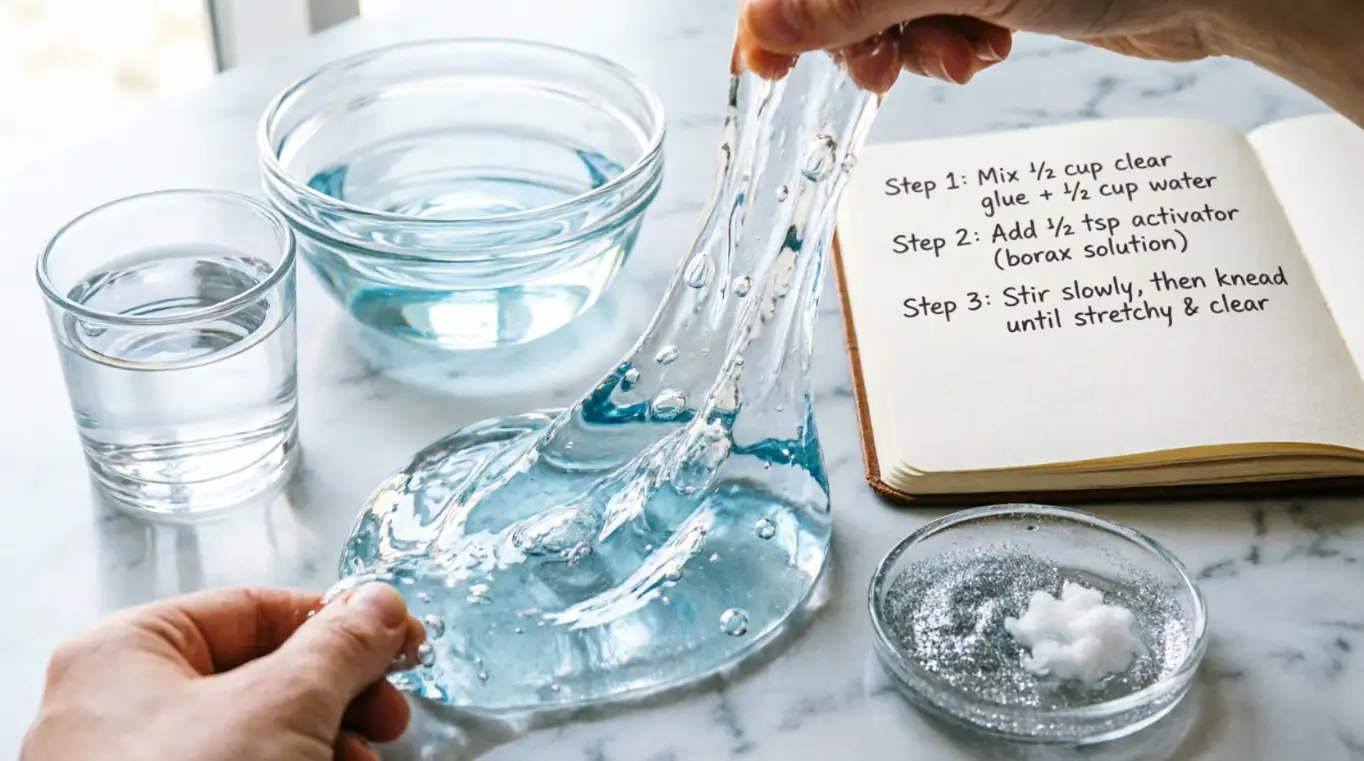
To make water slime, mix clear PVA glue with water, then slowly add a properly diluted slime activator until the mixture becomes stretchy and jiggly. For a more watery texture, use more water than you would in regular slime. You can also try no-glue versions made with shampoo or other thickening ingredients.
Key Takeaways
- Clear PVA glue makes transparent, glossy water slime.
- Add the activator slowly so you do not make the slime stiff or rubbery.
- Extra water creates a looser, more fluid texture.
- No-glue recipes can make slime-like mixtures, but their texture may differ from traditional slime.
- Keep homemade slime away from mouths, eyes, and pets, and wash hands after playing.
What Is Water Slime?
Water slime is a loose, jiggly type of slime designed to have a more watery or fluid texture than traditional stretchy slime. Depending on the recipe, it may look almost like clear water, wobble when you move it, or flow slowly through your fingers.
There is not just one official “water slime” recipe. Current DIY recipes use different methods. Some combine clear glue, water, and activator, while others use shampoo, cornstarch, or newer glue-free formulas.
For a classic clear water slime, the easiest place to start is a clear PVA glue and activator recipe.
How to Make Water Slime With Clear Glue
This method creates the clear, glossy, stretchy texture most people expect when they search for water slime.
Ingredients
You will need:
- 1 cup clear PVA school glue
- About 4–5 cups water
- A slime activator
- A large mixing bowl
- A spoon or silicone spatula
- Blue food coloring, optional
- An airtight container for storage
The amount of water can vary because different glues and activators behave differently. Current water-slime recipes commonly use substantially more water than standard slime to create the loose texture.
Step-by-Step Instructions
1. Add the clear glue.
Pour the clear PVA glue into a large bowl.
2. Add the water slowly.
Start with about 4 cups of water. Stir gently until the glue and water are well combined. If you want an even looser texture, you can add more water later.
3. Add color if you want it.
For a fresh-water appearance, add only one or two drops of blue food coloring. You can also leave it completely clear.
4. Prepare your activator separately.
If your chosen activator requires dilution, follow its package directions. For recipes using borax, dissolve it completely in water before adding it to the glue mixture. Do not sprinkle dry borax directly into the slime.
5. Add the activator little by little.
Pour in a small amount and stir. Continue adding tiny amounts while mixing until the mixture starts coming together.
6. Check the texture.
Stop adding activator when the slime becomes stretchy and jiggly but still has a loose, watery feel.
7. Let it rest.
Clear slime often contains tiny air bubbles after mixing. Allowing it to sit undisturbed can help the bubbles disappear and make the slime look clearer.
This general process matches established clear-slime recipes, where activator links the glue’s polymer chains and changes the mixture from a liquid into slime.
How to Get a Clear, Jiggly Texture
The biggest trick is balance.
Too little activator can leave your mixture extremely runny. Too much can turn it into a stiff, rubbery mass. Likewise, adding a lot of water creates a more fluid slime, but too much can make it difficult to handle.
How Much Water Should You Use?
For water slime, begin with a generous amount of water and adjust the texture gradually. One current recipe uses 1 cup of clear glue with 5 cups of water before adding activator, while another uses ½ cup of clear glue with 3 1⁄2 cups of water.
Because glue formulas differ, treat these measurements as starting points rather than a guarantee.
If your slime is too thick, a small amount of additional water may loosen it. If it is too runny, a little more activator may help.
How to Keep Clear Slime From Getting Cloudy
Clear slime can become cloudy when you mix it aggressively because stirring traps air bubbles.
Try these simple tricks:
- Stir slowly instead of whipping the mixture.
- Avoid squeezing the slime repeatedly while it is still full of bubbles.
- Let it rest in a sealed container.
- Give trapped bubbles time to rise and disappear.
- Use clear glue rather than white glue if you want a transparent result.
One clear-water slime recipe specifically recommends avoiding unnecessary stirring to reduce bubbles.
How to Make Water Slime Without Glue
What if you do not have glue?
You can try a shampoo-and-water version, although it will not have exactly the same polymer structure or stretch as traditional glue-based slime.
One current recipe uses thick shampoo with a very small amount of water, followed by refrigeration.
Shampoo and Water Method
Try this simple version:
- 4 tablespoons thick shampoo
- 1–2 teaspoons cold water
- A small bowl
- A spoon
Step 1: Put the shampoo in the bowl.
Step 2: Add water a few drops at a time.
Step 3: Stir slowly until the mixture becomes thicker.
Step 4: Place it in the refrigerator.
Step 5: Check the texture after chilling.
If it remains too thin, chill it longer rather than immediately adding a large amount of water.
Keep in mind that this version is better described as a slime-like mixture. Traditional clear water slime usually depends on a polymer such as PVA glue plus an activator.
How to Make Water Slime With Cornstarch
Cornstarch offers another simple option.
Mix cornstarch with a small amount of water and stir until you get a thick, smooth mixture. Add water gradually rather than pouring it all in at once.
This creates something quite different from stretchy glue slime. It behaves more like a non-Newtonian mixture, meaning its behavior changes depending on how you handle it.
For example, cornstarch mixtures can flow when handled gently but resist sudden pressure.
That makes this recipe especially useful if your goal is a quick sensory or science activity rather than crystal-clear, stretchy slime. Similar cornstarch-and-water versions appear in existing water-slime recipes.
Why Does Water Slime Work?
The science behind traditional slime is surprisingly simple.
Clear school glue contains long polymer molecules. When you add an appropriate activator, those molecules become connected into a network. Water becomes trapped within that network, creating the stretchy material we call slime.
Adding more water changes how loose that network feels.
That is why water slime can feel much more fluid than a typical batch of slime. Instead of behaving like a firm rubbery ball, it may wobble, flow, stretch, and slowly spread across a surface.
So, in simple terms, water slime is about balancing the polymer network with enough water to create a loose texture.
Troubleshooting Water Slime
Too Runny
If your slime looks more like colored water than slime, it may need a little more activator.
Add the activator in very small amounts and mix thoroughly after each addition. Avoid pouring in a large amount at once.
Too Sticky
Sticky slime usually needs more structure.
Try adding a tiny amount of activator, mixing well, and checking the texture again. Give the slime time to come together before making another adjustment.
Too Rubber-Like
This usually means you have gone too far with the activator or used too much thickening ingredient.
Work in a small amount of water gradually and gently stretch the slime. Do not flood it with water all at once.
Too Cloudy
Cloudiness often comes from trapped air.
Put the slime into an airtight container and let it sit. Resist the temptation to keep stirring it. Over time, many small bubbles can move out of the slime and improve its appearance.
How to Store Water Slime
Place finished slime in a clean, airtight container when you are finished playing.
Keep it away from direct sunlight and excessive heat. Do not mix old slime with fresh batches if the old slime has developed an unusual smell, visible mold, or other signs of spoilage.
Always wash your hands after handling homemade slime and clean the surface where you made it.
Water Slime Safety Tips
Slime is a craft activity, not something to eat or drink.
If your recipe uses borax or another borate-based ingredient, take extra care. Poison Control notes that borax can cause harmful effects if swallowed, inhaled, or improperly used, and recommends keeping borate products away from children and pets and following product directions.
For a safer activity:
- Have an adult handle powdered borax.
- Do not let children put slime in their mouths.
- Keep activator containers closed when not in use.
- Avoid contact with eyes.
- Wash hands after playing.
- Stop using the slime if it causes skin irritation.
- Keep ingredients away from pets.
- Never use household chemicals in ways not allowed by their labels.
If someone swallows a borate product in the United States, Poison Control recommends using webPOISONCONTROL or calling 1-800-222-1222 for guidance.
Frequently Asked Questions
Can You Make Slime With Just Water?
Water alone does not normally create stretchy slime. You need another ingredient that provides structure, such as PVA glue, a thickening ingredient, or another slime-forming material. Water mainly helps control the final consistency.
How Do You Make Water Slime Without Glue?
You can experiment with thick shampoo and a small amount of water, then chill the mixture. Another option is cornstarch and water. These alternatives can create slime-like textures, but they will not behave exactly like clear PVA glue slime.
Why Is My Water Slime Too Runny?
Your slime may need a little more activator, or you may have added too much water. Add the activator gradually and mix thoroughly before deciding whether you need more. Different glue formulas can also produce different results.
How Long Does Water Slime Last?
Storage time depends on the ingredients, cleanliness, and storage conditions. Keep slime sealed when you are not using it and discard it if it develops mold, an unusual smell, or another obvious sign of spoilage.
Can You Make Clear Water Slime?
Yes. Use clear PVA glue and avoid adding much food coloring. Mix gently to reduce bubbles, then let the slime rest in a sealed container so trapped air can escape. Clear glue is commonly used for transparent or translucent slime recipes.
Conclusion
Learning how to make water slime is easier when you focus on texture instead of following one rigid formula. Start with clear PVA glue, plenty of water, and a properly prepared activator. Add the activator slowly until the mixture becomes jiggly and stretchy without becoming rubbery.
If you do not have glue, shampoo or cornstarch can give you a different slime-like experience. Whichever method you choose, adjust ingredients gradually and keep safety in mind. With a little experimenting, you can create water slime that is clear, glossy, wobbly, and fun to stretch.

I am Jaxon Blake, the author of DreamZoons.com, where I explore the hidden meanings behind dreams. I am a dream expert, and I help people understand what their dreams may be trying to tell them.