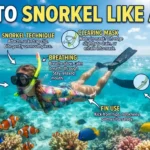
To snorkel, wear a properly fitted mask, place the snorkel comfortably in your mouth, and practice breathing slowly through it in shallow, calm water. Once comfortable, float face-down, use gentle kicks with your fins, and learn to clear water from your snorkel and mask. Always snorkel with a buddy and check water conditions first.
Key Takeaways
- Choose a mask that seals comfortably without excessive strap pressure.
- Practice breathing through the snorkel in shallow, calm water before heading farther out.
- Keep your body relaxed and use slow kicks from your hips.
- Learn how to clear a flooded snorkel and mask before exploring open water.
- Never snorkel alone, and avoid strong currents, rough conditions, and boat traffic.
What Is Snorkeling?
Snorkeling lets you explore underwater scenery while staying mostly at the surface. You normally wear a mask to see clearly, a snorkel to breathe while your face is in the water, and fins to help you move efficiently.
Unlike scuba diving, snorkeling does not require an air tank. However, that does not mean you can ignore water safety. Snorkelers can face currents, waves, changing weather, boats, marine life, and fatigue. Divers Alert Network identifies drowning as a major risk associated with snorkeling and warns about hazards such as strong water movement and watercraft.
For a first-time snorkeler, the goal is not to swim far or dive deep. Your first goal is to become comfortable breathing, floating, moving, and handling small equipment problems.
What Gear Do You Need to Snorkel?
You do not need a large collection of equipment. A basic setup includes a mask, snorkel, and fins. A flotation device, rash guard, wetsuit, or other gear may also make sense depending on your ability, location, and water conditions.
Snorkel Mask
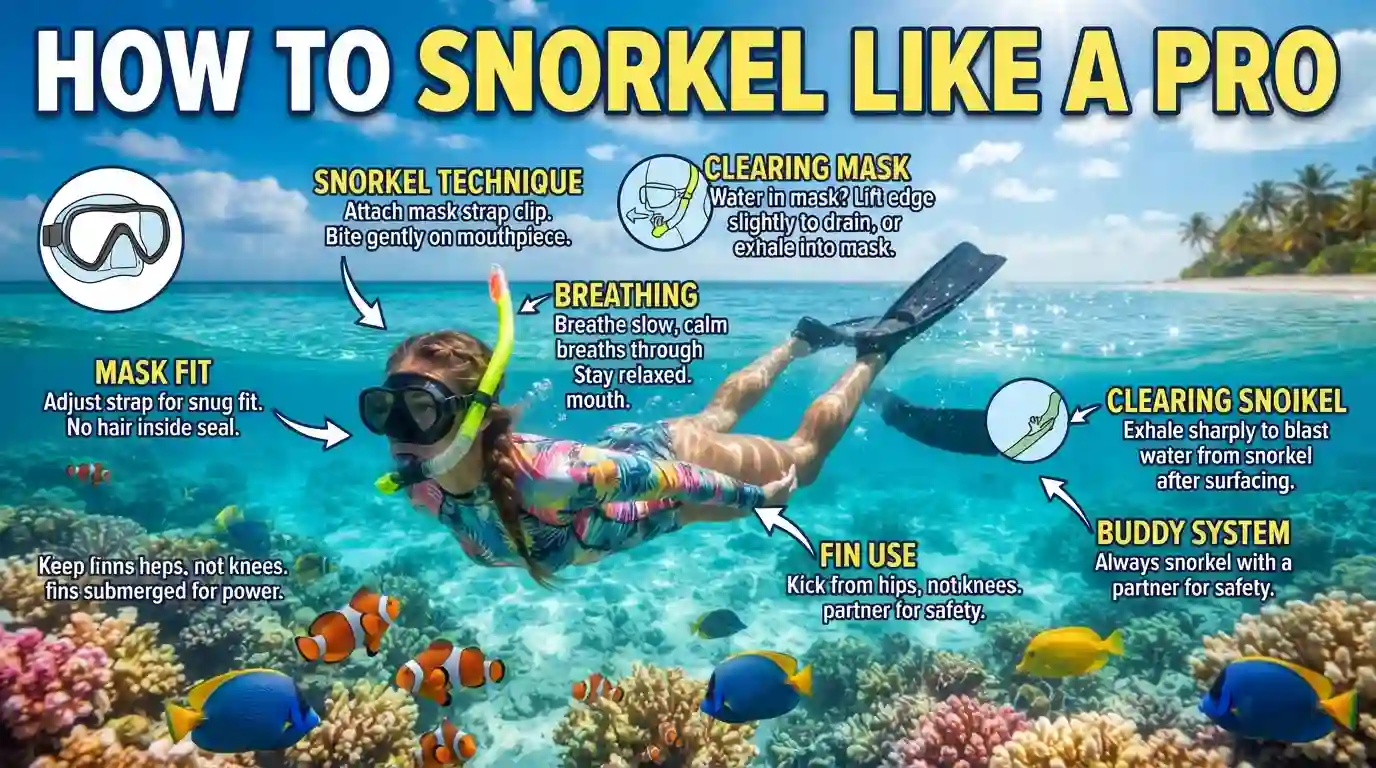
A good mask should create a comfortable seal around your face. Before entering the water, place the mask against your face without using the strap and gently inhale through your nose. If it stays in place briefly, the seal may be suitable.
Do not assume that tightening the strap will fix a poorly fitting mask. The shape of the mask and your face need to work together.
Snorkel
The snorkel lets you breathe through your mouth while your face remains in the water. The mouthpiece should feel comfortable, and your jaw should not need to clench tightly.
Some snorkels include purge valves or water-exclusion features that can make clearing water easier. Fit and comfort matter more than choosing a complicated design.
Fins
Fins help you move without making large, tiring movements. They should feel secure without pinching your feet.
As a beginner, use small, relaxed kicks rather than trying to move quickly. Your fins work best when your movements stay controlled.
Optional Gear
Depending on the environment, you may also use a flotation aid, rash guard, wetsuit, sunscreen, or brightly visible surface equipment. Your choice should match the water temperature, weather, local rules, and your swimming ability.
How to Snorkel Step by Step
1. Check Your Gear Before Getting In
Put on your mask and check the seal. Adjust the snorkel so the mouthpiece sits comfortably. Make sure your fins fit correctly and inspect your equipment for obvious problems.
Take a few minutes to understand how everything works before entering the water.
2. Start in Shallow, Calm Water
Your first practice session should happen in a swimming pool or another calm area where you can comfortably stand.
Do not begin your first snorkeling experience far from shore or in strong waves. Calm, shallow water gives you a chance to solve small problems without unnecessary stress.
The CDC recommends practicing snorkeling skills in a pool or shallow water and emphasizes checking weather and visibility before entering the water.
3. Practice Breathing Through the Snorkel
This is usually the biggest adjustment for a beginner.
Place the mouthpiece in your mouth, keep your lips sealed around it, and breathe normally through your mouth. Start with your face above the water if necessary. Then lower your face into shallow water while keeping the snorkel opening above the surface.
Take slow, comfortable breaths.
Do not try to breathe through your nose while using a traditional snorkel. If you feel anxious, lift your face out of the water, breathe normally, and try again when you feel comfortable.
4. Float Face-Down
Once breathing feels natural, practice floating.
Keep your body relaxed and relatively horizontal. Look slightly forward rather than constantly lifting your head. Relaxed floating makes it easier to see underwater and reduces unnecessary effort.
You do not need to fight the water. Let your body float while your fins provide gentle movement.
5. Kick Gently With Your Fins
Use slow flutter kicks from your hips. Keep your movements smooth instead of bending your knees dramatically or kicking as hard as possible.
Your arms can remain relaxed in front of you or by your sides. Large arm movements often create unnecessary resistance and can disturb sand or marine life.
The aim is simple: relax, float, kick gently, and look around.
6. Learn to Clear Your Snorkel
Water can enter your snorkel when a wave passes over it or when the tube briefly goes underwater.
If your snorkel allows it, a firm burst of exhaled air can push water out. Practice this skill in shallow water before relying on it in deeper water. The CDC specifically recommends learning how to clear water from the snorkel before exploring.
If clearing the tube does not feel easy, simply lift your face from the water and reset. There is no reason to panic.
7. Learn to Clear Your Mask
A small amount of water may enter your mask. Stay calm.
In shallow water, practice tilting your face slightly upward, holding the upper part of the mask against your forehead, and gently exhaling through your nose while allowing water to escape from the lower edge.
Practice this before your first long snorkeling trip. Knowing what to do when your mask leaks can make the experience much less stressful.
8. Move Slowly and Stay Aware
Once you can breathe, float, kick, and clear your equipment, you can begin exploring.
Move slowly. Look around instead of constantly kicking forward. Pay attention to your buddy, your position, the shoreline or boat, and changes in the water.
Never touch coral or marine animals. The CDC also recommends avoiding close contact with reefs because they can be sharp and some marine organisms can be harmful.
How to Breathe While Snorkeling
The basic rule is simple: breathe slowly through your mouth while keeping the snorkel opening above the water.
Many beginners become uncomfortable because breathing through a tube feels unfamiliar. They may start taking fast breaths or lifting their head repeatedly.
Instead, slow down.
Take a comfortable inhale, then exhale calmly through the snorkel. You should not feel that you need to race your breathing.
Also, do not hyperventilate before putting your face underwater or attempting breath-hold dives. Divers Alert Network warns that hyperventilation can delay the normal urge to breathe while oxygen levels continue to fall, increasing the risk of loss of consciousness.
For ordinary surface snorkeling, there is no reason to hyperventilate or hold your breath.
How to Snorkel Safely in the Ocean
Ocean snorkeling requires more awareness than practicing in a pool.
Before entering the water, check the weather, waves, tides, currents, visibility, entry and exit points, and local warnings. The American Red Cross notes that ocean environments can include changing tides, fast-moving currents, waves, sudden depth changes, underwater obstacles, marine animals, boats, and thunderstorms.
Follow these basic rules:
- Never snorkel alone. Stay with a buddy or qualified guide.
- Stay within your ability. Do not swim farther than you can safely return.
- Avoid strong currents. Beginners should choose calmer conditions.
- Watch for boats. Use designated swimming or snorkeling areas when available.
- Do not touch marine life or coral.
- Use appropriate flotation equipment if you need additional support.
- Leave the water if you become tired, dizzy, frightened, or unwell.
- Respect local signs, lifeguards, and tour-operator instructions.
The buddy rule is especially important. The CDC recommends staying with a buddy while snorkeling, while DAN warns that currents and watercraft can create serious hazards.
Common Beginner Snorkeling Mistakes
Swimming too fast: Slow movement saves energy and usually makes the experience more enjoyable.
Using a poor-fitting mask: A leaking mask can quickly become frustrating. Try another size or shape rather than simply tightening the strap.
Ignoring water conditions: Calm-looking water near shore can still have currents. Check conditions before entering.
Going too far from shore: Beginners should build confidence gradually.
Panicking when water enters the snorkel: Practice clearing it in shallow water so the situation feels familiar.
Holding your breath unnecessarily: Surface snorkeling does not require prolonged breath-holding.
Snorkeling alone: Always have a buddy or appropriate supervision.
Do You Need to Know How to Swim to Snorkel?
You should have basic swimming and water-survival skills before snorkeling in open water. Snorkeling equipment does not replace swimming ability.
If you are not a confident swimmer, do not simply head into deep ocean water because you have a mask and snorkel. Start with qualified instruction, shallow supervised water, or appropriate flotation support. The CDC recommends knowing how to swim before snorkeling and notes that a life jacket can provide additional support for less-experienced participants.
Frequently Asked Questions
Is snorkeling easy for beginners?
Yes, the basic skills are simple to learn. The hardest part for many beginners is getting comfortable breathing through the snorkel. Practice in calm, shallow water first, then gradually move to open water as your confidence and skills improve.
Can you snorkel if you are not a strong swimmer?
It is not a good idea to enter open water if you cannot swim confidently. Snorkeling gear does not make you water-safe. If you are a weak swimmer, learn basic swimming skills and use appropriate supervision and flotation support before attempting open-water snorkeling.
How do you breathe underwater while snorkeling?
You breathe through your mouth using the snorkel while keeping its opening above the water. Take slow, normal breaths. You do not need to hold your breath or hyperventilate for ordinary surface snorkeling.
What should you do if water gets into your snorkel?
Stay calm and use the snorkel’s clearing method to remove the water, usually with a firm exhale if the design supports it. If you are uncomfortable, lift your face from the water, breathe normally, and reset before continuing.
Can you snorkel without fins?
Yes. You can practice snorkeling without fins, especially in shallow water. Fins mainly make movement more efficient and can help you swim with less effort. They are useful, but learning to breathe and feel comfortable with your mask and snorkel should come first.
Conclusion
Learning how to snorkel does not require complicated techniques. Start with properly fitting equipment, practice breathing through the snorkel in shallow water, learn to float comfortably, and use gentle fin kicks. Before heading into the ocean, practice clearing both your snorkel and mask.
Most importantly, treat snorkeling as a water activity that requires real safety awareness. Check conditions, stay with a buddy, avoid strong currents and boat traffic, and never push beyond your swimming ability. Once you feel comfortable with the basics, you can relax, slow down, and enjoy exploring the underwater world.

I am Owen Walker, the author of dreamzoons.com and a passionate dream expert. I explore the hidden secrets and deep meanings of dreams to help you understand the true messages behind them.